

 русский
  Español
  عربى
عربى 

INQUIRY NOW

-
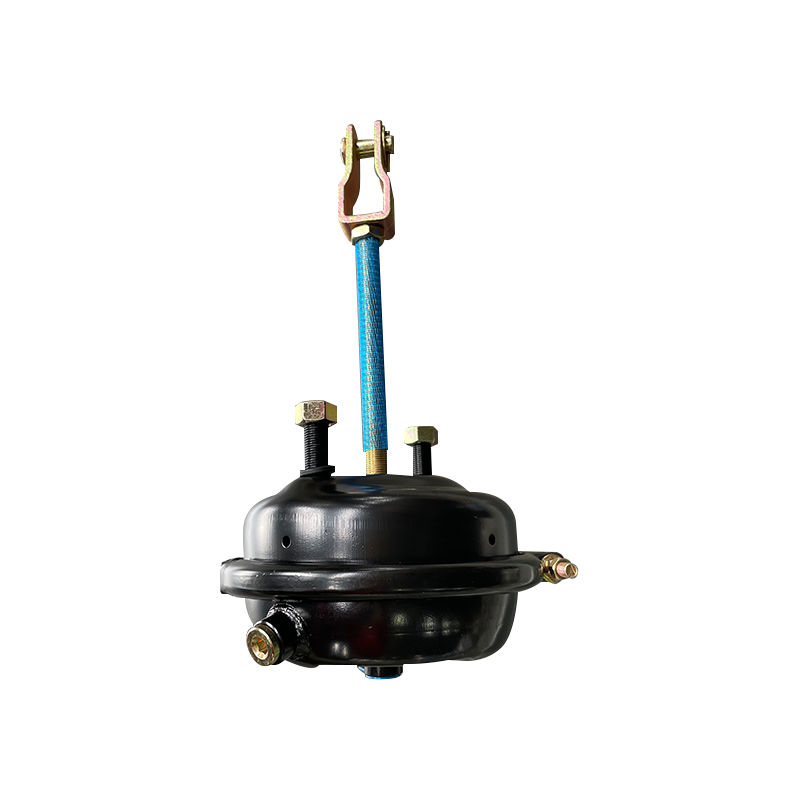



T30 Brake Chamber With Long Stroke
-
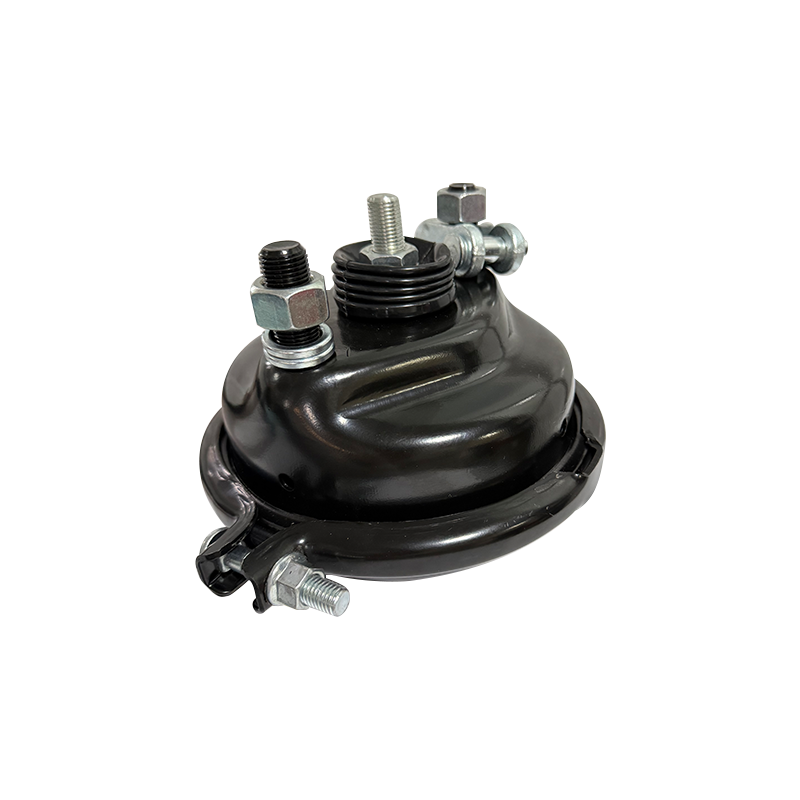
T24 Single Brake Chamber TATA Truck
-
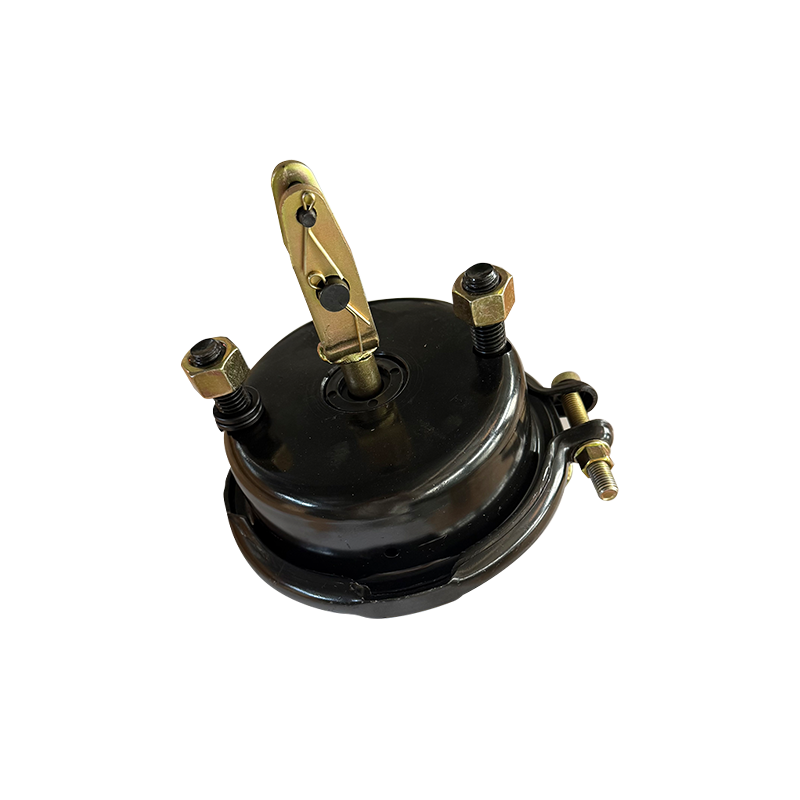
T20 Universal Standard Brake Chamber 20SCLW2
-
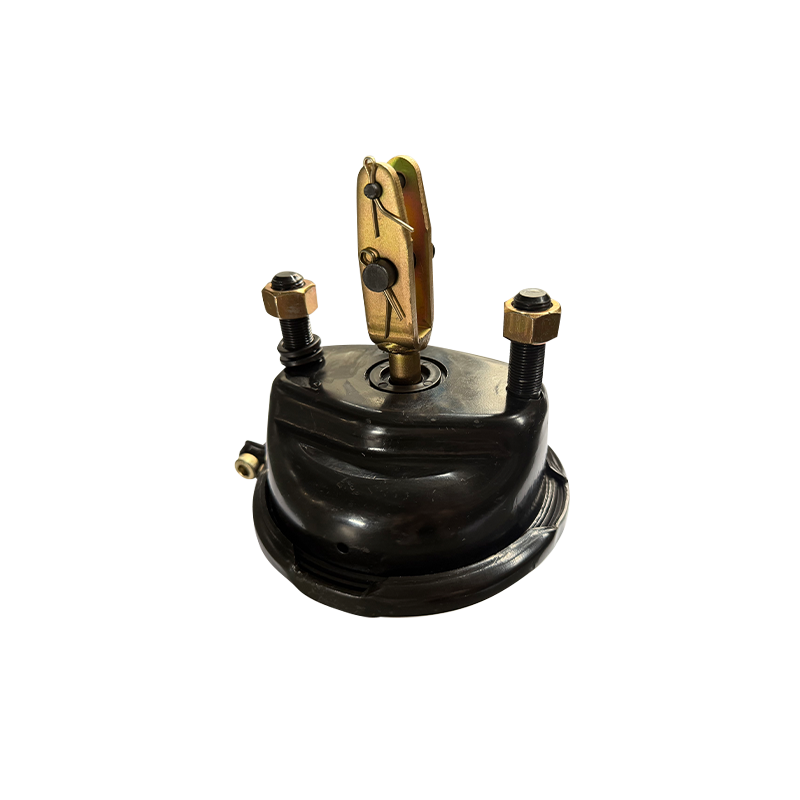
T16 Compact-Optimized Single-Chamber Brake Actuator 16LCW
-
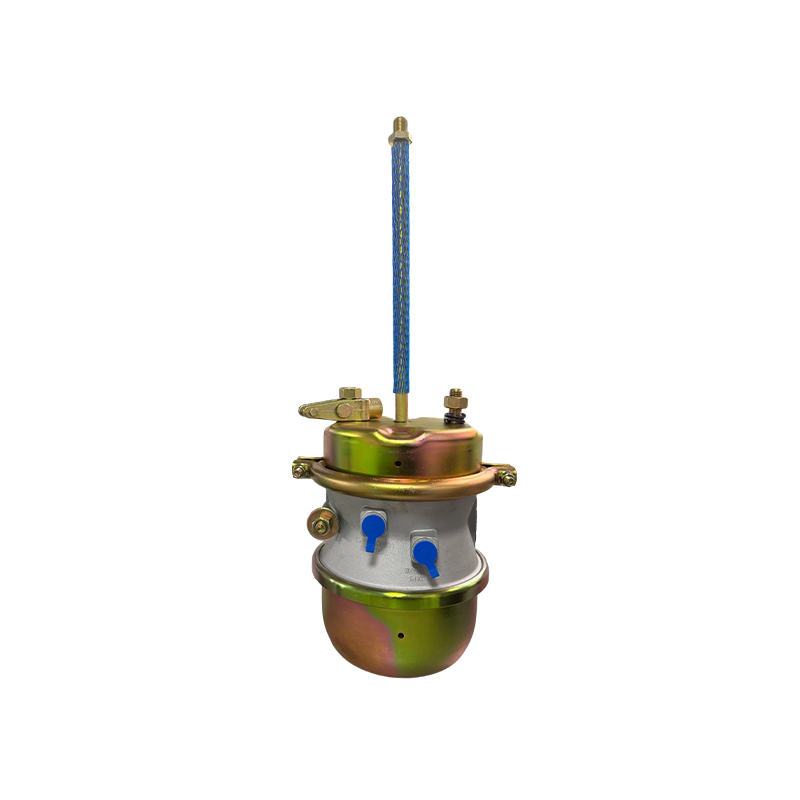
T3030 Long Stroke with Welded Clevis Brake Chamber GC3030LS4CW
-
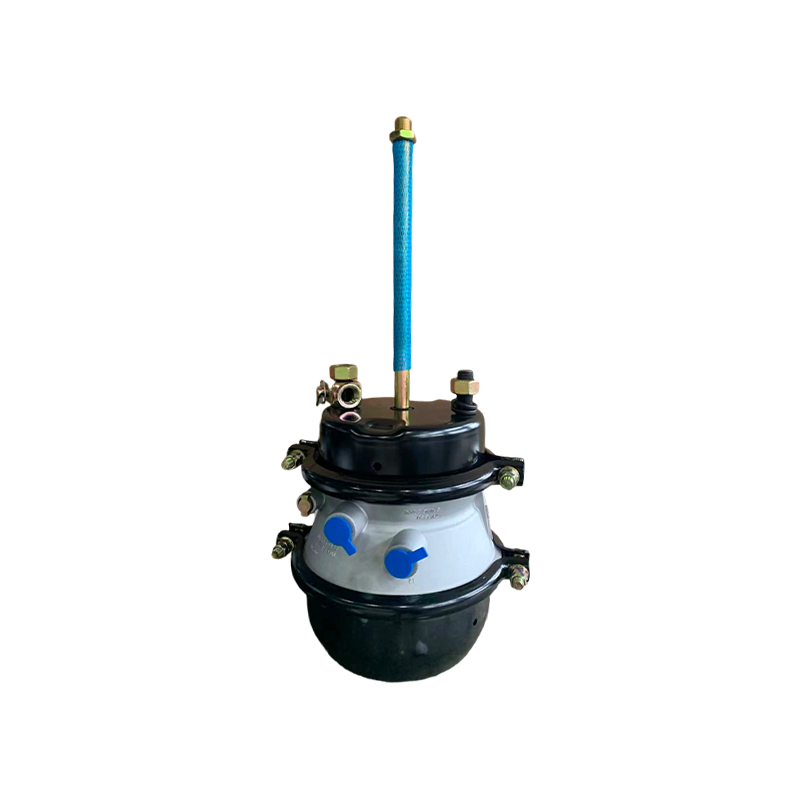
T2430 Long rod black brake chamber
-
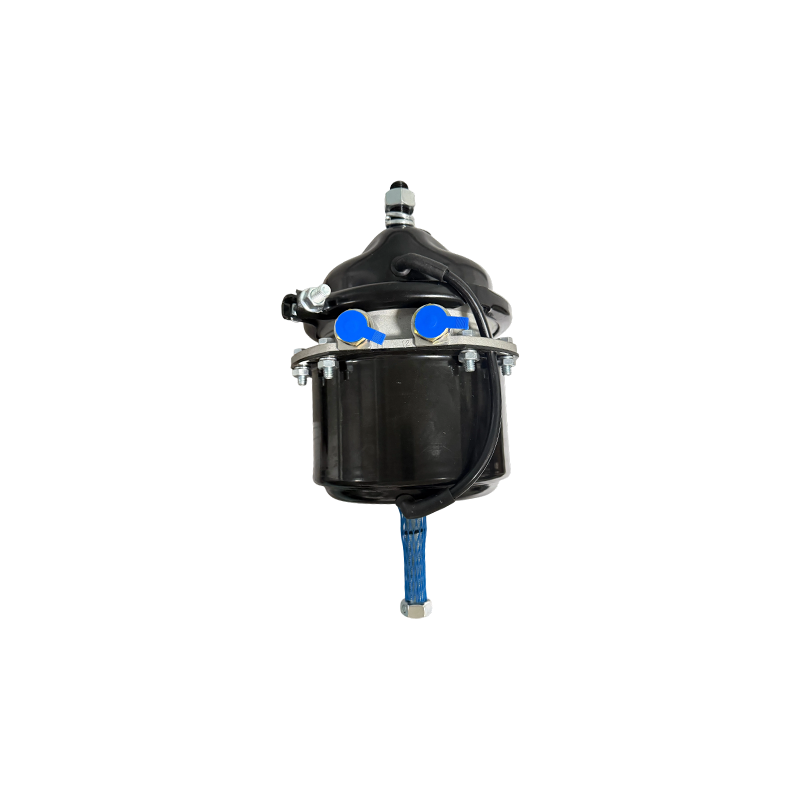
T2424DP short with Voss
-
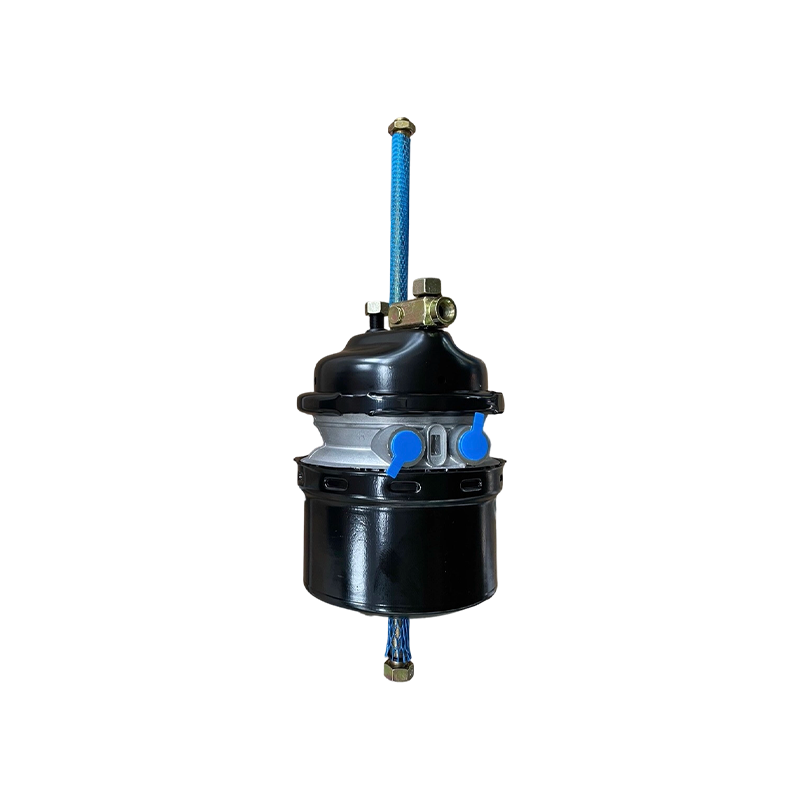
T2424DP Sealed with M22 port
-
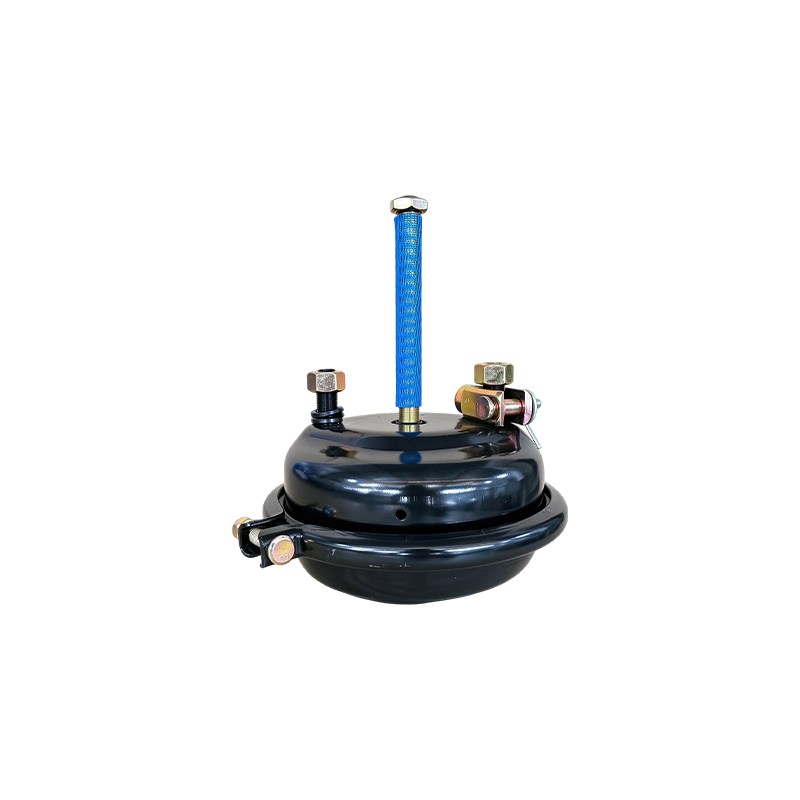
T30 Clamp-Mount Standard Brake Chamber
-
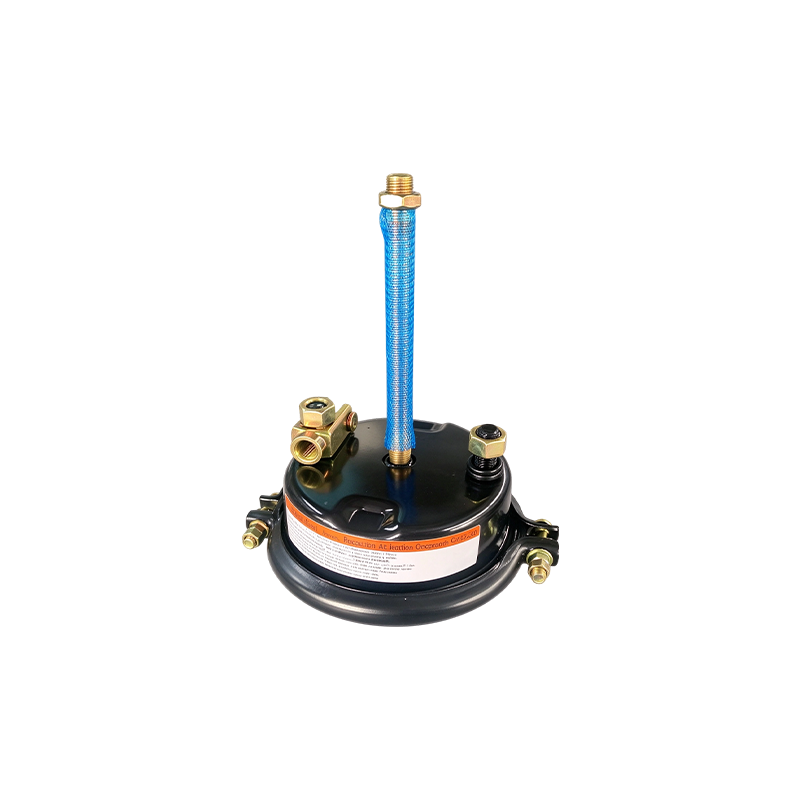
T24 Clamp-Mount Standard Brake Chamber (Black)
-
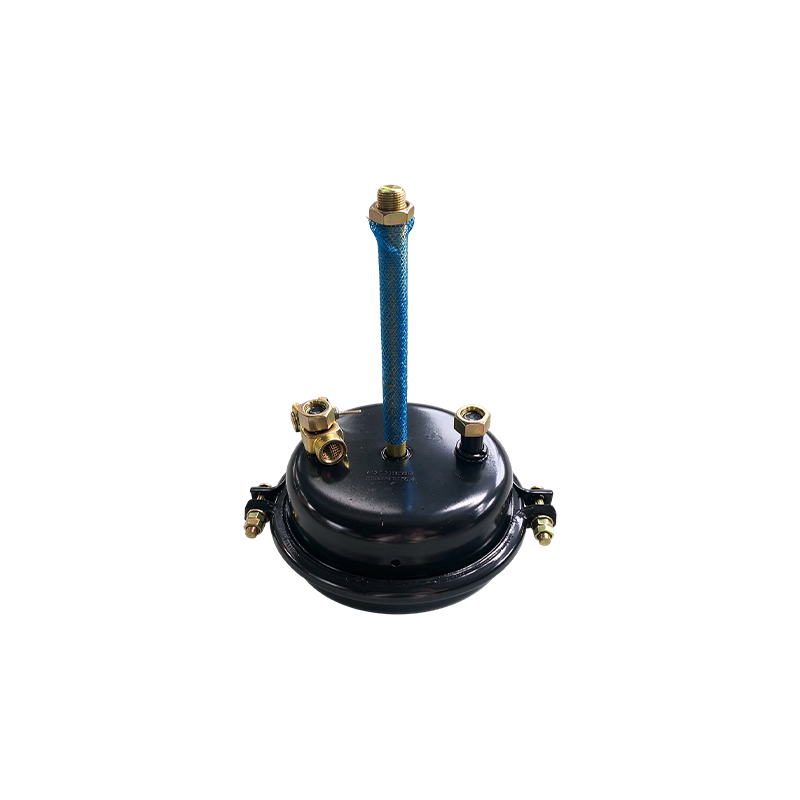
T30 Single-Hole Long Stroke Brake Chamber (2.25in)
-
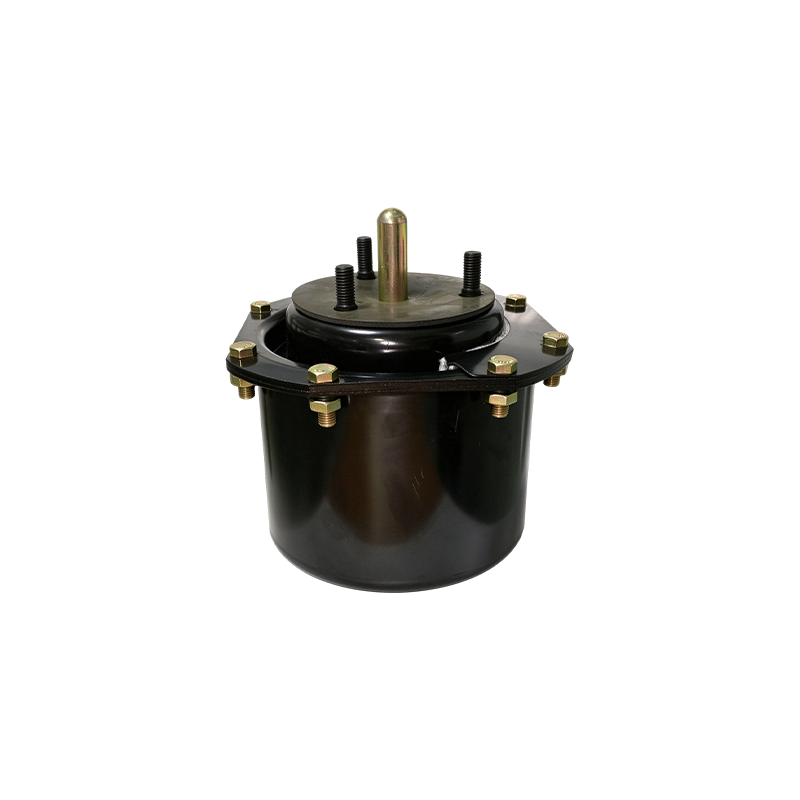
Flange-Mount Single Brake Chamber (Black)
S-Cam type brake chambers are critical components within braking systems, widely utilized in heavy-duty trucks, trailers, buses, and other large vehicles. Their operating principle involves pneumatic pressure acting upon a diaphragm, which drives a pushrod to actuate an attached slack adjuster, thereby enabling the vehicle's mechanical braking function. S-Cam brake chambers primarily fall into three structural categories—single-chamber, double-diaphragm, and piston-type—designed to meet diverse braking requirements and operating conditions.
Models are typically differentiated based on diaphragm size, designated by series such as T9, T16, T20, T24, and T30. For the double-diaphragm series, the stroke length can be identified by the shape of the air port located on the aluminum center section: a square port indicates a long stroke, while a circular port indicates a standard stroke, thereby facilitating ease of installation and maintenance. These products are manufactured using automated machinery to ensure a high degree of consistency in dimensions, performance, and reliability across every unit. Furthermore, through rigorous quality control measures, they are guaranteed to deliver stable and dependable braking force—even under heavy loads, frequent start-stop cycles, and complex road conditions—thereby fully safeguarding vehicle operational safety and ensuring the long-term durability of the braking system.
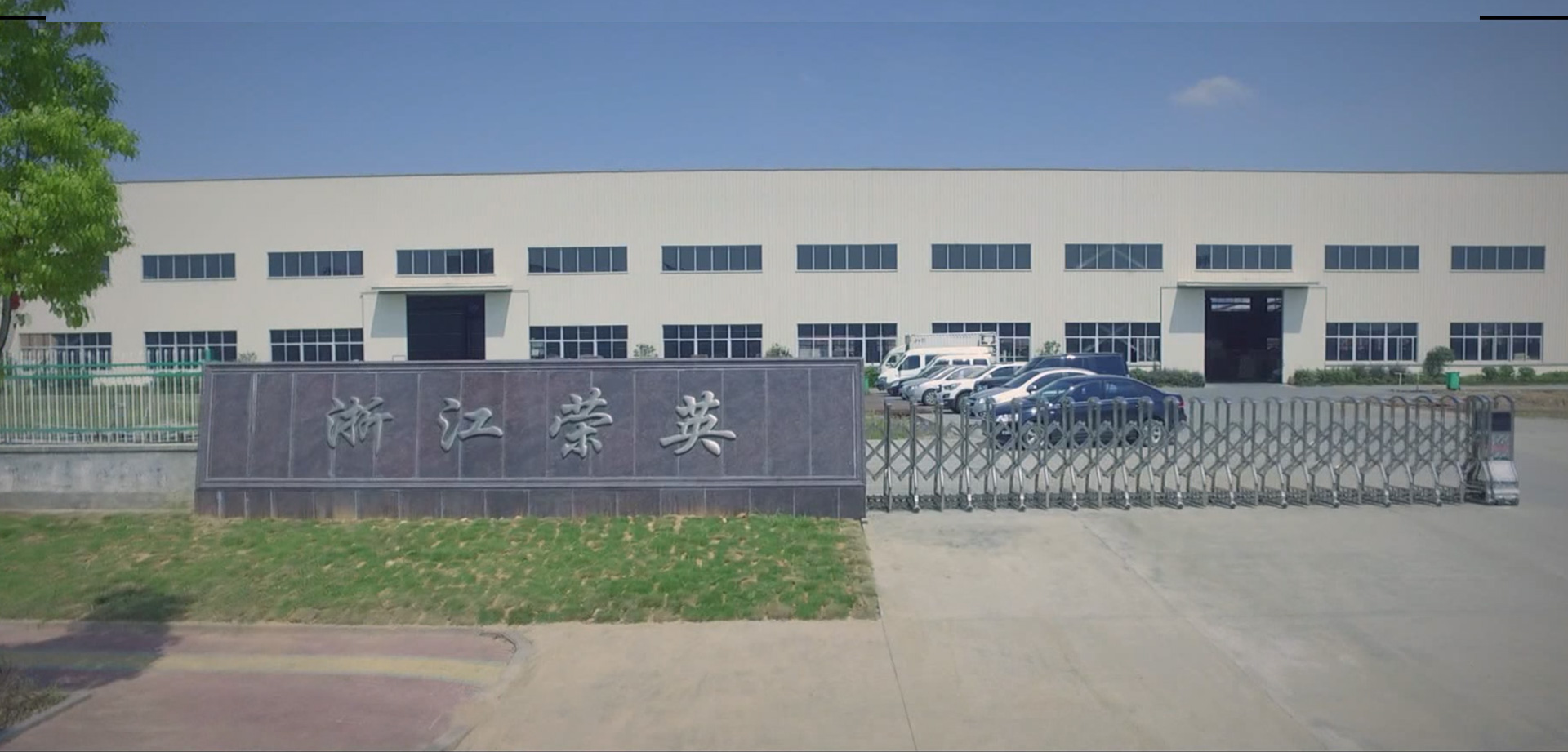
RONGZHAN
BRAKE COMPONENTS
As China Heavy Duty Truck S-Cam Type Brake Chamber Factory and Service Brake Chambers Manufacturers, Zhejiang Rongzhan Machinery Co., Ltd. specialize in the production of spring brake chambers and service brake chambers for trucks and trailers. Backed by stable production capacity, strict quality control systems, and extensive export experience, our products are widely supplied to overseas markets and OEM customers worldwide. Rongzhan is committed to reliable quality, consistent performance, and long-term partnerships. We provide customers with cost-effective solutions and dependable service.
-
 0Year Established
 -
 0+Number of Employees
 -
 0SetsAnnual Production Volume
 -
0SetsAnnual Export Volume
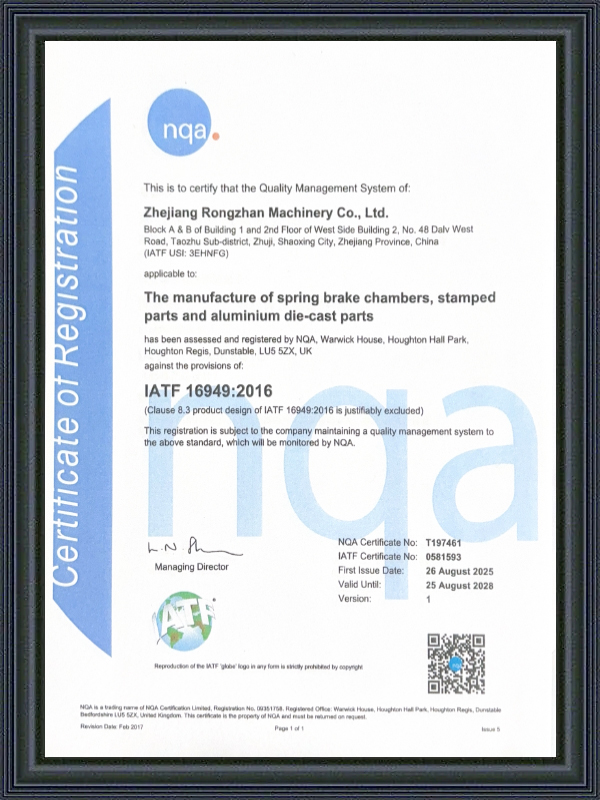
Certificate Of Honor

News
-
If you are qualifying a wedge brake chamber factory, settle five things before you talk about price: control over the wedge and roller components, test data produced on the wedge platform itself, pre-delivery inspection discipline, written interface dimensions, and the ability to repeat the same pa...
-
Two suppliers quote the same Type 20 service wedge brake chamber, and one is 20 percent cheaper. Six months later, the fleet that took the cheaper quote is replacing chambers early, re-adjusting stroke and paying freight twice. The saving never appeared on the invoice. It hid in the diaphragm compo...
-
Every S-Cam brake chamber you buy, whether you are a fleet maintenance director or an OEM purchasing engineer, is a bet on the factory that built it. The same Type 24 or Type 30 part number can behave very differently depending on the quality of the aluminum housing, the diaphragm compound, and the...
S-Cam Type Brake Chamber Industry knowledge
Compatibility Analysis of S-Cam Type Brake Chamber with Automatic and Manual Slack Adjusters
The pneumatic foundation brake configuration remains the standard configuration for heavy commercial vehicles, trailers, and buses globally. Within this system, the S-Cam type brake chamber plays a critical mechanical role by converting the energy of stored compressed air into a linear thrust force. This linear movement is transferred directly to the slack adjuster, which converts the motion into rotational torque to turn the S-camshaft and expand the brake shoes against the drum. A frequent engineering and procurement question raised by fleet managers and maintenance facilities is whether a single S-Cam type brake chamber design possesses cross-compatibility with both manual and automatic slack adjusters. Understanding the mechanical relationships, dimensional factors, and operational rules governing these linkages is essential for maintaining fleet safety, reducing down-time, and verifying correct parts selection.
Mechanical Interface and Universal Pushrod Design
From a fundamental mechanical standpoint, an S-Cam type brake chamber is inherently compatible with both manual and automatic slack adjusters because the primary interface between these two components relies on a standard pushrod connection. The pushrod extends out from the chamber housing and links to the slack adjuster arm using a clevis pin assembly. Standardized engineering dimensions defined by global commercial vehicle organizations govern the diameter of the pushrod threads, the layout of the yoke or clevis, and the general spacing requirements. This standardization ensures that the linear force delivered by the internal diaphragm acts on the slack adjuster arm regardless of whether that adjuster modifies its internal gear positioning manually during service or automatically during operation. Zhejiang Rongzhan Machinery Co., Ltd. manufactures these chambers to precise global standard tolerances, allowing the pushrod assembly to connect cleanly to any standard industry-compliant slack adjuster type.
| Interface Component | Manual Slack Adjuster Requirements | Automatic Slack Adjuster Requirements |
| Pushrod Threading | Standard 5/8-18 UNF or 1/2-20 UNF | Standard 5/8-18 UNF or 1/2-20 UNF |
| Clevis Pin Type | Standard Straight Pin with Cotter Pin | Threaded Clevis or Quick-Connect Pin |
| Yoke Alignment | Perpendicular to Slack Adjuster Arm | Perpendicular with Specific Control Arm Anchor |
| Mechanical Stroke Target | Monitored and Reset Manually | Regulated Automatically via Internal Gearing |
The Critical Role of Pushrod Travel and Stroke Length
While the physical connection points match between both configurations, the operating stroke length of the S-Cam type brake chamber represents a critical technical factor when mating the unit with an automatic slack adjuster. Automatic slack adjusters rely on the specific physical travel distance of the pushrod to calculate whether the brake shoes require adjustment to compensate for lining wear. If a standard stroke chamber is installed on a system that requires a long-stroke configuration, or vice versa, the automatic slack adjuster may miscalculate the adjustment cycles, which can cause either over-adjustment or under-adjustment. Over-adjustment causes dragging brakes, excessive heat buildup, and accelerated wear on the drums and linings, while under-adjustment results in extended stopping distances. Therefore, technical personnel must match the rated stroke specification of the chamber with the predefined configuration requirements of the specific automatic slack adjuster model in use.
Control Arm Anchoring and Spatial Clearances
A major physical difference when mounting an S-Cam type brake chamber alongside an automatic slack adjuster instead of a manual model involves the installation of the adjuster control arm or reference bracket. Automatic slack adjusters feature an extra mechanical component known as a control arm that must anchor to a fixed reference point on the brake chamber housing or axle bracket to accurately track the structural rotation of the arm. Manual slack adjusters do not possess this control mechanism and require no auxiliary external reference points. Modern heavy duty brake chamber models manufactured by Zhejiang Rongzhan Machinery Co., Ltd. feature standardized mounting stud lengths and flat housing surfaces that leave sufficient clearance for installing these reference brackets without creating interference with the air ports or the structural clamp band of the chamber.
| Installation Parameter | Manual Slack Adjuster Setup | Automatic Slack Adjuster Setup |
| Auxiliary Bracket Needed | No External Bracket Required | Yes, Reference Control Arm Bracket Required |
| Housing Interference Risk | Low due to Basic Geometric Design | Medium, Requires Verified Stud Clearance |
| Adjustment Frequency | Periodic Manual Service Intervals | Continuous Dynamic Self-Adjustment |
| Air Pressure Efficiency | Varies Based on Maintenance Quality | Consistent within Pre-set Stroke Ranges |
Regulatory Standards and Modern System Upgrades
In many global transport jurisdictions, vehicles equipped with commercial air brake systems are subject to strict legal mandates that require the use of automatic slack adjusters to maximize operational safety. While older trailer fleets or specific vocational vehicles still run manual slack adjusters as legacy configurations, replacing a damaged chamber on these systems requires a component that can serve as a direct fit. Conversely, when fleets upgrade older equipment from manual to automatic slack adjusters to meet modern safety compliance levels, they can typically retain the existing S-Cam type brake chamber provided that the internal return spring tension, overall pushrod length, and chamber size match the vehicle configuration requirements. This backward and forward hardware compatibility helps logistics operations lower parts inventory requirements by utilizing standardized chamber models across varied asset generations.
Fleet Maintenance Practices and Operational Lifespan
Ensuring operational safety and reaching the intended lifespan of the braking components involves regular inspection procedures regardless of the combination selected. When an S-Cam type brake chamber operates with a manual slack adjuster, mechanics must check pushrod stroke measurements frequently and manually turn the internal adjusting nut to bring the system back into specification. When paired with an automatic slack adjuster, maintenance changes focus toward inspecting the control arm attachment points, checking for free play, and ensuring that the internal clutch mechanism of the adjuster functions properly. Zhejiang Rongzhan Machinery Co., Ltd. supplies high-grade spring brake chambers and service brake chambers built with durable internal components and stable materials that resist the constant vibration and load forces encountered under both manual and automated operational cycles, ensuring steady application performance over extended distances.
FAQ
Q: How does the internal return spring tension of an S-Cam type brake chamber affect the performance of the overall foundation brake system?
A: The internal return spring inside the service section must provide consistent mechanical tension to fully retract the pushrod assembly once air pressure is released. If the spring tension weakens over time, the brake shoes may fail to pull away completely from the drum, leading to constant friction dragging, excessive thermal buildup, and premature lining wear. Zhejiang Rongzhan Machinery Co., Ltd. utilizes strictly tested spring materials to ensure stable retraction forces across thousands of operating cycles.
Q: What are the primary indicators that an S-Cam type brake chamber requires replacement rather than simple adjustment?
A: Operational indicators include audible air leakage around the clamp band or through the ports when the brakes are applied, physical deformation of the chamber housing from road debris, or a pushrod that fails to retract cleanly. If the chamber shows structural compromises or internal diaphragm leakage during inspections, it cannot maintain the pneumatic pressure required to safely actuate the camshaft, and the entire unit must be replaced to protect vehicle safety.
Q: Can an S-Cam type brake chamber manufactured for standard drum brakes be utilized on air disc brake configurations?
A: No, standard chambers designed for S-cam systems cannot be directly interchanged with air disc brake actuators. While both rely on compressed air, an S-Cam type brake chamber utilizes a linear pushrod designed to link with an external slack adjuster arm, whereas disc brake chambers feature specific internal pushrods, specialized mounting geometry, and different stroke characteristics engineered to directly press against an internal caliper mechanism.
Q: How does Zhejiang Rongzhan Machinery Co., Ltd. maintain dimensional precision for components exported to international OEM customers?
A: Zhejiang Rongzhan Machinery Co., Ltd. utilizes automated manufacturing lines and strict quality control systems to control the precision of mounting studs, pushrod threading, and port locations. This exact dimensional control guarantees that our products function perfectly as direct replacements or factory equipment worldwide, aligning seamlessly with international mounting brackets and air line connections without requiring structural field modifications.
Q: Why is it critical to inspect the alignment between the brake chamber pushrod and the slack adjuster arm during installation?
A: The pushrod must maintain a perpendicular angle to the slack adjuster arm at the midpoint of its working stroke. Any significant angular misalignment creates severe side-loading forces on the internal pushrod guide and seals of the chamber, which accelerates wear on the housing bushings, degrades the air seals, and significantly shortens the operational life of the entire actuator unit.

- WHY US
- Company Profile
- Certifications
- News
- PRODUCTS
- S-Cam Type Brake Chamber
- DISC Brake Chamber
- Wedge Brake Chamber
- Piggyback Brake Chamber
- Brake Chamber Repair Kits
- MANUFACTURING
- Customer Service
- Factory Tour
-
-
No.90 Zhancheng Avenue, Zhuji City, Zhejiang Province, China

-
rongzhan@zjrongzhan.com / judith@zjrongzhan.com

-
+86-15258814607

-
- CONTACT


