

 русский
  Español
  عربى
عربى 

INQUIRY NOW

information to be updated
RONGZHAN
BRAKE COMPONENTS
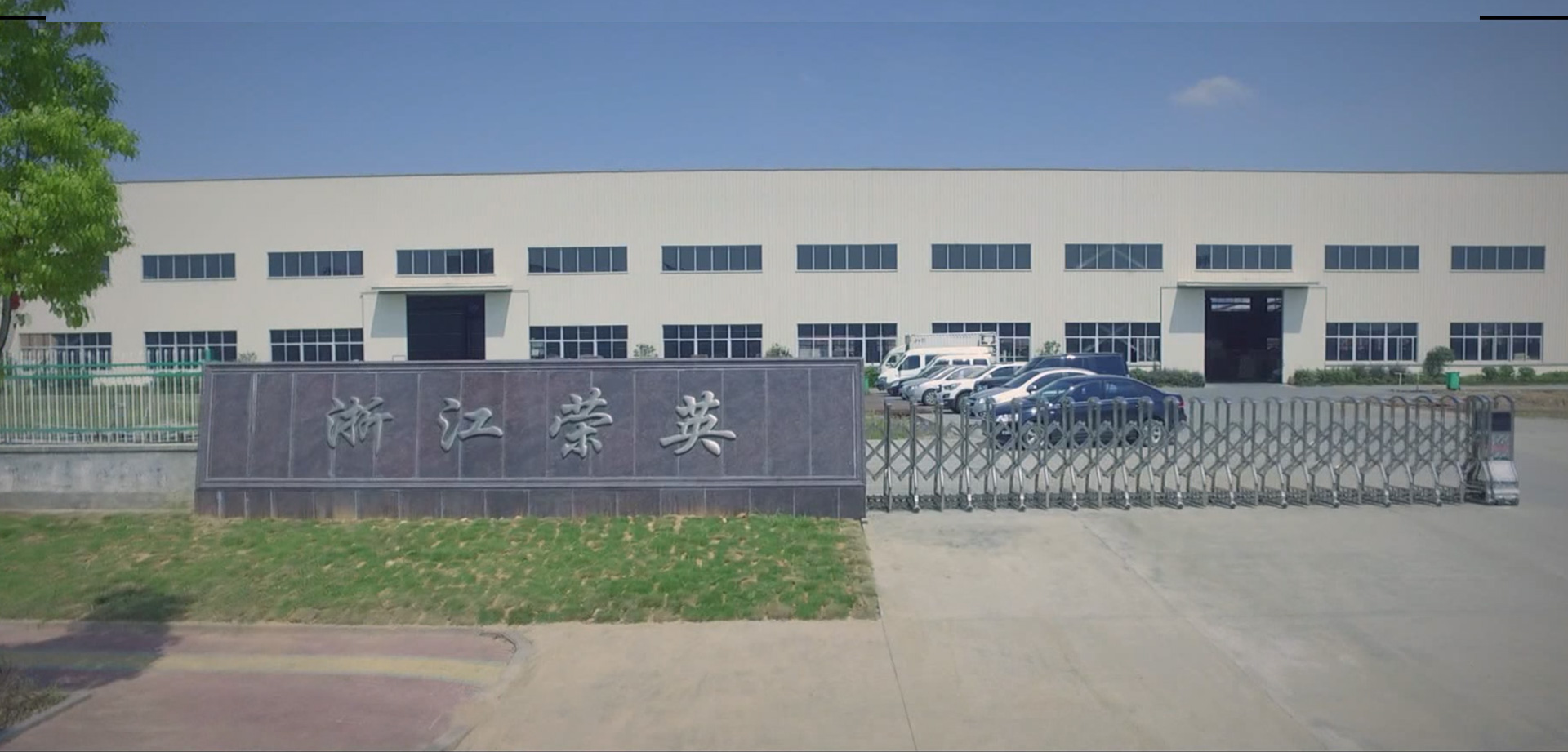
As China Service Wedge Brake Chamber Manufacturers and Service Wedge Brake Chamber Suppliers, Zhejiang Rongzhan Machinery Co., Ltd. specialize in the production of spring brake chambers and service brake chambers for trucks and trailers. Backed by stable production capacity, strict quality control systems, and extensive export experience, our products are widely supplied to overseas markets and OEM customers worldwide. Rongzhan is committed to reliable quality, consistent performance, and long-term partnerships. We provide customers with cost-effective solutions and dependable service.
-
 0Year Established
 -
 0+Number of Employees
 -
 0SetsAnnual Production Volume
 -
0SetsAnnual Export Volume
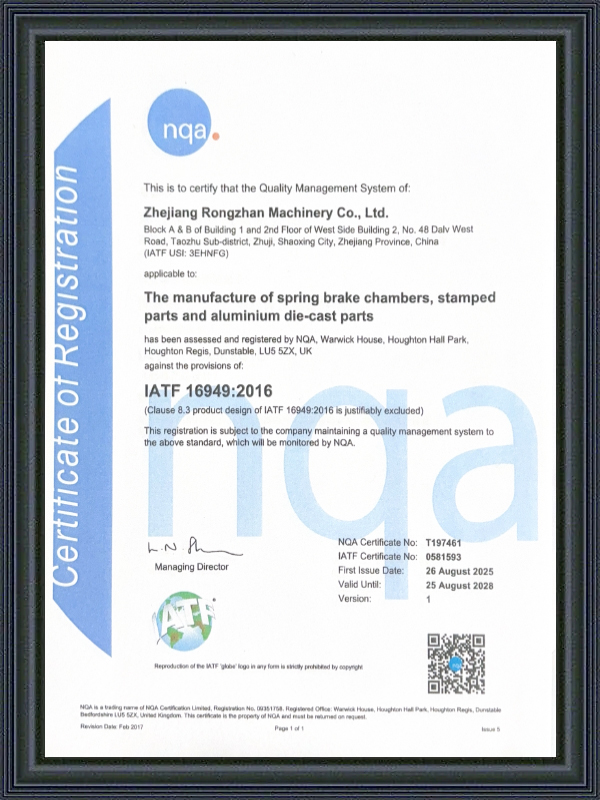
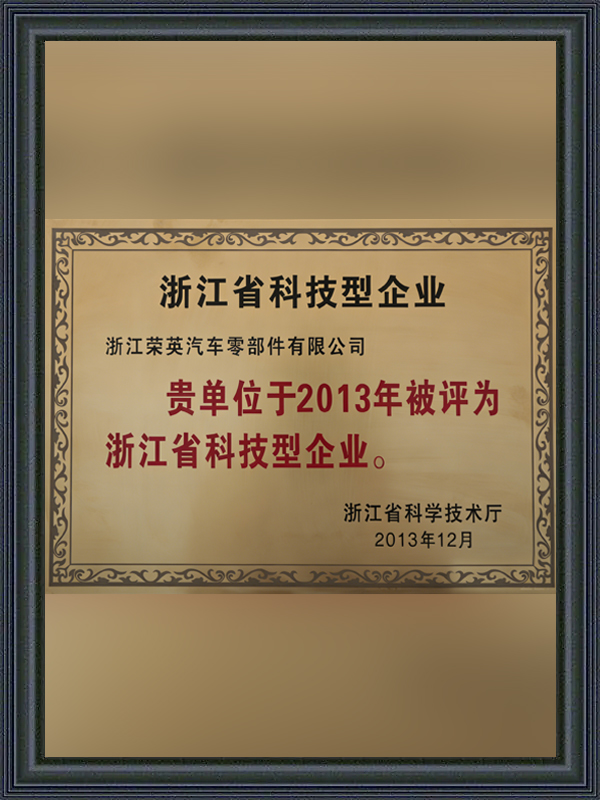
Certificate Of Honor
News
-
If you are qualifying a wedge brake chamber factory, settle five things before you talk about price: control over the wedge and roller components, test data produced on the wedge platform itself, pre-delivery inspection discipline, written interface dimensions, and the ability to repeat the same pa...
-
Two suppliers quote the same Type 20 service wedge brake chamber, and one is 20 percent cheaper. Six months later, the fleet that took the cheaper quote is replacing chambers early, re-adjusting stroke and paying freight twice. The saving never appeared on the invoice. It hid in the diaphragm compo...
-
Every S-Cam brake chamber you buy, whether you are a fleet maintenance director or an OEM purchasing engineer, is a bet on the factory that built it. The same Type 24 or Type 30 part number can behave very differently depending on the quality of the aluminum housing, the diaphragm compound, and the...
Service Wedge Brake Chamber Industry knowledge
Structural Differentiation: Service Wedge Brake Chambers Versus Spring Wedge Brake Chambers
Pneumatic foundation brakes on commercial transport vehicles rely on targeted actuator designs to convert air pressure into linear mechanical thrust. Within wedge-actuated braking systems, which utilize direct linear force transmission via an internal wedge and roller assembly rather than an external rotating camshaft, two distinct categories of actuators are employed depending on the operational function required. These are the service wedge brake chamber and the spring wedge brake chamber. While both units interface with identical internal wheel-end pistons to expand the brake shoes against the drum, their internal hardware architecture, housing configurations, and safety features are engineered for entirely separate operational goals. Choosing the correct component demands a thorough understanding of their structural differences, compression mechanics, and internal sealing paths. As an established global manufacturer of commercial vehicle brake system components, Zhejiang Rongzhan Machinery Co., Ltd. applies strict quality control systems to produce both service and spring configurations for commercial vehicles, trailers, and specialized transport applications worldwide.
Single-Cavity Pressure Architecture of the Service Variant
The structural layout of a service wedge brake chamber is defined by its single-cavity design, engineered exclusively to provide controlled deceleration when the vehicle is in motion. This chamber consists of a single forward housing shell and a matching cover plate, which clamp a single flexible elastomeric diaphragm or localized sealing plate between their peripheral flanges. There are no secondary emergency sections or mechanical storage springs integrated into this unit. When the driver depresses the brake pedal, compressed air enters the single pressure port, fills the internal cavity, and pushes the pressure plate forward, driving the pushrod and attached wedge directly into the brake caliper roller assembly. Because it lacks a secondary chamber, the service variant features a short, lightweight exterior profile that fits easily into space-constrained steer axle assemblies and low-clearance trailer hubs where secondary parking functionality is managed by adjacent axles.
| Structural Parameter | Service Wedge Brake Chamber | Spring Wedge Brake Chamber |
| Internal Cavity Configuration | Single operational chamber (Service only) | Dual tandem chambers (Service + Parking/Emergency) |
| Mechanical Power Spring | Absent; relies strictly on air and light return spring | Present; heavy-duty high-tensile steel coil spring |
| Total Housing Length | Short, compact axial depth profile | Extended axial depth to store compressed spring |
| Pneumatic Port Count | One input port for service brake application | Two input ports (One service line, one parking line) |
Dual-Chamber Tandem Construction of the Spring Variant
In contrast to the single-cavity model, a spring wedge brake chamber features a dual-chamber tandem construction that combines service braking with mechanical emergency and parking functionality. This actuator incorporates an extended rear housing section welded or securely double-clamped to the front service section, creating two distinct, isolated pressure zones separated by a center isolation wall. The front portion functions identically to a standard service chamber, utilizing air pressure to move the pushrod during normal traffic conditions. The rear section, however, houses a massive, high-tensile steel power spring held under thousands of pounds of mechanical compression by a specialized pressure plate. This rear section requires an independent secondary air inlet port to supply constant system pressure, keeping the heavy spring compressed during normal driving. If air pressure drops completely due to a pneumatic failure, or if the driver pulls the parking valve, the air exhausts, allowing the mechanical spring to expand and drive the internal push tubes forward to lock the wheels mechanically.
Mechanical Caging Systems and Service Access Ports
The presence of the high-tensile power spring inside the spring wedge brake chamber introduces a major structural difference regarding maintenance and safety features: the mechanical caging system. Because a compressed emergency spring stores massive potential energy, servicing the foundation brakes or towing a disabled vehicle with a dead air system requires a mechanical release mechanism. The spring variant features a built-in release bolt or a dedicated access port in the rear cap where a specialized threaded caging tool can be inserted. Winding this bolt clockwise pulls the internal pressure plate backward, mechanically locking the spring in a compressed state so the pushrod can retract. The service wedge brake chamber completely lacks these caging components, release bolts, and rear access access holes, as its internal return spring is a light-gauge wire model designed solely to pull the pressure plate back to center when the service air exhausts, posing no explosive mechanical safety risks during standard workshop disassembly.
| Mechanical Feature | Service Chamber Components | Spring Chamber Components |
| Caging Bolt Assembly | Not required; zero stored mechanical energy | Mandatory threaded release bolt or insertion tool |
| Internal Return Spring | Light-duty gauge wire for plate retraction | Heavy duty multi-stage coils + service return spring |
| Weight Profile Per Wheel | Minimized mass; reduces unsprung axle weight | Substantial mass due to steel spring and tandem shell |
Internal Sealing Paths and Center Wall Isolators
Because the spring wedge brake chamber must manage two separate air supplies simultaneously, its internal sealing configuration is far more intricate than that of a service wedge brake chamber. The center isolation wall of the spring model contains precision-machined bores fitted with low-friction internal O-rings or specialized lip seals. These seals must prevent compressed air from cross-leaking between the service line and the parking line, as cross-leakage can cause the parking brakes to drag or prevent the service brakes from releasing properly. The service wedge brake chamber contains no center walls, internal push tubes, or sliding bypass seals. Its sealing requirements are restricted to the outer perimeter flange diaphragm, simplifying the internal maintenance path and reducing potential structural leak points across long-distance service cycles.
Axle Positioning, Fleet Safety Logic, and Global Deployment
These structural variances dictate exactly where each chamber type is deployed across a commercial vehicle's axle configurations. Service wedge brake chambers are primarily installed on front steer axles, where parking brakes are omitted to prevent steering lockup risks, or on specific trailer axles within multi-axle sets that do not require parking retention. Spring wedge brake chambers are mandatory on rear drive axles and primary trailer axles to fulfill legal emergency stopping and stationary parking requirements. Zhejiang Rongzhan Machinery Co., Ltd. utilizes its stable production capacity and extensive export experience to supply both cost-effective, dependable variations to overseas markets and OEM customers worldwide, ensuring that each type fits perfectly with the vehicle's safety logic and spatial layout rules.
FAQ
Q: Why does the single-cavity design of a service wedge brake chamber exclude the internal caging bolt assembly found in spring variants?
A: A service wedge brake chamber operates strictly on pneumatic pressure and features no stored mechanical energy from an emergency parking spring. Because there is no high-tensile power spring to hold under compression or mechanically release for vehicle towing, the chamber completely omits caging bolts, release tools, and rear access ports, simplifying workshop disassembly and maintenance.
Q: How does the short axial depth profile of a service wedge brake chamber benefit front steer axle packaging on commercial trucks?
A: Front steer axles require maximum clearance for tight wheel turning angles and must avoid interference with steering linkages and suspension joints. Because the service variant lacks an extended rear spring housing section, its compact axial footprint fits neatly within tight wheel-end envelopes without adding unnecessary unsprung weight or restricting steering geometry.
Q: What internal component ensures the pushrod of a service wedge brake chamber fully retracts when the driver releases the brake pedal?
A: Since it lacks a heavy mechanical parking section, a service wedge brake chamber relies on a built-in, light-gauge wire return spring positioned inside the single forward housing. When the compressed air exhausts back through the foot valve, this spring immediately pulls the pressure plate and pushrod back to their rest position, preventing the internal wedge from dragging against the wheel-end roller assembly.
Q: Why does a service wedge brake chamber present fewer potential structural air leak paths than a spring tandem chamber?
A: A spring wedge brake chamber features a complex center isolation wall with sliding seals to prevent cross-leakage between the service and parking air lines. In contrast, a service wedge brake chamber features a simplified single-port network with no internal walls or push tubes, confining its sealing boundary strictly to the outer perimeter flange diaphragm, which inherently lowers the risk of internal pneumatic bypassing over long service intervals.
Q: How does Zhejiang Rongzhan Machinery Co., Ltd. ensure the outer perimeter flange diaphragm of its service wedge brake chamber resists fatigue during high-frequency cycling?
A: Zhejiang Rongzhan Machinery Co., Ltd. applies strict quality control systems and utilizes premium elastomeric compounds that maintain consistent flexural elasticity under temperature extremes. This precise manufacturing standard prevents the diaphragm from hardening or developing micro-fissures during repetitive application cycles, providing overseas markets and OEM customers with a highly dependable, cost-effective service actuator.

- WHY US
- Company Profile
- Certifications
- News
- PRODUCTS
- S-Cam Type Brake Chamber
- DISC Brake Chamber
- Wedge Brake Chamber
- Piggyback Brake Chamber
- Brake Chamber Repair Kits
- MANUFACTURING
- Customer Service
- Factory Tour
-
-
No.90 Zhancheng Avenue, Zhuji City, Zhejiang Province, China

-
rongzhan@zjrongzhan.com / judith@zjrongzhan.com

-
+86-15258814607

-
- CONTACT


