

 русский
  Español
  عربى
عربى 

INQUIRY NOW




RONGZHAN
BRAKE COMPONENTS
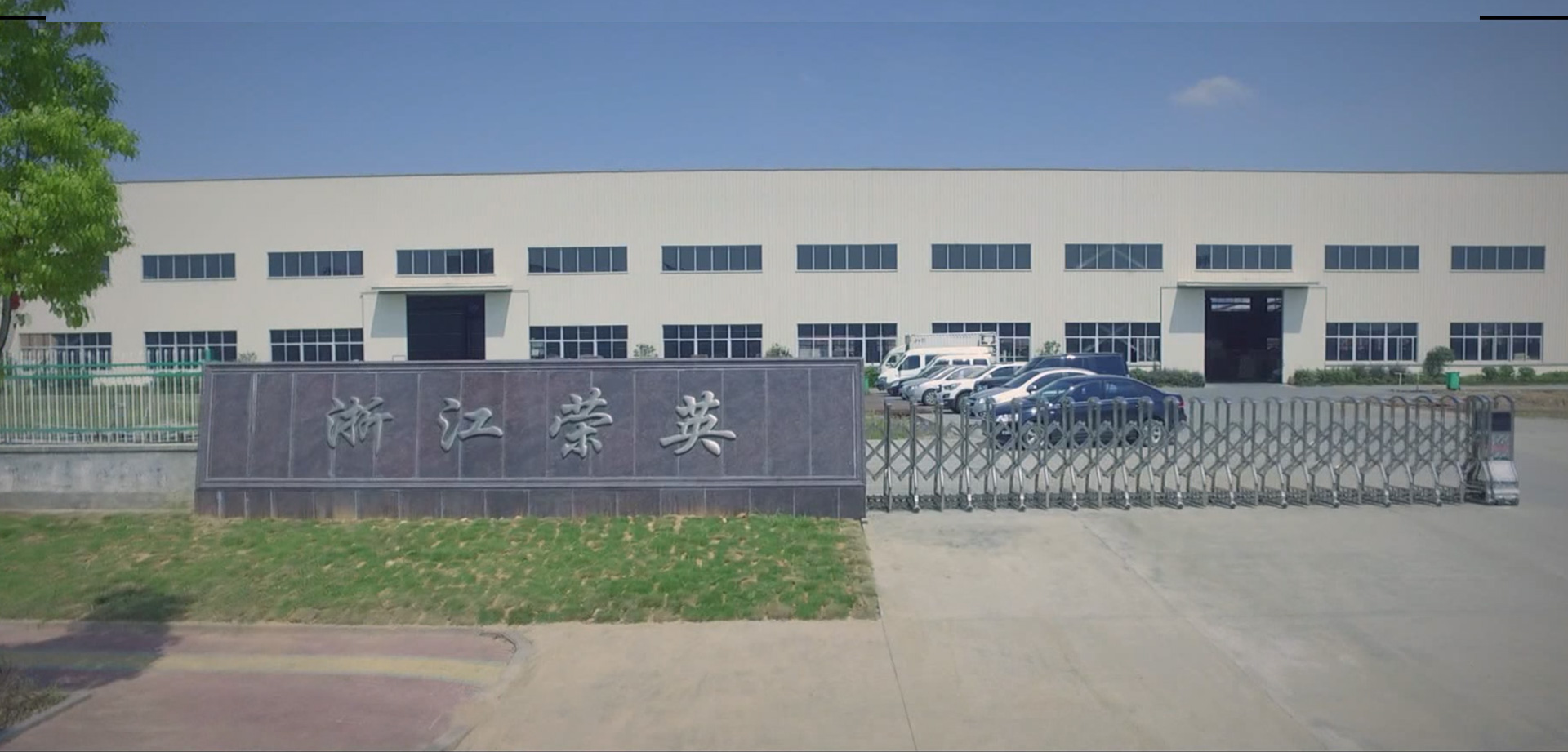
As China Long Stroke Piggyback Manufacturers and Long Stroke Piggyback Suppliers, Zhejiang Rongzhan Machinery Co., Ltd. specialize in the production of spring brake chambers and service brake chambers for trucks and trailers. Backed by stable production capacity, strict quality control systems, and extensive export experience, our products are widely supplied to overseas markets and OEM customers worldwide. Rongzhan is committed to reliable quality, consistent performance, and long-term partnerships. We provide customers with cost-effective solutions and dependable service.
-
 0Year Established
 -
 0+Number of Employees
 -
 0SetsAnnual Production Volume
 -
0SetsAnnual Export Volume
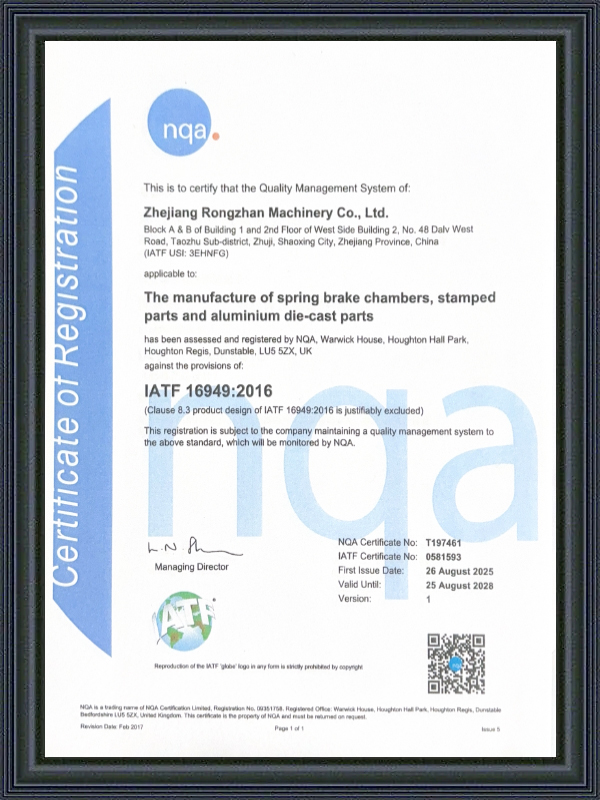
Certificate Of Honor

News
-
If you are qualifying a wedge brake chamber factory, settle five things before you talk about price: control over the wedge and roller components, test data produced on the wedge platform itself, pre-delivery inspection discipline, written interface dimensions, and the ability to repeat the same pa...
-
Two suppliers quote the same Type 20 service wedge brake chamber, and one is 20 percent cheaper. Six months later, the fleet that took the cheaper quote is replacing chambers early, re-adjusting stroke and paying freight twice. The saving never appeared on the invoice. It hid in the diaphragm compo...
-
Every S-Cam brake chamber you buy, whether you are a fleet maintenance director or an OEM purchasing engineer, is a bet on the factory that built it. The same Type 24 or Type 30 part number can behave very differently depending on the quality of the aluminum housing, the diaphragm compound, and the...
Long Stroke Piggyback Industry knowledge
Mechanical Compatibility Analysis: Long Stroke Piggyback Modules on Standard Stroke Service Bases
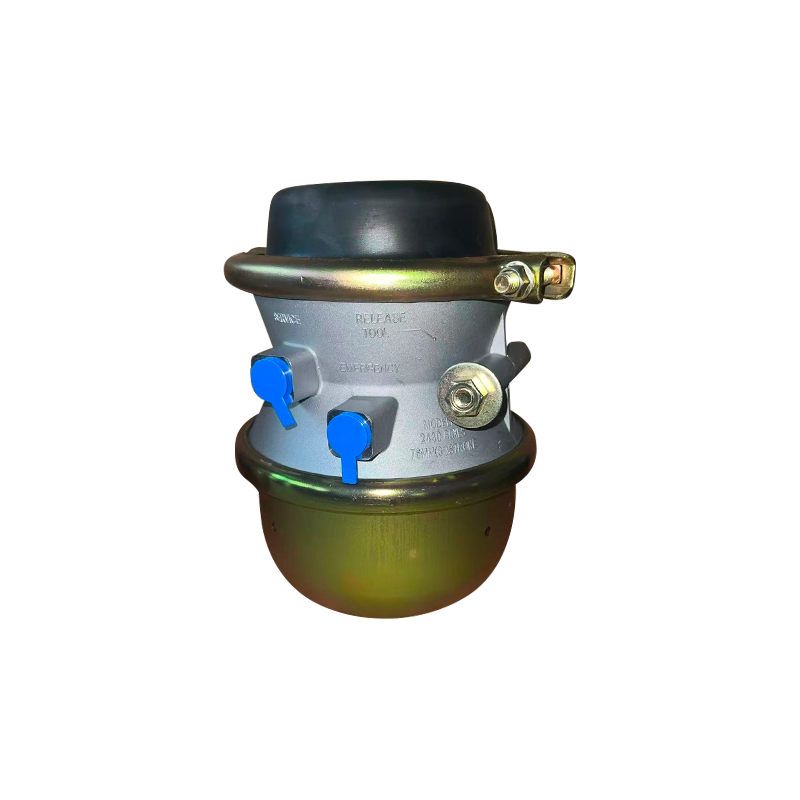
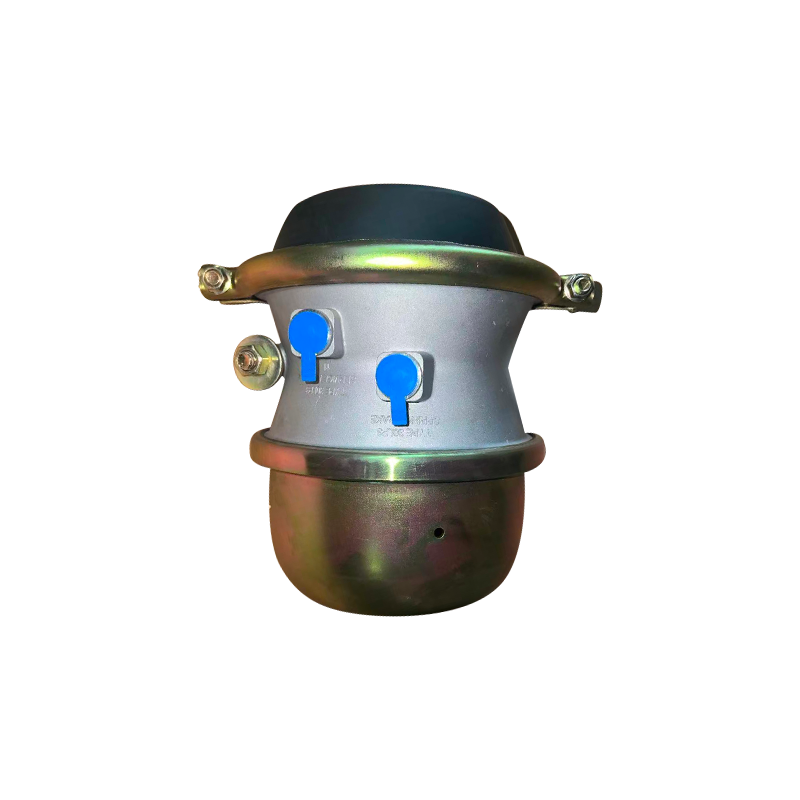
Pneumatic brake systems on commercial transport vehicles rely on precise component alignment across the service and parking brake sub-assemblies. A common technical query among fleet maintenance professionals and parts distributors revolves around mixing components with different stroke configurations. Specifically, the question is whether a long stroke piggyback module can be installed onto a standard stroke service brake chamber base. A piggyback module represents the rear tandem section of an actuator containing the high-force emergency parking spring and the center wall partition. Because long stroke and standard stroke systems utilize different housing dimensions and internal travel distances, joining these mismatched components introduces serious mechanical anomalies.
Dimensional and Geometric Incompatibilities Between Housing Profiles
The primary barrier to installing a long stroke piggyback onto a standard stroke service base is the physical geometry of the housing shells. Long stroke brake chambers are engineered with a deeper center body pocket and a more squared-embossed outer casing to accommodate a longer linear pushrod travel profile, which typically reaches 3.0 inches. Standard stroke service bases utilize a shorter, more tapered shell designed for a maximum physical travel limit of 2.5 inches. When attempting to mate a long stroke piggyback module onto a standard service base, the perimeter flange alignment and mounting clamp seat profiles often do not match precisely. This mismatch can prevent the heavy-duty external clamp ring from achieving complete circumferential contact, which introduces a high risk of pneumatic pressure leaks or structural joint failure when the parking brake is applied under heavy load conditions.
| Component Element | Standard Stroke Service Base Parameters | Long Stroke Piggyback Module Parameters |
| Maximum Design Travel Path | 2.5 Inches total physical stroke limit | 3.0 Inches total intended pushrod travel |
| Casing Pocket Geometry | Tapered shell with shallow axial depth | Squared-embossed edge with extended deep pocket |
| Diaphragm Outer Diameter | Standard radius optimized for 2.0-inch adjustment | Modified radius optimized for 2.5-inch adjustment |
| Legal Re-adjustment Limit | 2.0 Inches maximum operational stroke | 2.5 Inches maximum operational stroke |
Internal Push Tube Travel Misalignment and Diaphragm Strain
Even if a technician forces the external clamp ring to close over the mismatched sections, the internal moving parts will suffer from severe stroke misalignment. The internal push tube of a long stroke piggyback is physically longer to allow the parking spring to extend further into the actuator assembly during an emergency pressure drop. If this long push tube is forced into a standard stroke service base, it will constantly press against the service pressure plate even when the brakes are fully released. This constant internal preload prevents the service diaphragm from returning to its true zero-point rest position. Consequently, the service diaphragm remains under localized structural tension, which accelerates elastomeric fatigue and can cause premature material tearing or sudden pressure bypassing during routine application cycles.
Operational Consequences of Asymmetrical Foundation Brake Stroke
Mixing a long stroke piggyback with a standard service base creates a highly irregular operational profile when the vehicle is in motion. During high-frequency braking cycles, the foundation brake hardware expands thermally, causing the brake drums or rotors to stretch. Because the service base is physically limited to a standard stroke profile, it cannot utilize the extended travel capacity of the long stroke piggyback. If the friction linings wear down or the drum expands significantly, the service pushrod will bottom out against the shallow standard housing step long before the parking spring's push tubes can deliver effective mechanical force. This limitation creates localized brake force reduction and uneven axle deceleration, which compromises combination vehicle handling during downhill transport operations.
| Mismatched Assembly Risk | Impact on Service Brake Operation | Impact on Parking/Emergency Operation |
| Preloaded Push Tube Contact | Diaphragm remains under continuous tension, accelerating wear | Spring cannot fully compress, reducing parking hold force |
| Housing Flange Variance | Clamp ring looseness leading to unexpected pressure loss | Misaligned center wall seals cause internal air cross-leaking |
| Asymmetrical Travel Boundary | Actuator bottoms out prematurely during high-heat drum expansion | Uneven mechanical stroke across the single axle assembly |
Internal Cross-Leakage and Pressure Balancing Failures
A secondary tandem actuator requires perfect sealing along its center isolation wall to prevent compressed air from cross-leaking between the independent service and parking air lines. Because the sealing interfaces and center wall tolerances are uniquely calibrated for uniform stroke categories, mating mismatched components can compromise the internal O-ring or lip-seal seats. If the center wall alignment is distorted by an incompatible service base flange, air pressure from the parking line can migrate into the service cavity. This internal cross-leakage can cause the brake shoes to drag continuously against the drum, creating extreme localized heat buildup, glazing the friction linings, and significantly lowering fuel economy metrics across the fleet transport route.
Maintenance Compliance tracking and OEM Safety Standards
International commercial vehicle safety regulations across major export markets require strict uniform categorization of all axle actuators to simplify maintenance tracking and roadside compliance inspections. Regulatory inspectors check for visible stroke indicator tags or distinct housing shapes to ensure that all chambers on a single axle maintain identical stroke limits. Installing a long stroke piggyback onto a standard base creates a hybrid component that defies standard classification, leading to immediate out-of-service violations during regulatory reviews. Zhejiang Rongzhan Machinery Co., Ltd. utilizes its extensive export experience and stable production capacity to provide clearly labeled, fully integrated long stroke assemblies and matching replacement parts, helping global distributors avoid compliance risks through verified original equipment standards.
FAQ
Q: Why does mating a long stroke piggyback module with a standard stroke service base create a severe geometric mismatch during assembly?
A: Long stroke piggyback modules are specifically engineered with deeper center pockets and squared-embossed casing edges to accommodate an extended 3.0-inch pushrod travel path, whereas standard service bases feature a shallower, tapered shell built for a 2.5-inch limit. This structural variance prevents the heavy-duty external clamp ring from seating uniformly, which introduces a high risk of localized flange gaps and structural joint failure under high pressure.
Q: How does the extended internal push tube of a long stroke piggyback affect a standard stroke service diaphragm if forced into the same assembly?
A: The internal push tube of the long stroke piggyback is physically longer to match the extended travel boundaries of the emergency spring. If forced into a shallow standard base, this tube continuously preloads the service pressure plate, preventing the service diaphragm from returning to its true zero-point rest position and causing continuous material strain that accelerates elastomeric fatigue or tearing.
Q: What operational danger arises when a hybrid actuator containing a long stroke piggyback and standard service base encounters high-heat drum expansion?
A: When a brake drum heats up and expands radially outward, the pushrod must travel further to close the increased shoe clearance gap. Because the hybrid actuator is physically limited by the standard service housing step, the service pushrod will bottom out prematurely during heavy application, causing a sudden drop in deceleration force while the long stroke parking mechanism remains unable to assist.
Q: Can mixing a long stroke piggyback module with an incompatible service base cause internal air line cross-leakage?
A: Yes, because the center isolation wall sealing seats are uniquely calibrated for uniform stroke categories, forcing a mismatched alignment can distort the internal O-ring and lip-seal tolerances. This distortion allows high-pressure air from the parking lines to cross over into the service cavity, leading to continuous brake shoe drag, excessive lining glazing, and increased vehicle rolling resistance.
Q: How does choosing fully integrated long stroke assemblies from Zhejiang Rongzhan Machinery Co., Ltd. protect fleets from regulatory roadside compliance violations?
A: Commercial transport inspectors verify axle compliance by checking for uniform stroke shapes or visible indicator tags on all chambers across a single axle group. Installing a mixed hybrid component defies standard classification and triggers immediate out-of-service safety violations, making the fully certified, uniform long stroke solutions from Zhejiang Rongzhan Machinery Co., Ltd. essential for maintaining clean fleet inspection tracking.

- WHY US
- Company Profile
- Certifications
- News
- PRODUCTS
- S-Cam Type Brake Chamber
- DISC Brake Chamber
- Wedge Brake Chamber
- Piggyback Brake Chamber
- Brake Chamber Repair Kits
- MANUFACTURING
- Customer Service
- Factory Tour
-
-
No.90 Zhancheng Avenue, Zhuji City, Zhejiang Province, China

-
rongzhan@zjrongzhan.com / judith@zjrongzhan.com

-
+86-15258814607

-
- CONTACT


