

 русский
  Español
  عربى
عربى 

INQUIRY NOW

-
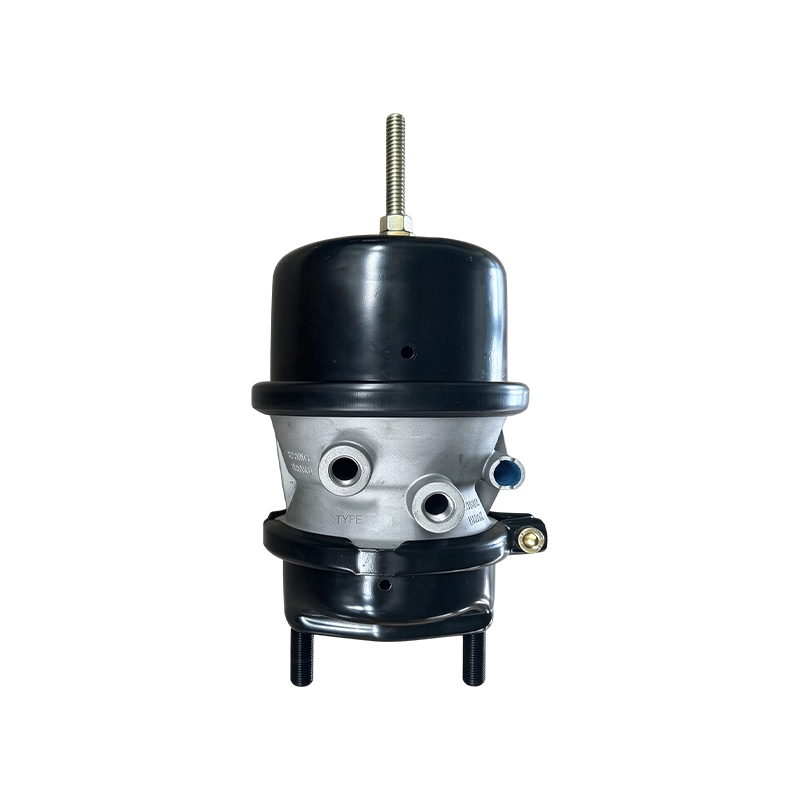



T16/24 Clevis-Fork Disc Brake Chamber
-
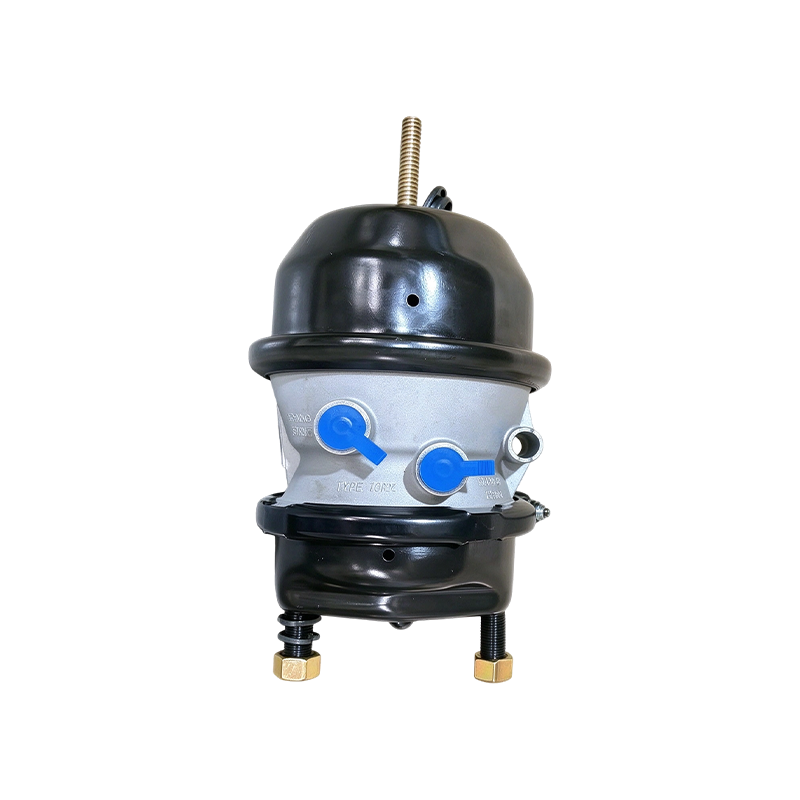
T16/24 Manual-Release Disc Brake Chamber
-
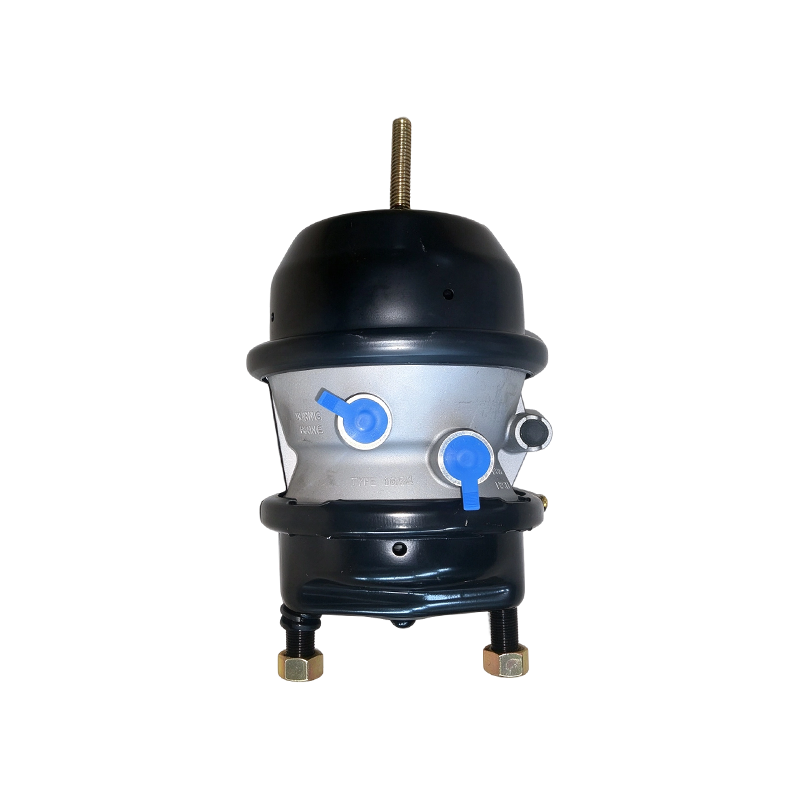
T18/24 Long-Stroke Manual-Release Disc Brake Chamber
-
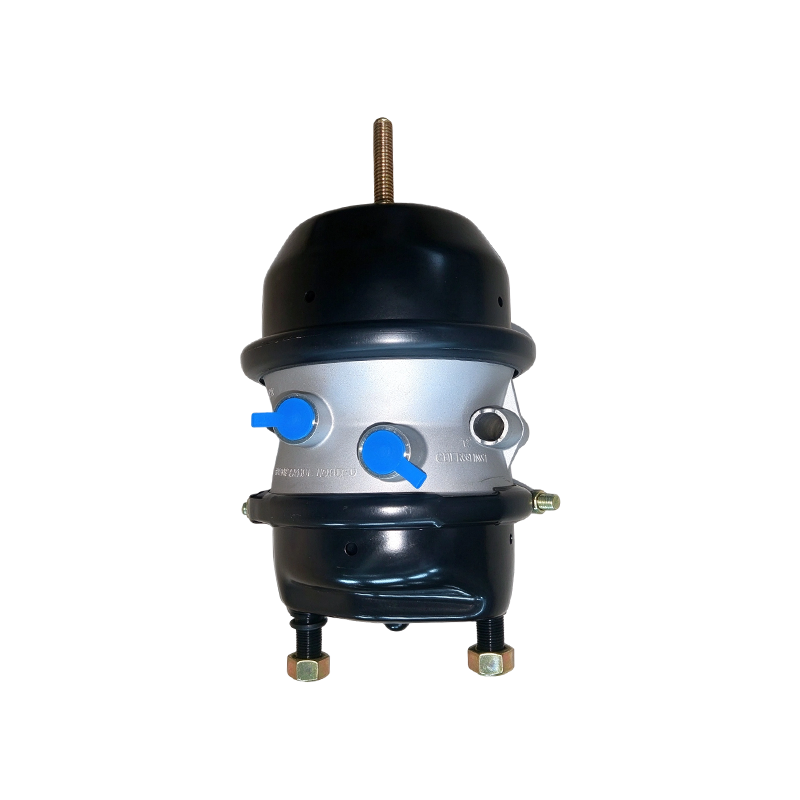
T20/24 Heavy-Duty Manual-Release Disc Brake Chamber
-
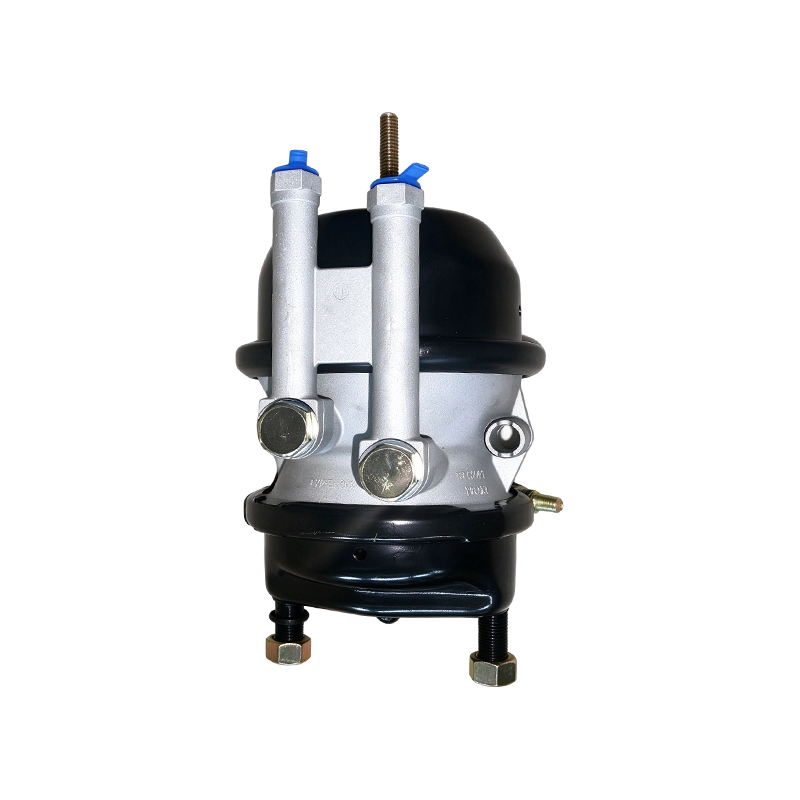
T16/24 Dual-Rod Disc Brake Chamber
-
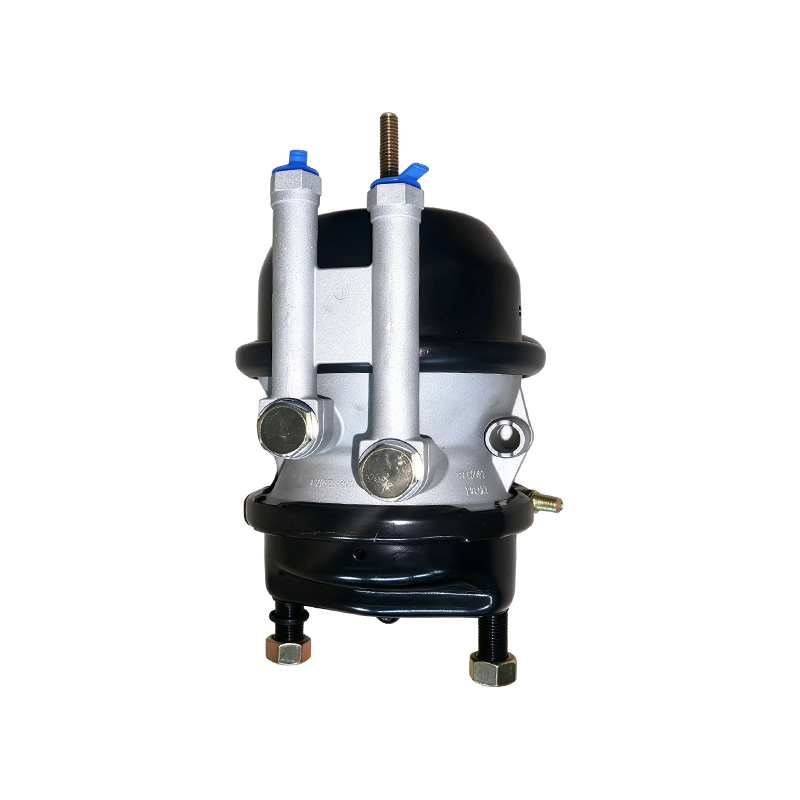
T20 Single Disc Brake Chamber
The DD Disc Brake Chamber is a high-performance braking component specifically designed for disc brake systems. Primarily installed on a vehicle's front axle or axle assembly, it connects to the slack adjuster via a yoke and plays a direct role in the vehicle's braking operations. During the braking process, compressed air acts upon the diaphragm or piston located in the upper chamber; this action drives the pushrod—which, in turn, actuates the brake caliper—thereby achieving precise and efficient transmission of braking force. The product offers a variety of stroke options, distinguished by the shape of the air port on the aluminum center housing: a square air port indicates a long-stroke configuration, suitable for heavy-duty trucks with high load capacities and high-specification vehicles; a circular air port indicates a standard-stroke configuration, suitable for most vehicle models.
The design of this brake chamber prioritizes both ease of installation and convenience of maintenance. Certain models feature clamp-band or sealed connection mechanisms, allowing users to select the appropriate method based on available chassis space and maintenance requirements; this ensures a secure connection while facilitating rapid assembly, disassembly, and component replacement. Manufactured using high-precision processes, the product features superior internal sealing that prevents air leakage and the ingress of contaminants, thereby extending its service life and ensuring the stable delivery of braking force—even under high-intensity operation, frequent start-stop cycles, or complex working conditions.
RONGZHAN
BRAKE COMPONENTS
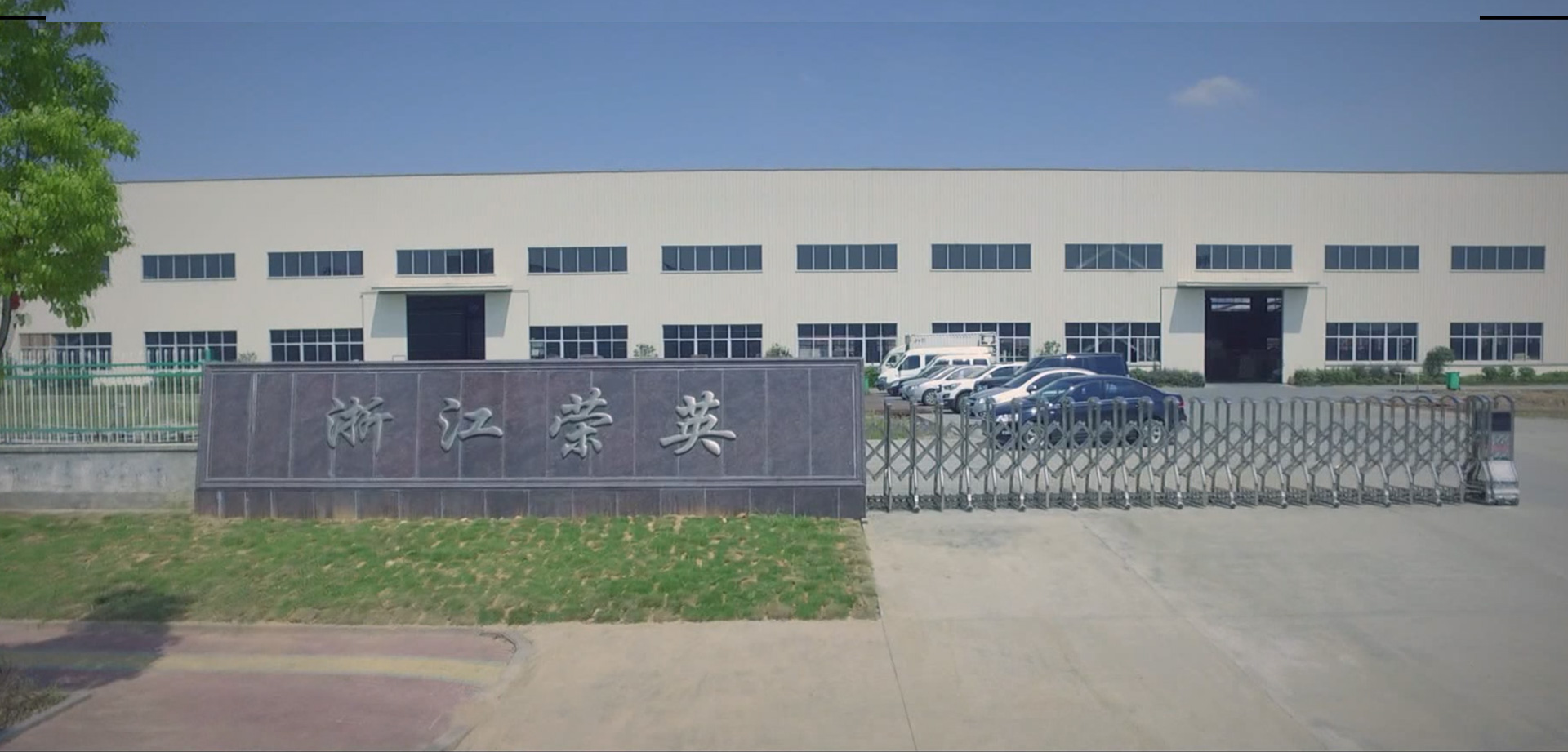
As China DD Disc Brake Chamber Manufacturers and DD Disc Brake Chamber Suppliers, Zhejiang Rongzhan Machinery Co., Ltd. specialize in the production of spring brake chambers and service brake chambers for trucks and trailers. Backed by stable production capacity, strict quality control systems, and extensive export experience, our products are widely supplied to overseas markets and OEM customers worldwide. Rongzhan is committed to reliable quality, consistent performance, and long-term partnerships. We provide customers with cost-effective solutions and dependable service.
-
 0Year Established
 -
 0+Number of Employees
 -
 0SetsAnnual Production Volume
 -
0SetsAnnual Export Volume
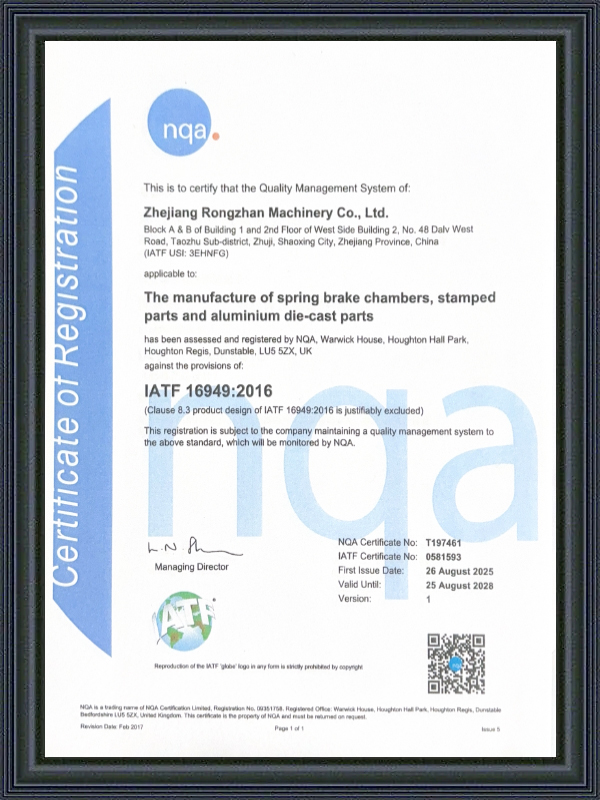
Certificate Of Honor

News
-
If you are qualifying a wedge brake chamber factory, settle five things before you talk about price: control over the wedge and roller components, test data produced on the wedge platform itself, pre-delivery inspection discipline, written interface dimensions, and the ability to repeat the same pa...
-
Two suppliers quote the same Type 20 service wedge brake chamber, and one is 20 percent cheaper. Six months later, the fleet that took the cheaper quote is replacing chambers early, re-adjusting stroke and paying freight twice. The saving never appeared on the invoice. It hid in the diaphragm compo...
-
Every S-Cam brake chamber you buy, whether you are a fleet maintenance director or an OEM purchasing engineer, is a bet on the factory that built it. The same Type 24 or Type 30 part number can behave very differently depending on the quality of the aluminum housing, the diaphragm compound, and the...
DD Disc Brake Chamber Industry knowledge
Fatigue Life and Cyclic Thresholds of Internal Power Springs in Professional DD Disc Brake Chambers
The operational durability of a commercial vehicle air brake system depends heavily on the fatigue life of its internal mechanical components. Within a dual-diaphragm disc brake actuator, commonly designated as a DD disc brake chamber, the internal power spring, or parking spring, is the single most highly stressed component. This spring remains under massive mechanical compression during normal driving conditions and expands to apply the parking or emergency brakes when air pressure is removed. Because these components are subject to constant vibrations, thermal cycling, and structural loading, understanding the exact lifecycle thresholds and the engineering factors that govern spring fatigue is vital for fleet safety management. As a global manufacturer of commercial vehicle brake system components, Zhejiang Rongzhan Machinery Co., Ltd. analyzes these stress factors to produce dependable DD disc brake chamber units that meet international durability mandates.
Standard Lifecycle Thresholds and Industry Benchmarks
In professional manufacturing, the endurance of a heavy-duty power spring is measured through rigorous mechanical lifecycle testing, where the spring is repeatedly compressed and released until material failure occurs. A standard industrial power spring used in basic configurations is typically rated to withstand approximately two hundred thousand full compression cycles before micro-fractures compromise its structural retention. However, professional-grade DD disc brake chamber models are engineered to far exceed these baseline requirements, often achieving a fatigue life between three hundred thousand and five hundred thousand full stroke cycles under laboratory conditions. This extended threshold ensures that the spring can survive years of daily parking applications and emergency pressure drops without experiencing a sudden mechanical collapse or a reduction in its rated clamping force.
| Spring Quality Tier | Minimum Cycle Rating | Primary Applications | Expected Operational Lifespan |
| Standard Aftermarket | 200,000 Cycles | Light-duty local delivery trailers | Variable based on regional climate |
| Professional OEM Grade | 300,000 to 500,000 Cycles | Long-haul heavy tractors and trailers | Extended service life under heavy load |
| Severe Duty Vocational | Over 500,000 Cycles | Mining, logging, and construction transport | Maximum fatigue survival parameters |
Metallurgical Processing and Micro-Stress Management
Achieving a high cyclic threshold requires precise metallurgical control during the spring manufacturing process rather than simply increasing the thickness of the wire. Power springs are coiled from high-grade chrome silicon or oil-tempered steel wire that possesses an optimum balance of tensile strength and ductility. Following the initial coiling phase, professional manufacturers implement a process known as shot-peening, where the spring surface is bombarded with tiny steel spherical shot at high velocities. This cold-working process creates a residual compressive stress layer on the wire surface, which acts as a barrier that prevents microscopic surface cracks from propagating into major structural fractures during high-frequency compression cycles. Zhejiang Rongzhan Machinery Co., Ltd. incorporates these precise stress-relief methodologies within its strict quality control systems to safeguard component reliability for international markets.
The Impact of Operational Stroke Length on Mechanical Fatigue
The actual number of cycles a power spring can withstand in the field is directly linked to the operational stroke length of the disc brake system. Because air disc brakes utilize internal caliper magnification mechanisms, they operate with a shorter, more constrained pushrod stroke than traditional drum brakes. This shorter travel displacement means the power spring inside a DD disc brake chamber does not expand completely to its free uncoiled length during standard parking applications, limiting the structural deflection range of the steel wire. By keeping the working stroke within a tight, optimized physical boundary, the internal stress range per cycle is lowered, which preserves the molecular matrix of the metal and allows the spring to achieve a significantly higher total cycle count before experiencing fatigue-related relaxation.
| Engineering Factor | Effect on Internal Spring Fatigue | Mitigation Strategy |
| Surface Micro-Cracks | Accelerates structural failure under tension | Precision shot-peening to build compressive layer |
| Extended Stroke Deflection | Increases internal stress per application | Integration with short-stroke air disc calipers |
| Corrosive Moisture Ingress | Causes pitting corrosion and localized snapping | Internal e-coating and optimized housing drainage |
| Thermal Softening | Lowers spring force retention capacity | Multi-stage oil tempering and alloy blending |
Environmental Factors and Environmental Corrosion Protection
In real-world transport environments, mechanical cycling is not the only threat to spring longevity; environmental corrosion can significantly shorten a spring's expected lifecycle. When a vehicle operates in northern winter climates, road salt and moisture can enter the rear housing through the exhaust breather holes. If the steel wire is left unprotected, moisture causes pitting corrosion, which creates localized stress concentration points that can cause a high-tensile spring to snap prematurely, even if it has performed fewer than fifty thousand cycles. To prevent this environmental degradation, professional DD disc brake chamber units feature advanced internal coatings, such as electrodeposition e-coats or specialized epoxy finishes, that encapsulate the power spring. This protective barrier isolates the steel from corrosive elements, ensuring the component reaches its full mechanical cycle potential.
OEM Validation and System Alignment Compliance
Verifying that a DD disc brake chamber can reliably sustain hundreds of thousands of cycles requires continuous product testing and stable production capacity. OEM customers worldwide mandate that suppliers provide documented proof of compliance with international commercial vehicle safety standards. Proper vehicle alignment and correct pushrod length adjustments are also required to prevent side-loading forces from tilting the internal pressure plate, which can cause uneven spring wear. Zhejiang Rongzhan Machinery Co., Ltd. utilizes its extensive export experience to supply cost-effective, dependable solutions that match original equipment specifications, supporting long-term fleet partnerships through verified engineering compliance and uniform component performance.
FAQ
Q: What metallurgical processes enable the internal power spring of a professional DD disc brake chamber to surpass 300,000 stroke cycles without structural failure?
A: Professional-grade power springs undergo multi-stage oil tempering and specialized shot-peening treatments during manufacturing. This mechanical surface bombardment creates a uniform layer of residual compressive stress on the high-tensile chrome silicon wire, effectively blocking the initiation and propagation of microscopic surface cracks during continuous parking and emergency brake applications.
Q: Why does the shorter working stroke of an air disc system inherently extend the operational fatigue life of a DD disc brake chamber's parking spring?
A: Because air disc calipers rely on internal high-ratio eccentric levers, they require less pushrod travel to apply the brakes than traditional drum setups. This short-stroke requirement keeps the power spring within a highly constrained, optimized structural deflection zone, lowering the total stress range experienced by the steel wire per cycle and preserving its molecular matrix over a longer service period.
Q: How does internal moisture ingress degrade the cyclic durability of a double-diaphragm disc actuator, and how is this mitigated?
A: Road salt and moisture entering through housing breather holes cause pitting corrosion on unprotected steel, creating localized stress concentration points that can make a high-tensile spring snap prematurely. To prevent this environmental fatigue, professional units from Zhejiang Rongzhan Machinery Co., Ltd. utilize advanced electrodeposition e-coats or specialized protective barrier finishes to fully encapsulate and shield the power spring from corrosive elements.
Q: What are the operational consequences if external side-loading forces tilt the internal pressure plate inside a DD disc brake chamber during its actuation cycles?
A: If the pushrod is misaligned and introduces side-loading, the internal pressure plate tilts, causing uneven load distribution across the coils of the power spring. This uneven stress accelerates localized metal fatigue on one side of the spring and causes the internal push tubes to bind against the center isolation walls, reducing the actuator's mechanical output efficiency.
Q: How does Zhejiang Rongzhan Machinery Co., Ltd. validate the long-term cyclic performance of its exported DD disc brake chamber units for OEM customers?
A: Zhejiang Rongzhan Machinery Co., Ltd. subjects production samples to continuous automated mechanical cycle testing within its strict quality control systems to simulate years of heavy-duty vocational operation. This empirical validation ensures that all exported actuators maintain stable clamping force and structural integrity, fulfilling the rigorous compliance demands and safety benchmarks required by international OEM and fleet partnerships.

- WHY US
- Company Profile
- Certifications
- News
- PRODUCTS
- S-Cam Type Brake Chamber
- DISC Brake Chamber
- Wedge Brake Chamber
- Piggyback Brake Chamber
- Brake Chamber Repair Kits
- MANUFACTURING
- Customer Service
- Factory Tour
-
-
No.90 Zhancheng Avenue, Zhuji City, Zhejiang Province, China

-
rongzhan@zjrongzhan.com / judith@zjrongzhan.com

-
+86-15258814607

-
- CONTACT


