

 русский
 Español
 عربى



Evaluating an S-Cam Type Brake Chamber Factory: Essential Supplier Criteria
Content
Every S-Cam brake chamber you buy, whether you are a fleet maintenance director or an OEM purchasing engineer, is a bet on the factory that built it. The same Type 24 or Type 30 part number can behave very differently depending on the quality of the aluminum housing, the diaphragm compound, and the stroke control behind it. That is why supplier evaluation for an S-Cam type brake chamber factory should begin with process evidence, not price lists. The sections below outline what to verify before placing a full container order.
Why S-Cam Foundation Brakes Depend on the Chamber
An S-Cam brake converts the linear force of a brake chamber into rotation that spreads the brake shoes against the drum. When the driver presses the brake pedal, air pressure pushes the chamber diaphragm, the pushrod extends, and the slack adjuster rotates the S-cam, forcing the shoes outward to create braking torque. The chamber's effective area and stroke length therefore control how much force the foundation brake produces at a given system pressure.
Two specifications matter most when matching a chamber to a vehicle: type size and stroke. The type number corresponds to the effective diaphragm area in square inches, so a Type 20, Type 24, or Type 30 chamber delivers 20, 24, or 30 square inches of effective area respectively. Standard stroke chambers suit many service brake positions, but long-stroke chambers with up to 76.2 mm (3 in) of travel have become the preferred original equipment fitment on heavy vehicles because they maintain clamp force as the brake lining wears. The two common slack adjuster lengths are 5.5 in and 6 in, and chamber stroke must be compatible with the adjuster geometry.
Construction also matters. A single service chamber handles normal braking; a double-diaphragm (DD) spring chamber adds a mechanical spring that applies and holds the parking brake when air pressure is released. The spring is powerful enough to hold a loaded truck, so it must be caged correctly before any maintenance work, and the factory should mark the approved caging procedure on the chamber body. For a step-by-step explanation of the operating cycle, see what a brake chamber does in a commercial air brake system.
How to Audit an S-Cam Type Brake Chamber Factory
Short version: a factory earns your trust through certification, documented inspection, and reproducible test reports, not through empty claims. Start with IATF 16949. This automotive quality management standard is the baseline for export suppliers to Europe and North America because it requires controlled change management, risk analysis, and traceability from incoming material to finished goods.
Beyond the certificate, the audit evidence that matters can be organized into five areas.
| Audit area | What to check | Typical evidence |
|---|---|---|
| Quality system | IATF 16949 certificate, scope, and validity | Certificate and surveillance audit reports |
| Incoming material | Aluminum alloy, pushrod steel, diaphragm rubber compound | Mill certificates and material test reports |
| Production control | Die-casting, stamping, assembly line condition, key process parameters | Process flow chart and control plan |
| Final inspection | 100% pre-shipment inspection records, leak testing | Inspection records and leak test data |
| Design verification | Temperature range, endurance cycles, performance curves | Laboratory test reports |
Use these five areas as the first-round filter when you send an inquiry to a candidate factory. A supplier that cannot produce this documentation should not move to the next stage.
- Current IATF 16949 certificate with the correct scope.
- Product drawings with tolerance notes for housing, diaphragm, and pushrod.
- Rubber compound specification and surface treatment standard.
- Representative temperature, endurance, and sealing test reports.
- Packaging and marking plan for your market.
A factory with its own laboratory is a practical advantage because it can generate high- and low-temperature test reports, performance curves, and service-life data in days rather than weeks. You should also ask how the factory handles the two common field failure modes for S-Cam chambers: diaphragm rupture and pushrod corrosion. Ask for the rubber compound specification and the pushrod surface treatment standard. The supplier that answers with documents, not assurances, is the one worth visiting.
Remember that brake chambers are safety parts. In North America, FMVSS 121 sets performance requirements for the entire air brake system; in Europe, replacement components may be covered by type-approval frameworks such as ECE R90. The factory should state plainly which regulatory frameworks its products are engineered to meet. Use this as a filter in your first round of inquiries: a serious export factory will answer with part numbers, drawings, and test data rather than a one-line price quotation.
Why Vertical Integration Matters in a Brake Chamber Factory
Vertical integration is the strongest structural advantage an S-Cam type brake chamber factory can offer. When the manufacturer operates its own aluminum die-casting and stamping shops, it controls the housing, end caps, mounting brackets, and pushrods — the components most likely to cause air leaks and alignment problems. That control improves cost, delivery, and quality at the same time.
Zhejiang Rongzhan Machinery Co., Ltd. is a concrete example. The company, based in Zhejiang, China, operates internal die-casting and stamping workshops and describes this supply-chain control as the basis for competitive pricing while maintaining 100% pre-shipment inspection. Its company profile documents an annual capacity of more than 3,000,000 sets, which tells a buyer that volume orders and smaller mixed batches can both be absorbed without disrupting production flow.
Why this matters on the road: casting porosity is a root cause of air leaks in brake chambers, and stamping quality determines whether mounting brackets and pushrods stay aligned under millions of strokes. When one factory controls casting, stamping, assembly, and final testing, responsibility for a defect never disappears into a subcontractor gap.
Matching the Product Range to Your Axle Configurations
The practical rule is to define your part numbers by type, construction, and stroke, then compare them against the factory catalog. The main construction families for S-Cam brake chambers are single service chambers, double-diaphragm (DD) spring chambers, and sealed DP chambers.
| Family | Function | Typical application | Port / mounting examples |
|---|---|---|---|
| Single brake chamber | Service braking only | Steer axle or drive axle service position | M18 hole, standard mounting |
| DD brake chamber | Combined service and spring-applied parking/emergency braking | Drive axles and trailer axles | Welded clevis, long rod, long-stroke options |
| DP brake chamber | Sealed construction for demanding installations | Space-constrained or corrosion-prone axle positions | M22 port, Voss port |
A typical mixed-fleet bill of materials includes Type 16 or Type 20 single chambers on lighter front axles, Type 24 or Type 30 DD chambers on drive axles, and Type 30 long-stroke chambers where 3-inch travel is required. European fleets often specify sealed DP variants with a Voss or M22 port to avoid corrosion at threaded air connections. North American operations commonly pair Type 30 chambers with a 5.5-inch slack adjuster, while some heavy vocational vehicles use a 6-inch adjuster.
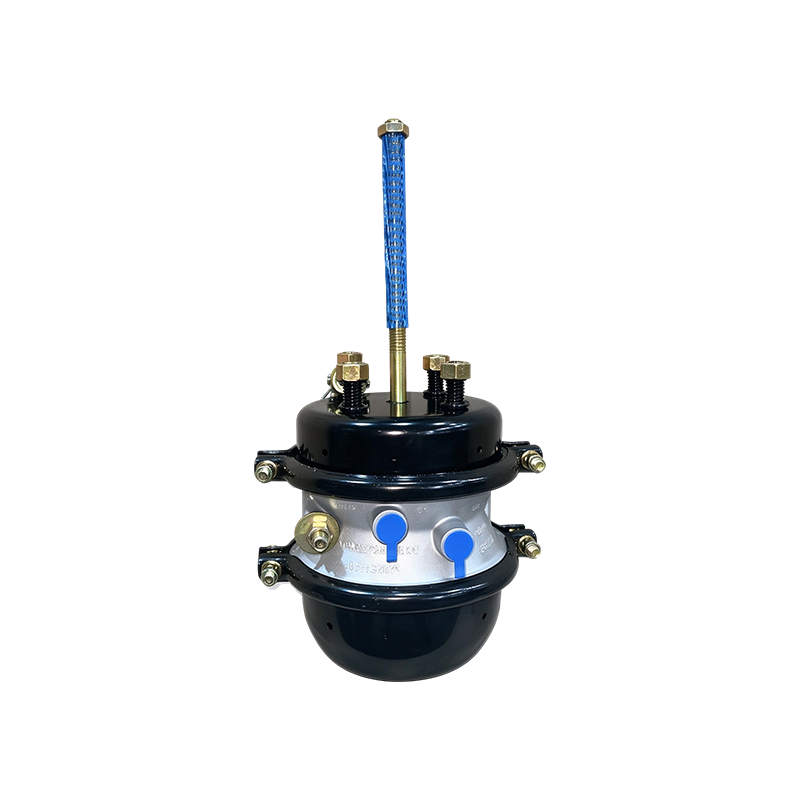
For a drive-axle DD application with 3-inch stroke, the T3030 long-stroke chamber with welded clevis is a reference design.
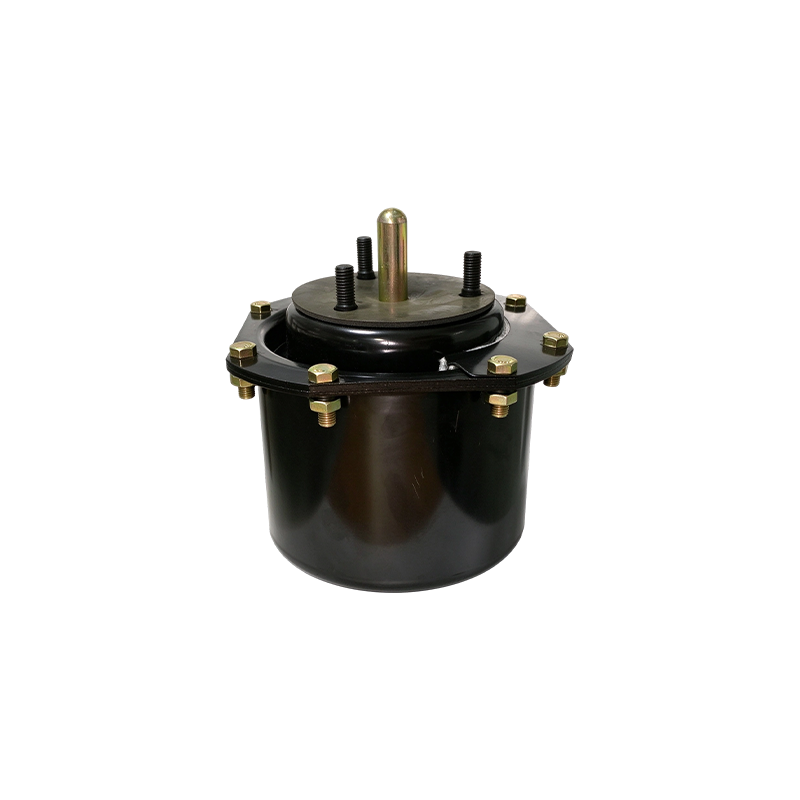
 T3030 Long-Stroke Brake Chamber with Welded Clevis for Drive AxlesDesigned for drive-axle applications with a 3-inch stroke, this chamber features a fully sealed structure and detachable yoke, ensuring durability and easy installation in heavy-duty vehicles.View Product →
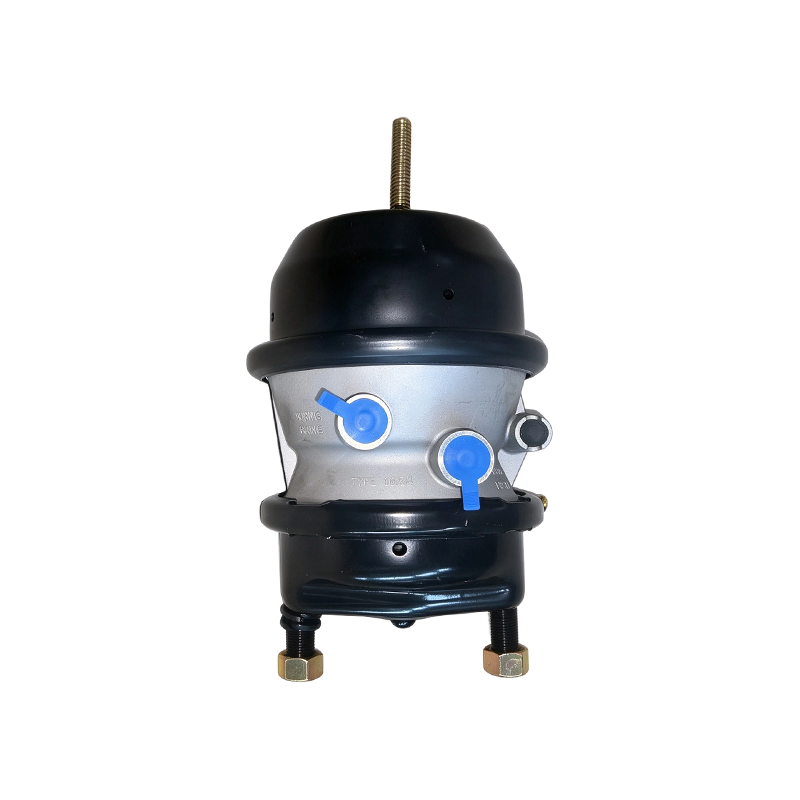
For sealed DP installations, the T2424DP sealed chamber with M22 port covers a common European air-connection pattern.
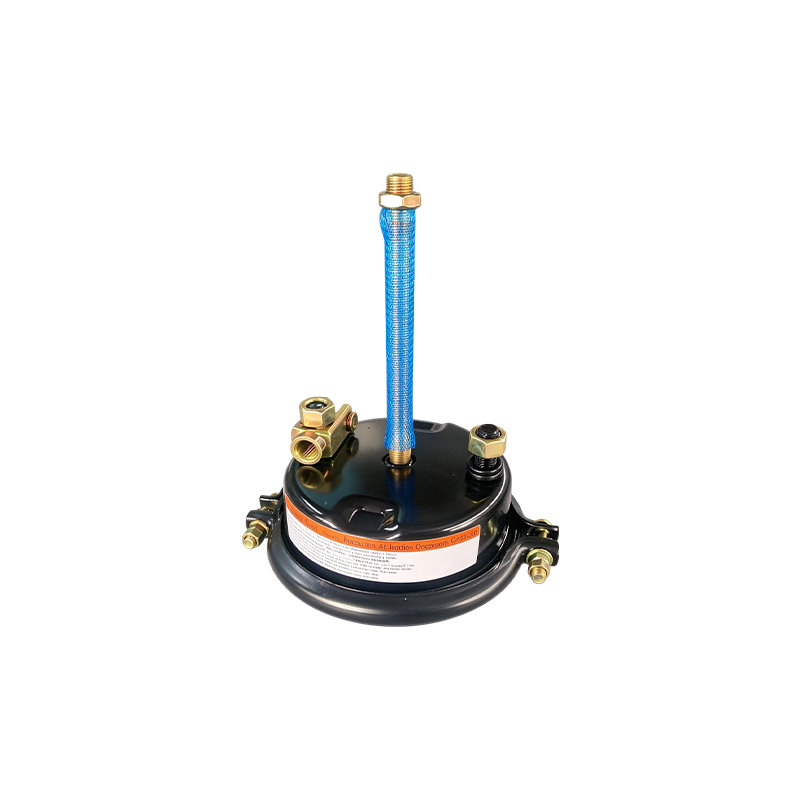
 T2424DP Sealed Brake Chamber with M22 Port for Compact InstallationsThis sealed chamber with M22 port suits European air-connection patterns and limited chassis space, offering protection against contaminants and stable braking performance in demanding conditions.View Product →
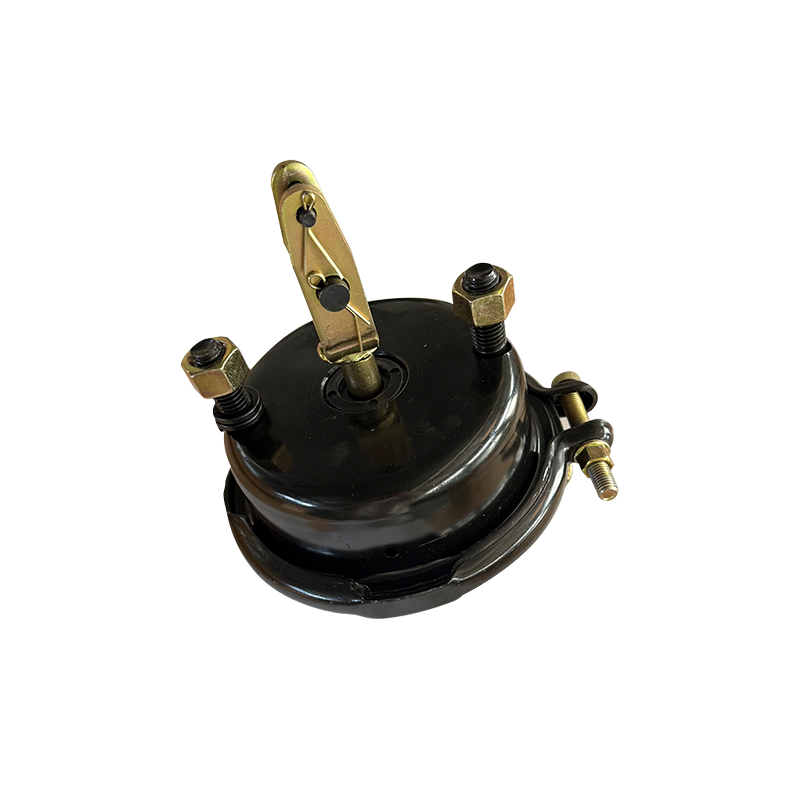
For service-only use on an axle with limited clearance, the T24 2.5 single chamber with M18 hole keeps the assembly short.
 T24 2.5-Inch Single Brake Chamber with M18 Hole for Service UseA widely adopted 2.5-inch stroke chamber with M18 air port, suitable for service-only applications where clearance is tight. It features durable iron housings and corrosion resistance.View Product →
Capacity, Documentation, and Working with an Export Supplier
The final layer is operational. The factory should state capacity in annual sets, not vague terms. An annual capacity above 3,000,000 sets supports stable lead times for container shipments and still allows mixed lots of different part numbers. Customization is the next test. Confirm that the factory can archive your order drawings, produce custom drawings, and adapt material, surface treatment, and packaging to your specification. Export buyers in North America and Europe consistently require their own formats for product marking, labels, and documentation.
Communication is the third test. A supplier that offers its interface in English, Russian, Spanish, and Arabic, as Zhejiang Rongzhan does, has structured its sales process for international buyers rather than domestic spot sales. That structure usually means faster answers on technical questions, clearer inspection schedules, and fewer misunderstandings about packaging.
The takeaway is straightforward. Evaluate an S-Cam type brake chamber factory the same way you would evaluate a safety-critical component supplier: verify the quality system certificate, ask for test evidence, confirm the vertical integration and capacity behind the price, and match the chamber family, stroke, and port configuration to each axle position. A factory that can present all four is a factory worth adding to your approved supplier list.



-
If you are qualifying a wedge brake chamber factory, settle five things before you talk about price...
-
A truck pulls into the shop with the low-air warning light flickering at the end of a delivery rout...
-
Two suppliers quote the same Type 20 service wedge brake chamber, and one is 20 percent cheaper. Si...
-
A fleet running 40-ton tractors can feel the difference between two nominally identical S-cam brake...
-
The modern commercial transport industry relies heavily on air brake systems to ensure fleet safety...
-
Piggyback Brake Chamber: What It Does and Why Specs Matter When a trailer sits overnight and you he...

- WHY US
- Company Profile
- Certifications
- News
- PRODUCTS
- S-Cam Type Brake Chamber
- DISC Brake Chamber
- Wedge Brake Chamber
- Piggyback Brake Chamber
- Brake Chamber Repair Kits
- MANUFACTURING
- Customer Service
- Factory Tour
-
-
No.90 Zhancheng Avenue, Zhuji City, Zhejiang Province, China

-
rongzhan@zjrongzhan.com / judith@zjrongzhan.com

-
+86-15258814607

-
- CONTACT


