

 русский
  Español
  عربى
عربى 

INQUIRY NOW

-
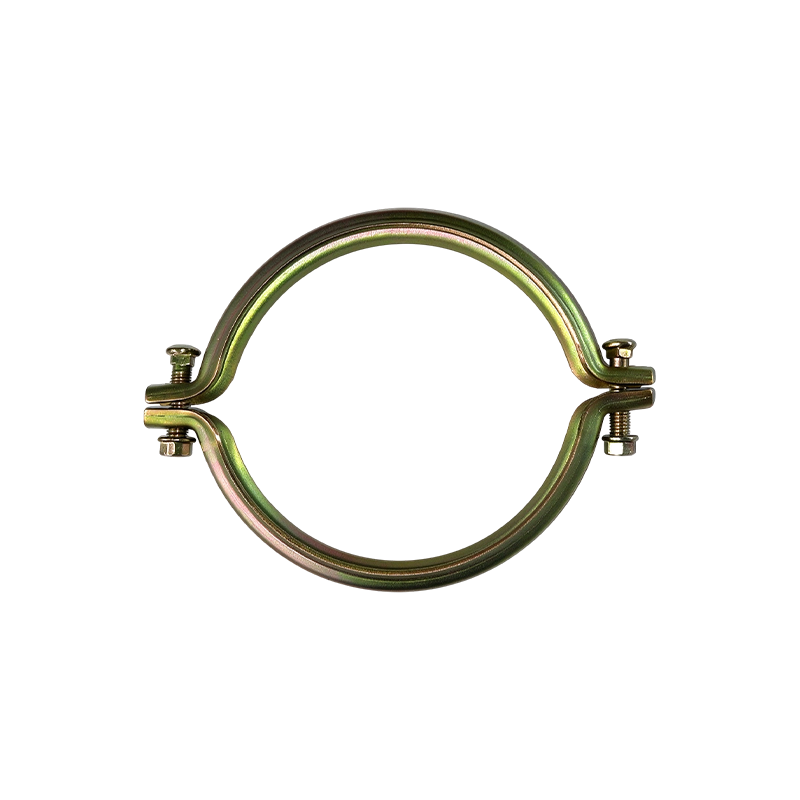



Universal Brake Chamber Clamp (7 Sizes)
-
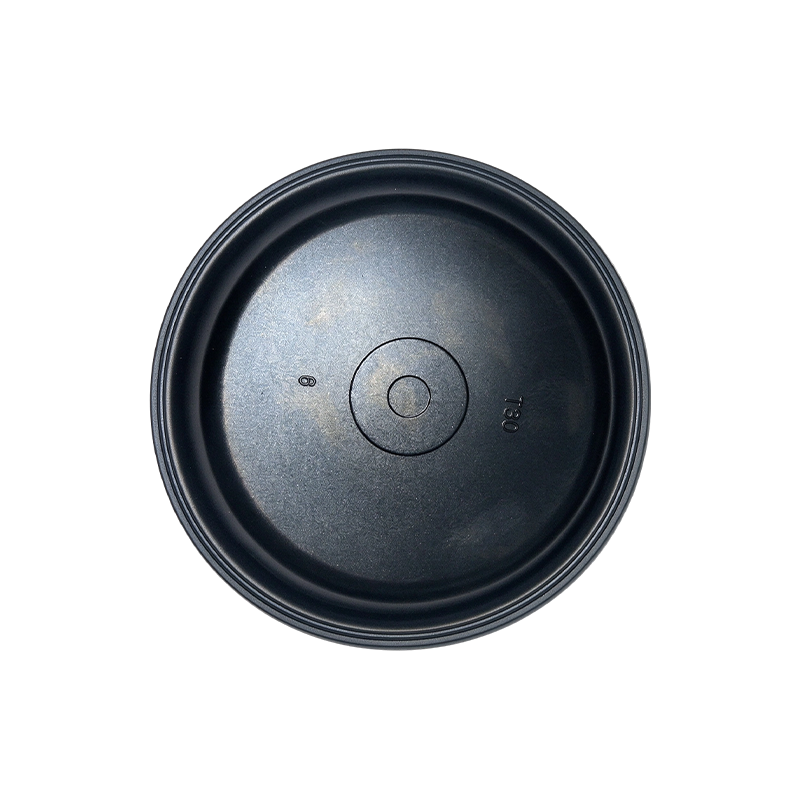
Universal Brake Chamber Diaphragm (5 Sizes)
-
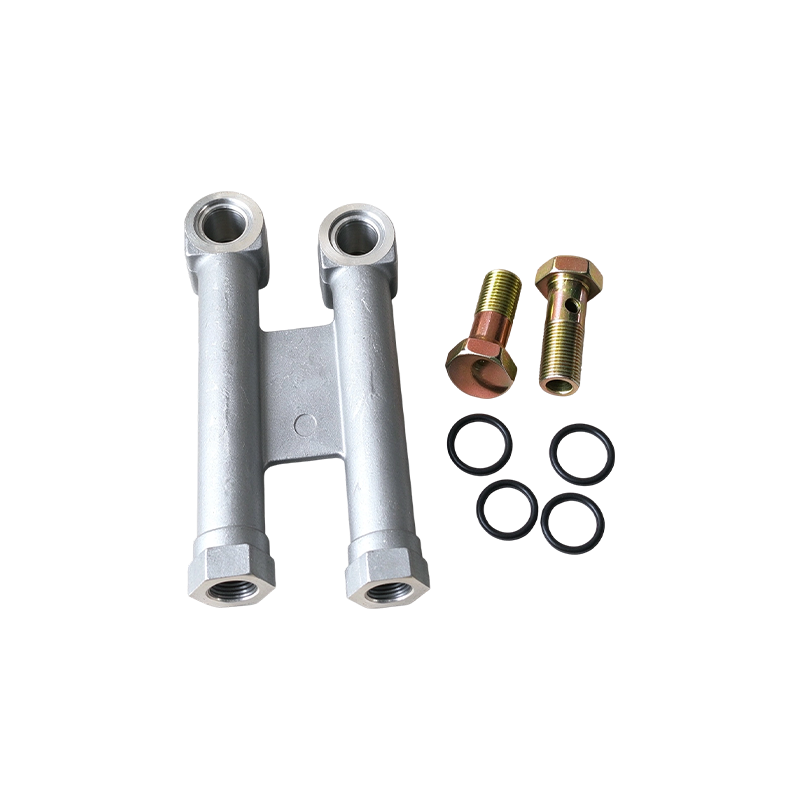
H-Pipe Connector Assembly
-
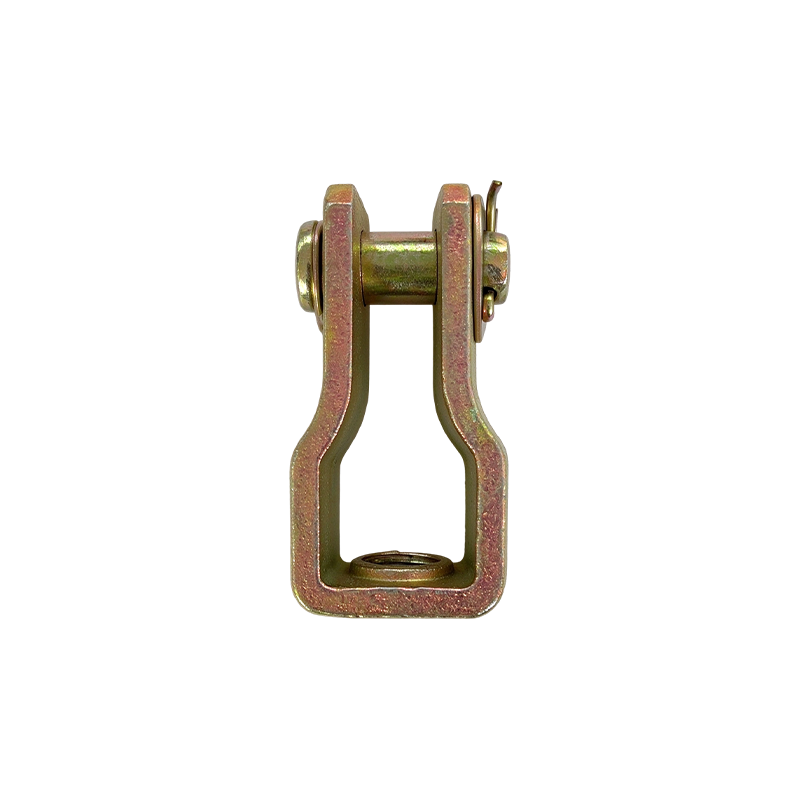
Push Rod Clevis Fork
Our Brake Chamber Repair Kits are designed to provide efficient and reliable solutions for vehicle maintenance and aftermarket service needs. Leveraging integrated automated stamping machinery, we independently manufacture standardized, uniform, and precision-engineered components, ensuring that every repair kit matches original brake chambers perfectly in terms of dimensions, performance, and durability. These repair kits—which include diaphragms, pushrods, seals, and other critical components—address the maintenance requirements of various brake chamber types, allowing for the restoration of a vehicle's braking system performance without the need to replace the entire brake chamber assembly.
Our independent manufacturing capabilities and rigorous quality control processes not only guarantee a high degree of component compatibility but also help reduce maintenance costs and improve the efficiency of vehicle downtime for servicing. Whether for heavy-duty trucks, trailers, or buses, utilizing our brake chamber repair kits ensures the restoration of the braking system to its original performance levels, extends operational lifespan, and provides a robust guarantee for the safe and reliable operation of the vehicle.

RONGZHAN
BRAKE COMPONENTS
As China Brake Chamber Repair Kits Manufacturers and Brake Chamber Repair Kits Factory, Zhejiang Rongzhan Machinery Co., Ltd. specialize in the production of spring brake chambers and service brake chambers for trucks and trailers. Backed by stable production capacity, strict quality control systems, and extensive export experience, our products are widely supplied to overseas markets and OEM customers worldwide. Rongzhan is committed to reliable quality, consistent performance, and long-term partnerships. We provide customers with cost-effective solutions and dependable service.
-
 0Year Established
 -
 0+Number of Employees
 -
 0SetsAnnual Production Volume
 -
0SetsAnnual Export Volume
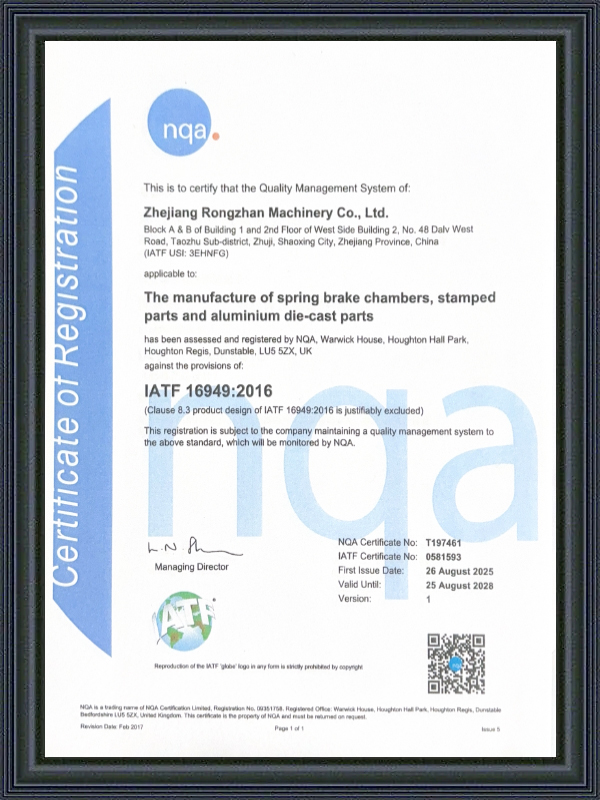
Certificate Of Honor

News
-
If you are qualifying a wedge brake chamber factory, settle five things before you talk about price: control over the wedge and roller components, test data produced on the wedge platform itself, pre-delivery inspection discipline, written interface dimensions, and the ability to repeat the same pa...
-
Two suppliers quote the same Type 20 service wedge brake chamber, and one is 20 percent cheaper. Six months later, the fleet that took the cheaper quote is replacing chambers early, re-adjusting stroke and paying freight twice. The saving never appeared on the invoice. It hid in the diaphragm compo...
-
Every S-Cam brake chamber you buy, whether you are a fleet maintenance director or an OEM purchasing engineer, is a bet on the factory that built it. The same Type 24 or Type 30 part number can behave very differently depending on the quality of the aluminum housing, the diaphragm compound, and the...
Brake Chamber Repair Kits Industry knowledge
Interchangeability Analysis of Brake Chamber Repair Kits: Universal Solutions Versus OEM Specificity
The upkeep of commercial vehicle pneumatic actuators requires a balanced approach to component replacement, balancing maintenance costs against absolute fleet safety. When a service or spring brake chamber develops an internal pressure leak or experiences material degradation, maintenance managers must decide whether to replace the entire cylinder housing or rebuild the assembly using specialized internal components. This brings up a critical question in the global aftermarket logistics sector: can a single, universal repair kit service a broad variety of actuators, or must components be sourced based strictly on specific original equipment manufacturer, or OEM, part numbers? Understanding the technical nuances of internal component geometry, elastomeric compounding, and stroke classifications is essential for ensuring proper vehicle deceleration and avoiding unexpected breakdown variables. As a key supplier to international transport sectors, Zhejiang Rongzhan Machinery Co., Ltd. analyzes these engineering parameters to ensure proper parts matching for global fleet operators and distribution networks.
The Concept of Dimensional Standardization Across Chamber Sizes
The idea of a universal repair kit stems from the broad dimensional standardization enforced across the commercial vehicle industry by regulatory bodies. Actuators are universally classified by their nominal size, such as Type 16, Type 24, Type 30, or Type 36, which refers directly to the effective square-inch surface area of the internal diaphragm. Consequently, certain components within the same size category—primarily the main rubber service diaphragms—exhibit a high degree of dimensional interchangeability across different brands. A standard Type 30 service diaphragm from one manufacturer will often fit securely into the clamped housing flange of another manufacturer's Type 30 shell. In this limited context, a basic kit containing only a standard diaphragm and an outer clamp ring can function across multiple brands, providing a partial universal solution for simple service-side maintenance needs.
| Kit Component Type | Universal Compatibility Level | Primary Technical Constraints |
| Standard Rubber Diaphragms | Moderate to High within identical size types | Outer flange radius and material thickness variances |
| Internal Return Springs | Low interchangeability across brands | Calibrated wire tension and coiled height differences |
| Center Isolation Wall Seals | Strictly OEM specific configuration | O-ring groove depths and push-tube diameter constraints |
| Pushrod Pressure Plates | Low to Moderate compatibility | Center shaft attachment styles and alignment seat angles |
Internal Architecture Variances and Return Spring Calibration
While the outer diameter of a diaphragm may match across brands, the internal mechanical hardware of the actuator cylinder quickly introduces brand-specific constraints. The internal return springs used in a service chamber, for instance, are uniquely calibrated to match the specific volumetric flow and pressure curves of that exact housing design. Return springs vary in their uncoiled free length, wire gauge thickness, total coil count, and structural seat nesting profiles. Attempting to install a return spring from a universal assortment into an incompatible shell can cause the spring to buckle laterally or rub against the inner housing wall. This internal friction damages the protective epoxy liner and creates localized metal shavings that can puncture the elastomeric elements, altering the brake timing across that vehicle axle.
The Critical Nature of Center Wall Seals and Push Tube Profiles
The limitation of universal kits becomes most obvious when servicing dual-diaphragm tandem actuators or piggyback modules used for parking brake applications. These secondary cylinders feature a structural center isolation wall that contains sliding seals designed to prevent high-pressure air from cross-leaking between the service and emergency lines. The internal push tubes that pass through this center barrier are manufactured with unique diameters, groove depths, and machining tolerances specific to each OEM design. Repair kits that include center wall O-rings, specialized lip seals, or non-metallic guidance bushings must match these exact dimensions down to fractions of a millimeter. Sourcing parts based strictly on the original OEM part number is necessary here, as even a minor dimensional mismatch will cause internal air bypassing, leading to dragging brake shoes or a complete failure of the parking brake retention system.
| Maintenance Approach | Operational Advantages | Logistical and Safety Risks |
| Universal Component Matching | Reduced warehouse inventory; lower unit procurement costs | Risk of internal cross-leaks; potential stroke variations |
Stroke Classification Distinctions and Travel Profile Safety
The widespread adoption of long stroke actuator configurations alongside standard stroke models further restricts the use of general universal kits. A standard Type 30 chamber features a legal travel adjustment limit of 2.0 inches, while a long stroke Type 30 model extends that boundary to 2.5 inches to provide a mechanical safety buffer against thermal brake fade. To handle this extra half-inch of linear travel, long stroke repair kits use diaphragms with deep-pocket geometries and modified elastomeric flex zones. Utilizing a standard diaphragm from a universal kit inside a long stroke housing will cause the rubber material to stretch past its design limits at full extension. This structural strain leads to localized thinning, rapid material splitting, and unexpected pressure drop violations during roadside commercial vehicle inspections.
Quality Control and Global Parts Supply Integration
For international distributors and fleet maintenance managers, relying on verified production quality is just as critical as choosing between universal and specific part numbers. Companies like Zhejiang Rongzhan Machinery Co., Ltd. utilize strict quality control systems to ensure that component dimensions match original design parameters across their extensive export ranges. This manufacturing accuracy supports long-term fleet partnerships by providing reliable component tolerance control. When rebuilding critical foundation brake components, selecting parts backed by verified quality standards ensures that repaired actuators maintain a uniform response curve and dependable service life under heavy load transport conditions, avoiding the unpredictable wear tracking often associated with unbranded universal components.
FAQ
Q: Why can standardizing on a general universal diaphragm repair kit lead to unexpected failure inside a long stroke cylinder housing?
A: A long stroke housing is engineered for an extended travel boundary of up to 2.5 inches or more, requiring a deep-pocket diaphragm geometry with specialized elastomeric flex zones. Utilizing a standard diaphragm from a generic universal kit will cause the rubber material to over-stretch at full pushrod extension, resulting in localized structural thinning, rapid splitting, and dangerous pneumatic pressure loss.
Q: What mechanical hazards occur if a replacement internal return spring from an unverified assortment does not match the original OEM part profile?
A: Internal return springs are calibrated precisely for specific wire gauge thicknesses, coil diameters, and uncoiled free heights. Installing an incorrect spring can cause it to buckle laterally and rub against the inner housing, destroying the protective internal epoxy liner and creating localized metal debris that can puncture the rubber components and disrupt brake application timing.
Q: Why is it necessary to use specific OEM numbers rather than cross-referenced universal parts when rebuilding the center isolation wall of a tandem spring actuator?
A: The center isolation wall separates the independent service and emergency air channels, utilizing precision-machined bores, push-tube dimensions, and custom O-ring or lip-seal groove depths. Sourcing by specific part number is essential because even a fraction of a millimeter difference in seal tolerance will allow high-pressure parking air to cross-leak into the service cavity, causing dragging brake shoes and glazed linings.
Q: How do the manufacturing standards applied by component producers preserve the calibrated pressure rise thresholds during a chamber rebuild?
A: Professional component producers apply rigid quality control systems to ensure that every replacement pressure plate, diaphragm, and sealing ring duplicates original design specifications down to strict tolerances. This dimensional accuracy ensures the rebuilt cylinder handles internal volumetric airflow uniformly, maintaining synchronized brake application times across the entire tractor-trailer axle array.
Q: In what way does sourcing certified brake chamber repair kits from a verified exporter support global fleet logistics and roadside inspection compliance?
A: Utilizing fully certified kits backed by strict quality verification protocols ensures that the internal stroke characteristics, spring tensions, and pressure parameters remain identical to factory specifications. This predictability protects international transport operators from localized structural wear variations and prevents unexpected out-of-service safety violations during roadside regulatory audits.

- WHY US
- Company Profile
- Certifications
- News
- PRODUCTS
- S-Cam Type Brake Chamber
- DISC Brake Chamber
- Wedge Brake Chamber
- Piggyback Brake Chamber
- Brake Chamber Repair Kits
- MANUFACTURING
- Customer Service
- Factory Tour
-
-
No.90 Zhancheng Avenue, Zhuji City, Zhejiang Province, China

-
rongzhan@zjrongzhan.com / judith@zjrongzhan.com

-
+86-15258814607

-
- CONTACT


