

 русский
 Español
 عربى



Wedge Brake Chamber Factory: Applications, Selection Criteria, and Practical Guidance
Content
If you are qualifying a wedge brake chamber factory, settle five things before you talk about price: control over the wedge and roller components, test data produced on the wedge platform itself, pre-delivery inspection discipline, written interface dimensions, and the ability to repeat the same part a year later. Unit price, packaging and lead time only become comparable once those five are pinned down.
That order matters because a wedge chamber is not a relabelled S-cam chamber. In a wedge foundation brake, the chamber push rod drives a wedge between two rollers, the rollers ride up the wedge faces, and the shoes spread against the drum. The stroke is short and the force multiplication is high, so small deviations in wedge angle, roller hardness or push rod length show up quickly as uneven lining wear, drum scoring or a brake that pulls to one side. A factory that only machines S-cam push rods can print a wedge part number, but the tooling behind it is a different problem.
Why the Wedge Platform Needs Its Own Tooling
Wedge geometry concentrates the accuracy burden in a few small parts. The wedge face angle, the roller diameter and hardness, the push rod end and the return spring all influence how evenly the two shoes are applied. Set the wedge-to-roller clearance too tight and the chamber drags; set it too loose and you lose effective stroke before the shoes reach the drum.
The practical question for a buyer is which of those parts are produced inside the factory. Machining the wedge, rollers and housing in the manufacturer's own shops keeps interface dimensions stable between batches and removes one layer of trading margin from the quotation. Assembly from purchased wedge kits is cheaper to set up and harder to control.
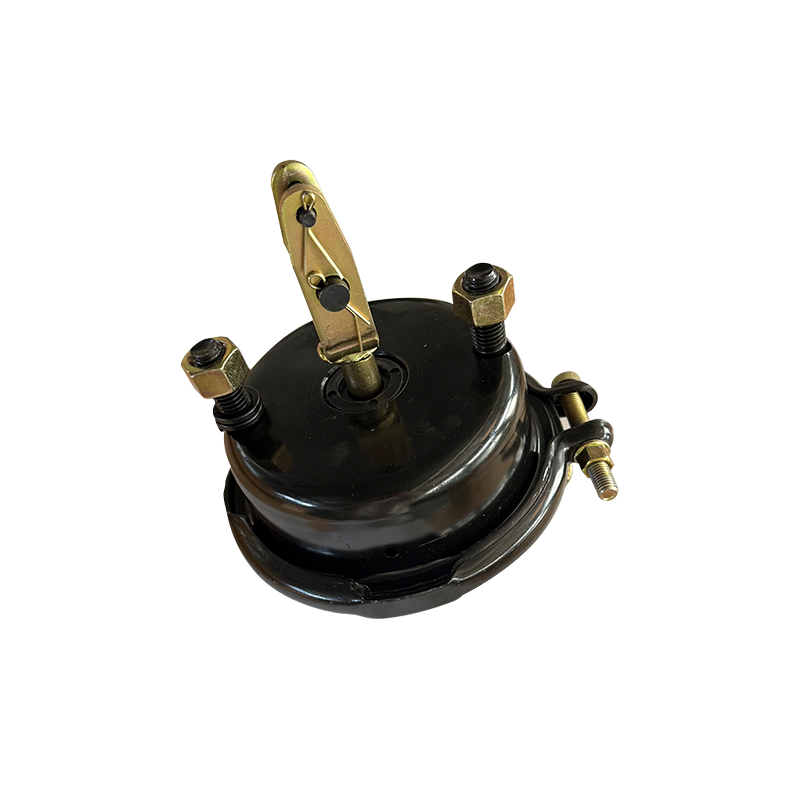
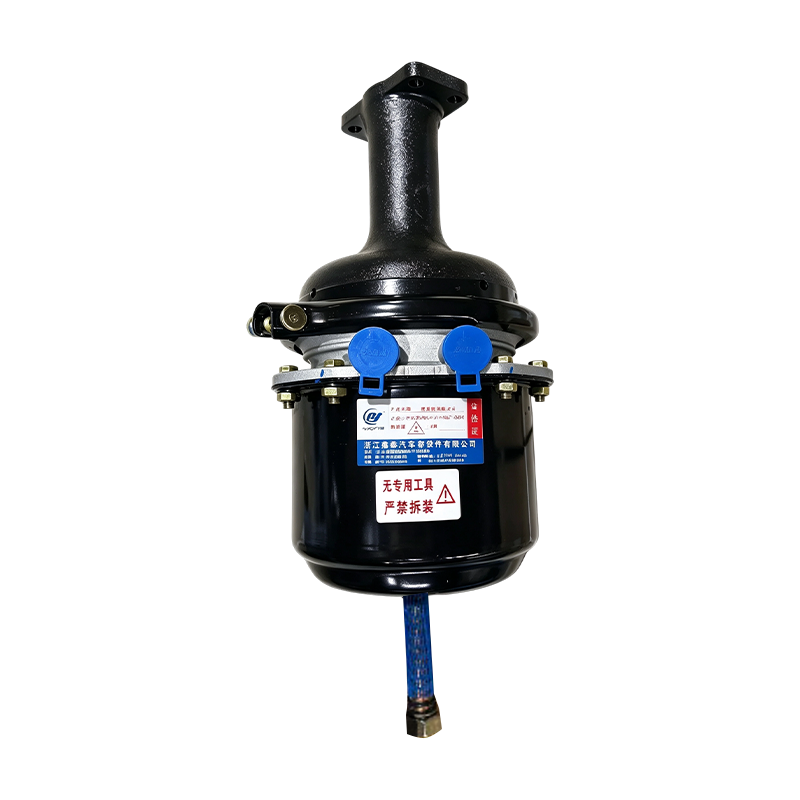 Wedge Brake Chamber OEM/ODM Category for Trucks and TrailersOEM/ODM wedge brake chamber category, including T24/24 and T30/30, with in-house machining for stable interfaces and easier selection by function.View Product →
Wedge chambers are one branch of a wider actuator family, and the branch itself splits by function. Knowing where a part sits in that structure is the fastest way to avoid ordering the wrong unit.
- Air brake actuators for trucks and trailers
- S-cam drum brakes: S-cam chambers in DD, DP and single configurations
- Wedge drum brakes: wedge chambers
- Service wedge chamber, air applied for service braking only
- DP wedge chamber, service braking plus a spring-applied parking and emergency function
- Disc brakes: single, DD and DP disc chambers
- Combined parking packages: piggyback chambers, standard and long stroke
- Aftermarket support: DD and DP chamber repair kits
If you want to review how a chamber converts air pressure into push rod travel before you write a specification, this explanation of what a brake chamber does in an air system covers the mechanics in plain terms.
What to Verify, and What Evidence Settles It
Most disputes in wedge chamber supply come from assumptions rather than price. The table below lists the five checks that decide whether a first order becomes a repeat order, together with the evidence that closes each one.
| Check | Evidence that closes it | Warning sign |
|---|---|---|
| Casting and machining control | Named in-house operations for the wedge, rollers and housing, with subcontracted steps listed | Vague references to partner factories |
| Platform testing | High and low temperature, performance and service life reports produced on wedge parts | Data borrowed from an S-cam programme |
| Pre-delivery inspection | A documented 100% inspection step before shipment and a look at the record | Sampling inspection presented as equivalent |
| Interface documentation | A drawing fixing port thread, push rod length, clevis type and stroke | Part numbers with no dimensions attached |
| Repeatability | Archived drawing plus fixed material and surface treatment specification | New tooling or a new subcontractor every batch |
Checks one to three are the ones suppliers most often answer with adjectives. A manufacturer that runs its own aluminium die casting and stamping shops and tests components in an in-house laboratory can usually answer them with documents instead, and you can read our manufacturing background to see how that is organised on our side.
Service Wedge or DP Wedge: Match the Function First
A service wedge chamber does one job. Air enters, the push rod extends, the wedge spreads the shoes, and a return spring retracts the rod when the air is released. A DP wedge chamber adds a large spring inside the housing, so the same unit also provides parking and emergency braking, with air pressure holding that spring off while the vehicle is running. If you order the service version for an axle that needs a spring brake, the vehicle loses its parking brake, and no price advantage compensates for that.
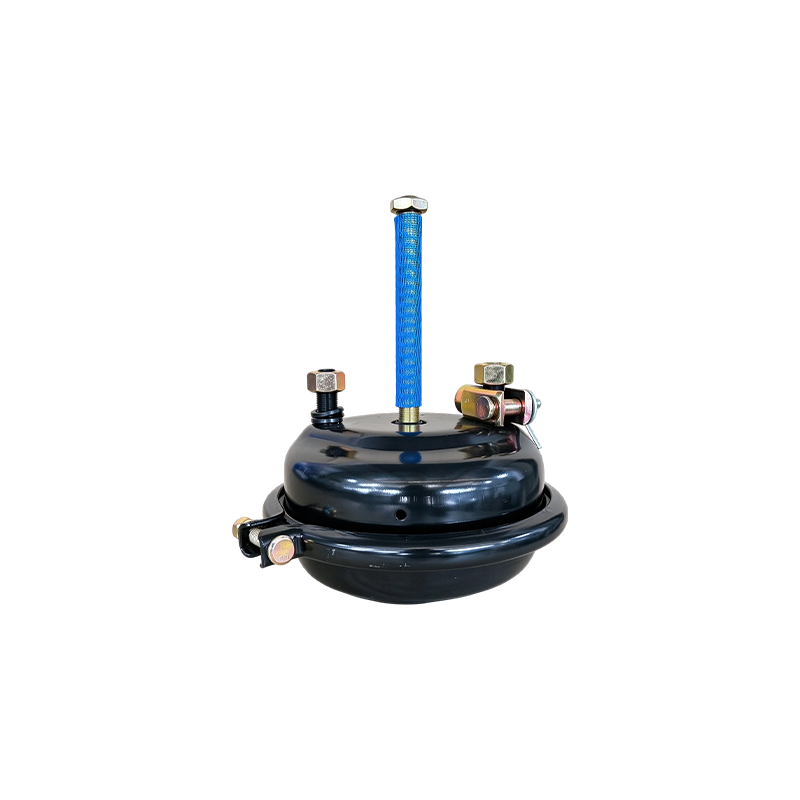
 Custom Service Wedge Brake Chamber for Commercial Vehicle AxlesSingle-cavity pneumatic actuator for normal service braking, suited to space-constrained steer or trailer axles where parking and emergency braking are handled separately.View Product →
The two versions share an interface but not a duty cycle, which is why the comparison below is worth keeping beside a quotation.
| Point of comparison | Service wedge chamber | DP (spring) wedge chamber |
|---|---|---|
| Braking function | Service braking only | Service, parking and emergency braking |
| Internal spring | Return spring only | Heavy spring held off by air and caged for service |
| Typical replacement trigger | Leaking service section, worn wedge or rollers, split boot | Spring-side diaphragm failure or housing corrosion, plus the service-side causes |
| Fitment risks | Stroke and port configuration | Stroke, port, spring rating and cage bolt configuration |
| Procurement note | Often cross-referenced on dimensions alone | Confirm function first, then the interface drawing |
Where a fleet is standardising across mixed axles, it usually pays to fix one supplier and one drawing per axle position rather than chasing the lowest quote per unit. Mixed sourcing of the same function is how two apparently identical chambers end up with different stroke behaviour.
Interface, Stroke and Fitment Details That Cause Returns
Fitment failures cluster in the same few places. Port threads lead the list: a chamber supplied with an M22 port will not accept a fitting made for another thread form, and the same applies to Voss connections and to mounting holes such as M18. Push rod length and clevis type come second, because a welded clevis, a threaded rod and a plain rod are not interchangeable at the slack adjuster. Stroke comes third, and it fails in both directions: a chamber that runs out of stroke before the shoe contacts the drum feels like a soft pedal, while one that over-travels can leave the brake dragging.
On the spring side the list gets longer. A DP wedge chamber has to satisfy the parking brake requirement as well as the service side, so spring rating, cage bolt and port arrangement all need checking against the axle drawing rather than the previous part number.
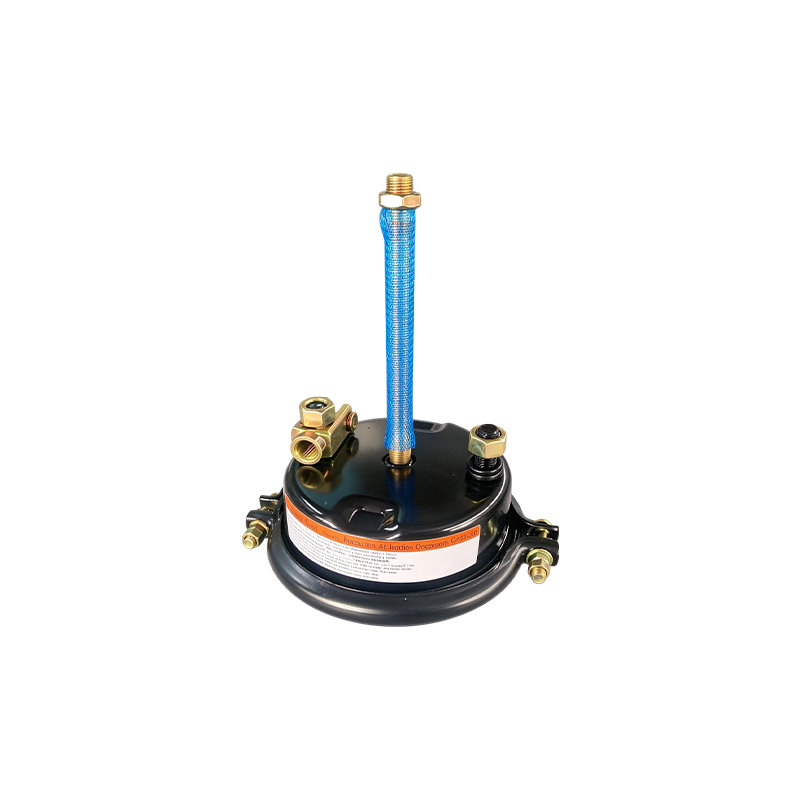
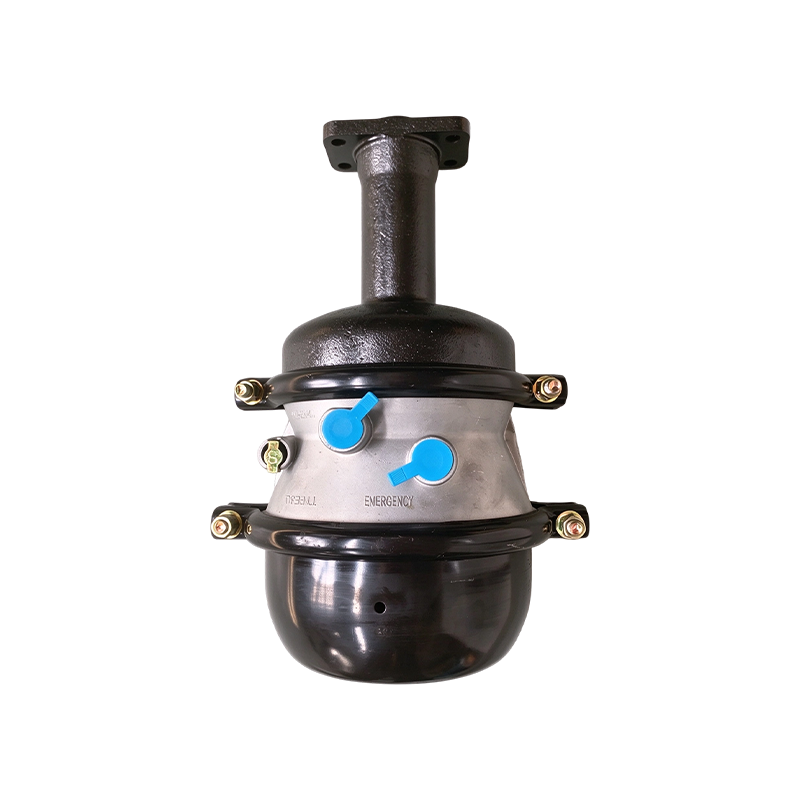
DP Wedge Brake Chamber for Severe-Duty Commercial VehiclesDual-performance wedge actuator with sealed internal mechanism and T24/24 or T30/30 options, suited to severe-duty trucks and trailers where boot durability matters.View Product →
Boot and seal compounds matter more than they look. Road salt, heat cycling and vibration attack the boot first, and once it splits, water reaches the wedge and rollers and the chamber fails early. Ask which temperature range the boot compound is rated for, and ask how that was verified rather than assumed.
Capacity, Lead Time and Small-Batch Realities
Capacity is easy to claim and hard to check. The useful question is not how many units a factory can build, but how many production slots it runs for wedge parts each month and how a repeat order is scheduled around large OEM programmes. A plant with annual output above 3,000,000 chambers and its own laboratory generally has room to fit small and medium batches between large runs. A trading company with no line of its own does not, and lead times slip whenever its subcontractor is busy.
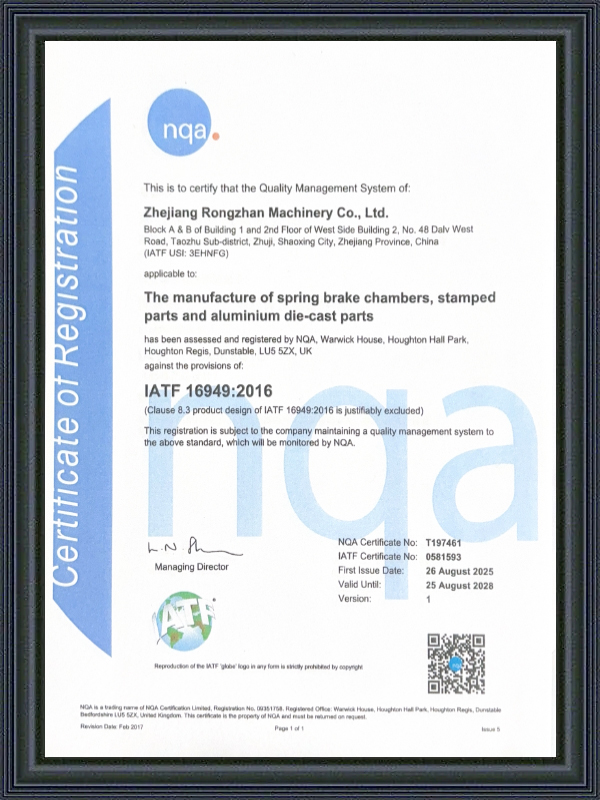
Certification is the other filter. IATF 16949 and conformity with international standards are the baseline for supplying European and North American truck and trailer programmes, and they are also why a vertically integrated factory can hold a stable price: in-house casting, stamping and assembly remove costs that a buying-and-reselling operation must pass on. Customisation of material, surface treatment and packaging belongs in the quotation stage, not after the order, and the agreed drawing should be archived so that the second shipment matches the first.
What to Put in Writing Before You Order
Turn the checks above into a short specification and send it with the enquiry. It takes twenty minutes and removes most of the risk from a first order.
- Function: service wedge or spring (DP) wedge, stated with the axle it fits.
- Interface drawing: port thread, mounting hole, push rod length, clevis type and stroke.
- Boot and seal compound with the temperature range it must survive.
- Test evidence: high and low temperature, performance and service life reports for the platform.
- Inspection: written confirmation of 100% pre-delivery inspection and the record format.
- Traceability: archived drawing, order reference and packing specification.
- Delivery: batch size, repeat-order lead time, and how medium batches are scheduled.
A wedge brake chamber factory is judged on the wedge, the rollers and the test bench behind them, not on a catalogue photograph. Verify casting and machining control, ask for platform-specific test data, fix the interface in a drawing, and confirm how your batch size will be scheduled. Send the drawing and the required function with your enquiry, and the quotation that comes back will be something you can compare line by line with the next one.




-
Every S-Cam brake chamber you buy, whether you are a fleet maintenance director or an OEM purchasin...
-
A truck pulls into the shop with the low-air warning light flickering at the end of a delivery rout...
-
A purchasing manager once dismissed a low-priced ADB brake chamber factory because its sample faile...
-
Piggyback Brake Chamber: What It Does and Why Specs Matter When a trailer sits overnight and you he...
-
Two suppliers quote the same Type 20 service wedge brake chamber, and one is 20 percent cheaper. Si...
-
A heavy duty brake chamber that fails at 200,000 miles instead of 600,000 miles is rarely a design ...

- WHY US
- Company Profile
- Certifications
- News
- PRODUCTS
- S-Cam Type Brake Chamber
- DISC Brake Chamber
- Wedge Brake Chamber
- Piggyback Brake Chamber
- Brake Chamber Repair Kits
- MANUFACTURING
- Customer Service
- Factory Tour
-
-
No.90 Zhancheng Avenue, Zhuji City, Zhejiang Province, China

-
rongzhan@zjrongzhan.com / judith@zjrongzhan.com

-
+86-15258814607

-
- CONTACT


