

 русский
  Español
  عربى
عربى 

INQUIRY NOW




RONGZHAN
BRAKE COMPONENTS
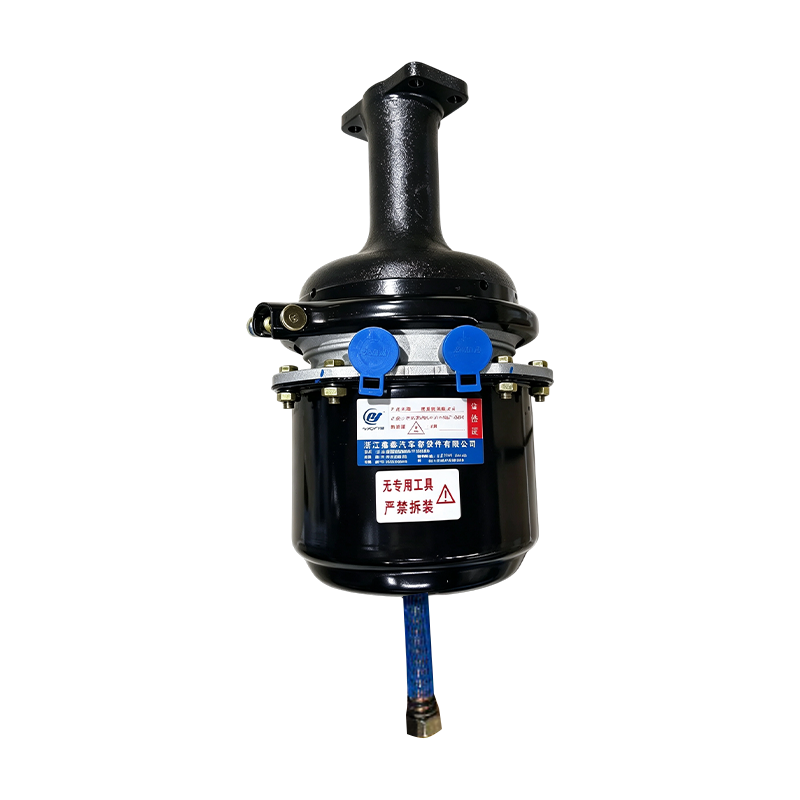
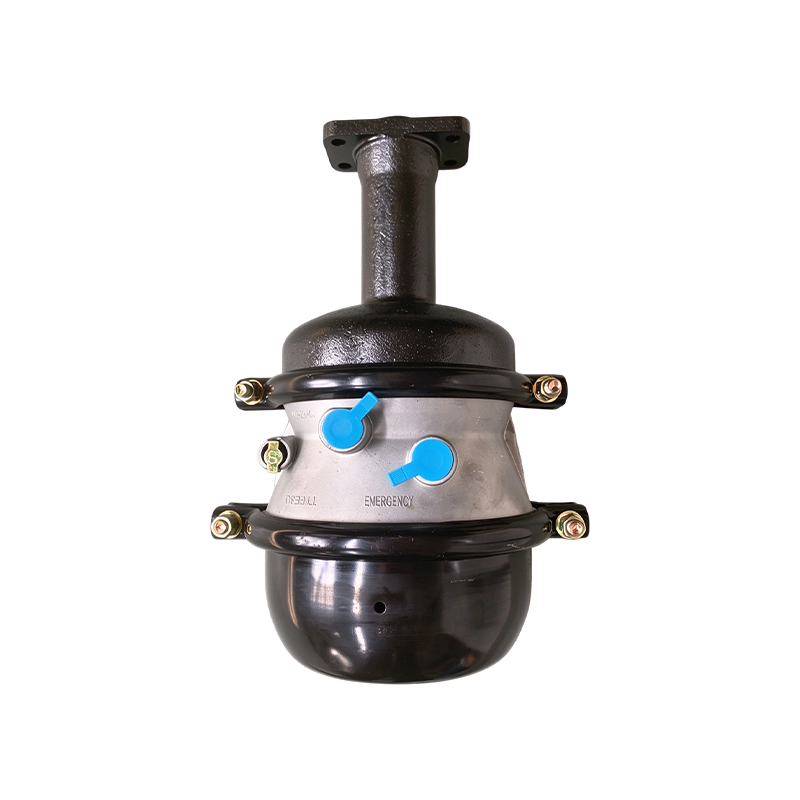
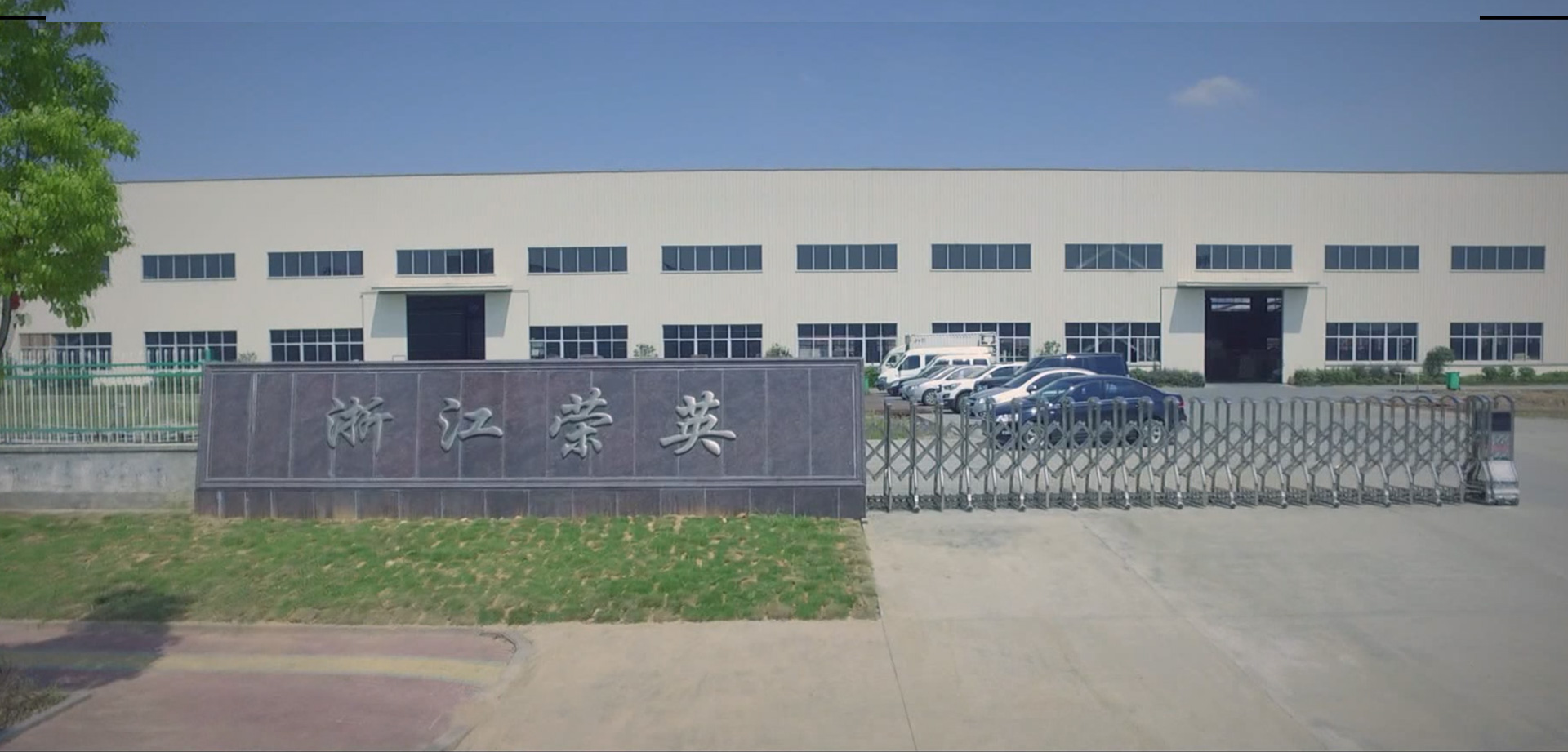
As China DP Wedge Brake Chamber Manufacturers and DP Wedge Brake Chamber Suppliers, Zhejiang Rongzhan Machinery Co., Ltd. specialize in the production of spring brake chambers and service brake chambers for trucks and trailers. Backed by stable production capacity, strict quality control systems, and extensive export experience, our products are widely supplied to overseas markets and OEM customers worldwide. Rongzhan is committed to reliable quality, consistent performance, and long-term partnerships. We provide customers with cost-effective solutions and dependable service.
-
 0Year Established
 -
 0+Number of Employees
 -
 0SetsAnnual Production Volume
 -
0SetsAnnual Export Volume
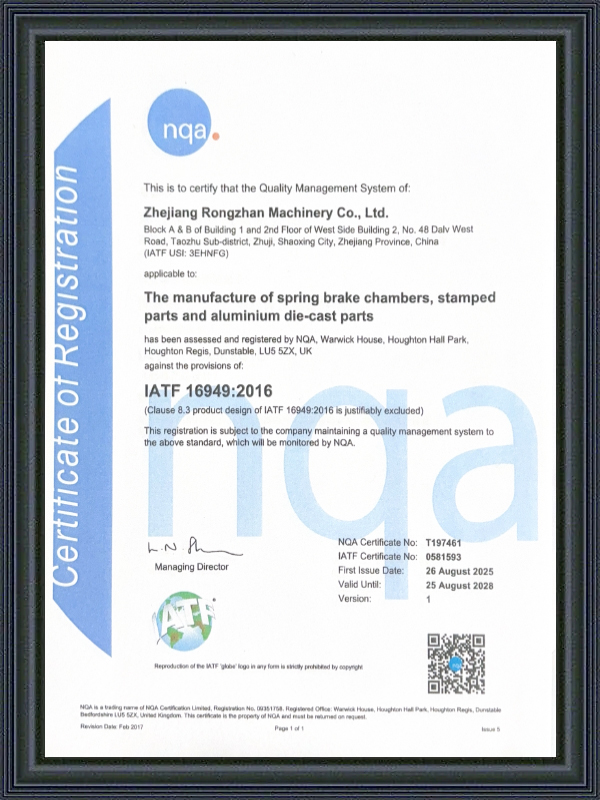
Certificate Of Honor

News
-
If you are qualifying a wedge brake chamber factory, settle five things before you talk about price: control over the wedge and roller components, test data produced on the wedge platform itself, pre-delivery inspection discipline, written interface dimensions, and the ability to repeat the same pa...
-
Two suppliers quote the same Type 20 service wedge brake chamber, and one is 20 percent cheaper. Six months later, the fleet that took the cheaper quote is replacing chambers early, re-adjusting stroke and paying freight twice. The saving never appeared on the invoice. It hid in the diaphragm compo...
-
Every S-Cam brake chamber you buy, whether you are a fleet maintenance director or an OEM purchasing engineer, is a bet on the factory that built it. The same Type 24 or Type 30 part number can behave very differently depending on the quality of the aluminum housing, the diaphragm compound, and the...
DP Wedge Brake Chamber Industry knowledge
Primary Application Scenarios for DP Wedge Brake Chambers in Commercial Transport Architecture
Heavy-duty commercial vehicle engineering requires specialized pneumatic actuators that match the precise spatial constraints, weight limitations, and load profiles of diverse transport configurations. The dual-piston or dual-performance wedge brake chamber, commonly classified as the DP wedge brake chamber, represents an integrated actuation technology that combines the direct, linear mechanical efficiency of a wedge mechanism with an optimized dual-pressure surface configuration. Unlike standard S-cam systems that rely on external linkages, this co-axial assembly mounts directly to the brake backing plate, transmitting force symmetrically to the brake shoes. Determining where to deploy this technical configuration involves evaluating axle spacing, unsprung mass limits, and specific operating vocational cycles. As a global manufacturer of commercial vehicle brake system components, Zhejiang Rongzhan Machinery Co., Ltd. applies strict quality control systems to produce reliable DP wedge brake chamber units designed to handle specialized application scenarios across international transport sectors.
Low-Chassis Logistics and High-Volume Freight Configurations
International freight logistics relies heavily on maximizing cargo volume within strict legal vehicle height limits. To achieve this, modern fleet designs utilize low-chassis tractors and mega-trailers that require smaller wheel diameters and low-profile tires to lower the deck height. Standard S-cam brake chambers, with their large outer diameters, protruding slack adjusters, and long external camshaft brackets, cannot physically fit within the extremely tight spatial clearance inside a small fifteen-inch or 19.5-inch wheel rim. The DP wedge brake chamber resolves this geometric barrier because its inline dual-piston design sits completely flush against the brake spider housing, eliminating all external rotating linkages. This ultra-compact profile allows trailer manufacturers to maximize interior cargo height while maintaining standard pneumatic brake capacity, making it a standard choice for high-volume automotive component haulers and intermodal terminal equipment.
| Vehicle Design Constraint | Standard S-Cam Chamber Limitations | DP Wedge Brake Chamber Solutions |
| Small Wheel Rim Clearances | External brackets and slack adjusters strike the rim | Inline housing fits entirely inside low-profile wheel drums |
| Axle Package Unsprung Mass | Heavy external shafts add dead weight to the hub | Integrated design eliminates components, reducing weight |
| Ground Clearance Requirements | Low-hanging chambers are vulnerable to debris impact | High-mounted direct interface protects the cylinder body |
| Pneumatic Space Allocation | Demands broad clearance arcs for pushrod stroke | Confined linear travel preserves vital chassis space |
Severe-Duty Off-Road Vocational and Construction Operations
Vehicles operating in logging sectors, mining infrastructure, and heavy construction environments face constant exposure to mud, loose gravel, flying stones, and deep water crossings. On these routes, traditional S-cam brakes are highly vulnerable because their exposed slack adjusters and camshaft bushings can become jammed with debris or suffer from rapid abrasive wear, causing brake dragging or delayed application timing. A DP wedge brake chamber offers substantial protection in these severe-duty scenarios because the entire mechanical force multiplication system—including the wedge, roller bearings, and dual actuating pistons—is completely enclosed within the sealed internal environment of the axle housing. This sealed configuration insulates the critical moving elements from external environmental contamination, ensuring that vehicles maintain stable stopping torque under repetitive deep mud immersion and heavy dust loading.
Weight-Sensitive Liquid Tankers and Bulk Commodity Hauling
For fleets transporting liquid petroleum, chemical compounds, cement, or grain, every pound of dead weight saved on the vehicle structure translates directly into additional payload capacity and higher operational revenue per trip. Standard foundation brake configurations add substantial unsprung weight to each axle hub due to the mass of the thick steel camshafts, heavy mounting brackets, and external slack adjusters. By replacing these multi-component linkages with an integrated DP wedge brake chamber network, fleet engineers can strip dozens of kilograms of unneeded weight from each axle assembly. This weight reduction not only maximizes legal fluid payload limits but also improves the compliance tracking of the trailer suspension over rough terrain. Zhejiang Rongzhan Machinery Co., Ltd. addresses these weight-critical market requirements by leveraging its stable production capacity to deliver cost-effective, lightweight actuators that fulfill international transport regulations.
| Target Fleet Sector | Primary Technical Requirement | DP Wedge Performance Contribution |
| Mega-Trailer Cargo Hauling | Minimum physical component clearance dimensions | Permits downsized wheel rim profiles without force loss |
| Mining and Logging Transport | Shielding against debris and stone impacts | Enclosed internal wedge design eliminates external wear |
| Liquid Chemical Tankers | Reduction of unneeded vehicle structural tare weight | Streamlined direct mounting eliminates heavy steel linkages |
| Stop-and-Go Urban Distribution | Rapid pneumatic response and air conservation | Condensed internal stroke space minimizes air usage |
High-Frequency Urban Transit and Stop-and-Go Passenger Systems
City transit buses and urban distribution delivery trucks operate under high-frequency braking profiles, where the foundation brakes are cycled thousands of times per shift, generating constant pneumatic demands. Because a DP wedge brake chamber utilizes a highly optimized internal dual-pressure surface, it requires a significantly shorter pushrod stroke distance to achieve full shoe expansion compared to a standard diaphragm actuator. This short-stroke characteristic reduces the internal clearance volume, meaning the vehicle air compressor expends far less energy repopulating the air reservoirs during extended urban routes. This air volume conservation minimizes wear on the compressor clutch, lowers fuel consumption, and limits moisture accumulation within the air filtration network, proving useful for municipal transit authorities seeking to optimize their long-term fleet maintenance cycles.
Symmetrical Force Demands for Heavy Steer Axle Stabilization
Maintaining steering control during sudden emergency stops is a critical safety consideration for heavy-duty commercial transport vehicles. When a standard single-sided cam applies force to a front steer axle, it can generate asymmetrical radial pressures inside the brake drum, causing the vehicle to pull slightly to one side under extreme load deceleration. Deploying DP wedge brake chambers on front steer axles allows for dual-directional balanced shoe actuation, where two opposing wedges push both brake shoes outward with identical mechanical force simultaneously. This balanced application stabilizes the steering geometry, prevents the brake drums from distorting into oval shapes under high thermal stress, and provides drivers with a more predictable, uniform deceleration feel. Zhejiang Rongzhan Machinery Co., Ltd. applies extensive export experience and precise testing to manufacture these components, ensuring seamless integration into the advanced steering and braking systems of worldwide OEM customers.
FAQ
Q: Why is the compact profile of a DP wedge brake chamber useful for modern low-chassis mega-trailer configurations?
A: Low-chassis mega-trailers utilize downsized wheel rims to maximize vertical cargo capacity, leaving insufficient space for the external slack adjusters and long camshafts of traditional S-cam setups. A DP wedge brake chamber features an inline, direct-mounting design that fits entirely within the confined clearance areas of small wheel drums, allowing trailer builders to lower vehicle deck height without sacrificing pneumatic braking force.
Q: How does the enclosed mechanical environment of a DP wedge brake chamber protect heavy-duty vocational vehicles operating in harsh off-road conditions?
A: Unlike standard S-cam brakes with exposed external linkages, the entire force multiplication network of a DP wedge brake chamber—including the wedge, roller bearings, and dual actuating pistons—is fully enclosed and sealed inside the axle housing interface. This structural isolation guards critical moving parts against abrasive mud, loose gravel, deep water, and dust contamination, preventing brake dragging and maintaining stable stopping torque.
Q: In what way does a DP wedge brake chamber help weight-sensitive bulk commodity haulers increase their operational payload capacity?
A: Traditional foundation brake assemblies add significant unsprung mass to each wheel end due to the combined weight of thick steel camshafts, heavy support brackets, and automatic slack adjusters. By integrating the actuator directly onto the brake spider housing, a DP wedge brake chamber eliminates these heavy external mechanical linkages, stripping unneeded structural tare weight from the axle to maximize legal cargo capacity.
Q: Why do the shortened stroke requirements of a DP wedge brake chamber improve the durability of the vehicle's air compressor system in stop-and-go urban transit?
A: Because the internal wedge mechanism multiplies force over a highly condensed linear path, the pushrod operates with a very short travel displacement. This short-stroke design minimizes the internal clearance volume inside the housing, meaning less compressed air is consumed during high-frequency cycling, which lowers the operational load on the vehicle compressor, decreases fuel usage, and limits moisture accumulation in the air lines.
Q: How does a DP wedge brake chamber configuration enhance steering stability on heavy commercial front axles during sudden deceleration?
A: Many configurations utilize a dual-opposing wedge layout that drives both brake shoes outward simultaneously and symmetrically against the drum face with identical mechanical force. This balanced application prevents the brake drum from twisting or distorting into an oval shape under extreme thermal loads, eliminating asymmetrical steering pull and giving the driver a predictable, uniform deceleration trajectory.

- WHY US
- Company Profile
- Certifications
- News
- PRODUCTS
- S-Cam Type Brake Chamber
- DISC Brake Chamber
- Wedge Brake Chamber
- Piggyback Brake Chamber
- Brake Chamber Repair Kits
- MANUFACTURING
- Customer Service
- Factory Tour
-
-
No.90 Zhancheng Avenue, Zhuji City, Zhejiang Province, China

-
rongzhan@zjrongzhan.com / judith@zjrongzhan.com

-
+86-15258814607

-
- CONTACT


