

 русский
  Español
  عربى
عربى 

INQUIRY NOW

-
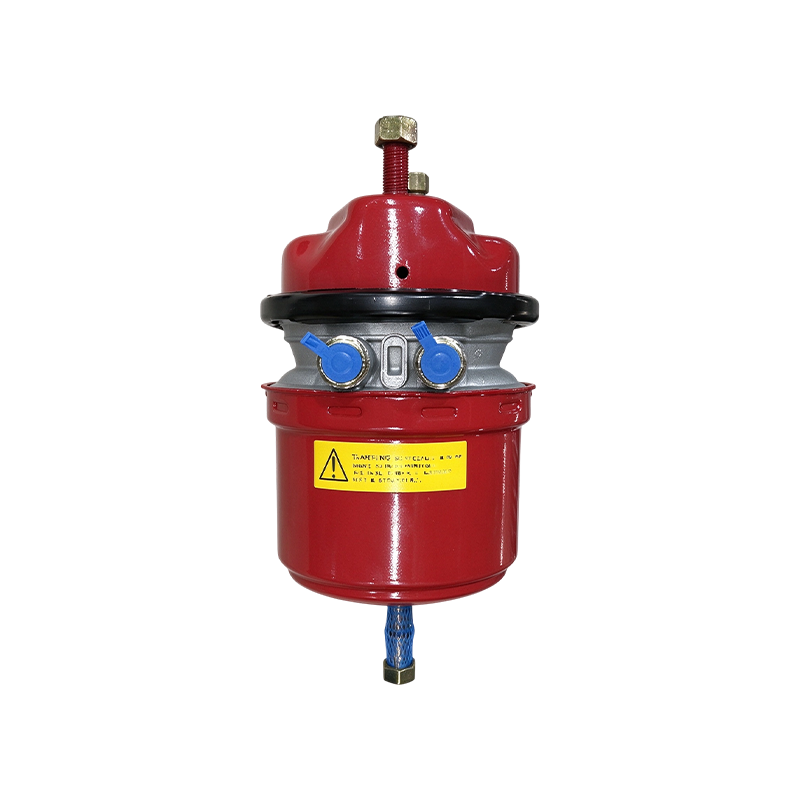



T24/24 DP Disc Brake Chamber (Red, M16 Port)
-
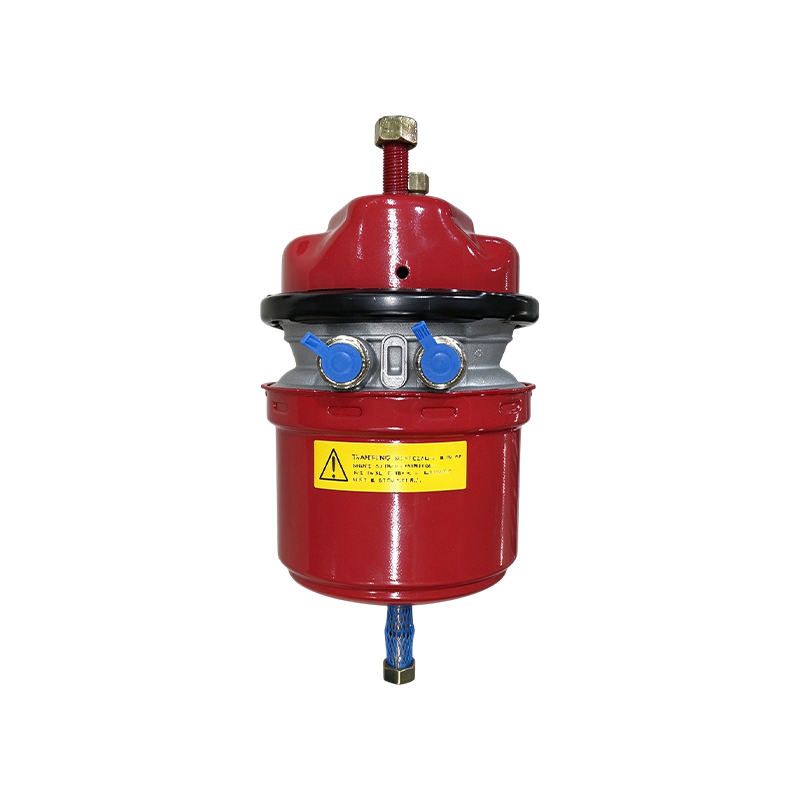
T24/24 DP Disc Brake Chamber (Red, M22 Port)
-
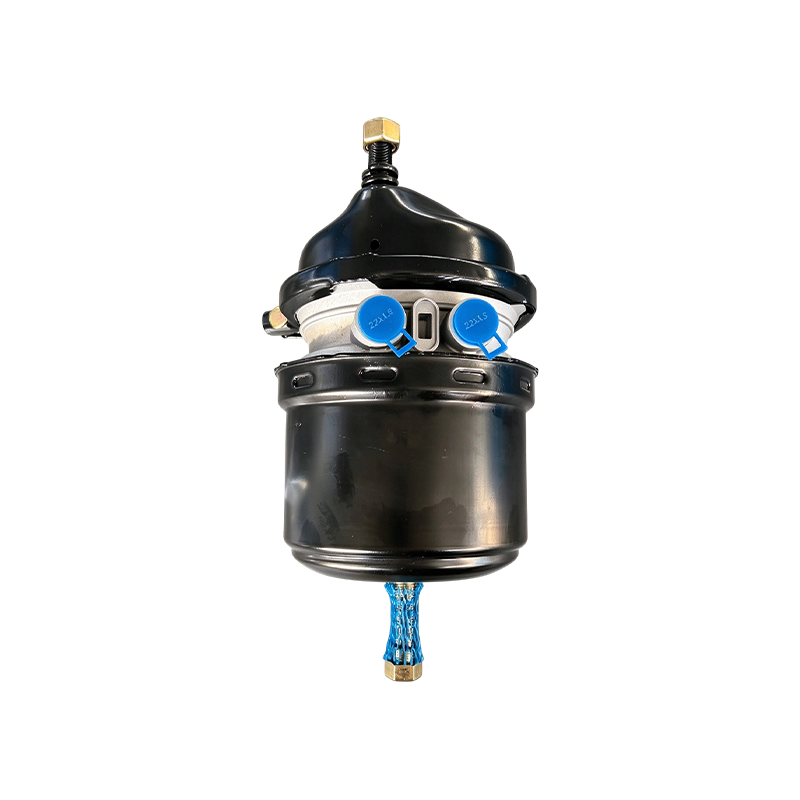
T24/24 DP Disc Brake Chamber (M22 Port)
-
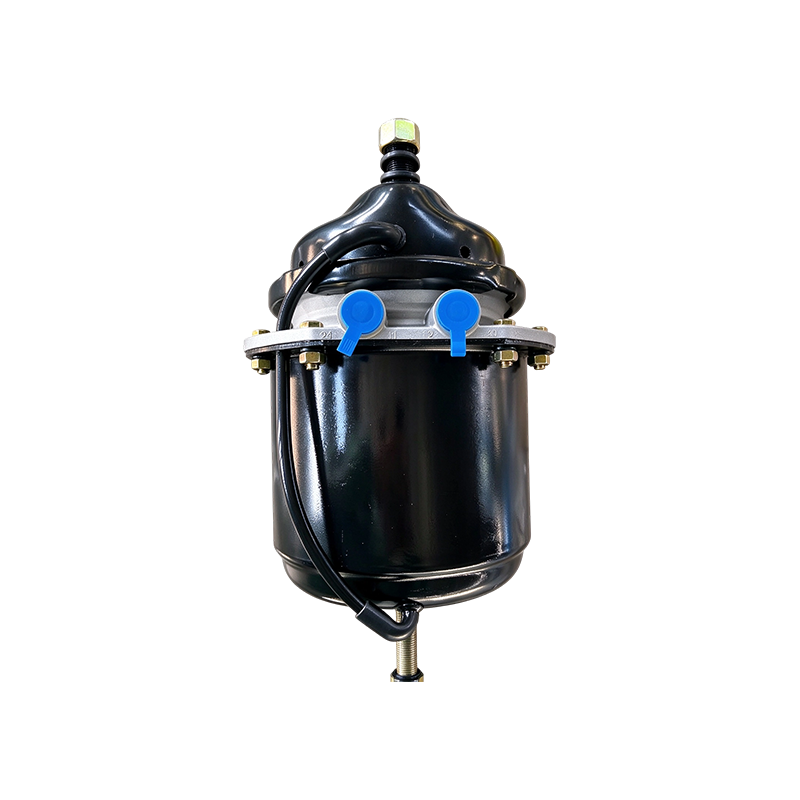
T24/30 DP Disc Brake Chamber (M16 Port)
-
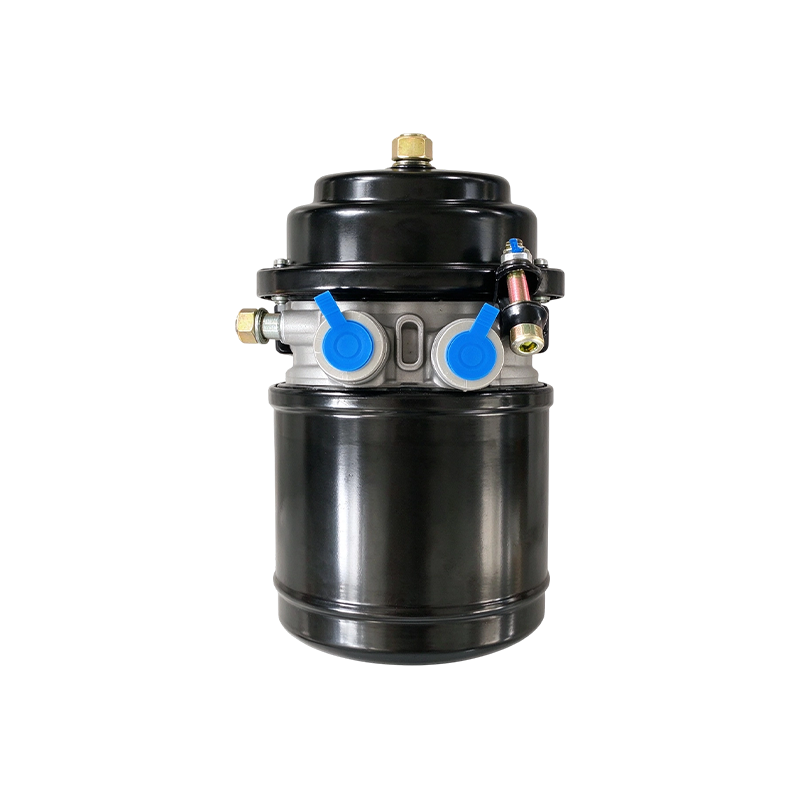
T24/24 DP Disc Brake Chamber (Cross Top Cover, M16 Port)
The DP Disc Brake Chamber is a high-performance braking component featuring a piston-type design. Primarily installed on a vehicle's front axle or axle assembly, it directly facilitates braking operations via a round-head pushrod (which connects to the slack adjuster or upper assembly). This brake chamber utilizes compressed air acting upon a piston to actuate the round-head pushrod, thereby achieving the efficient transmission of braking force. Compared to traditional diaphragm-type brake chambers, the piston-based design of the DP Disc Brake Chamber offers a longer braking stroke, reduces component wear, enhances sealing performance and durability, and extends the product's overall service life.
Featuring a compact structure and ease of installation, this brake chamber is compatible with the disc braking systems of light trucks, heavy-duty trucks, and specialized vehicles, effectively meeting braking demands under high-load conditions, frequent start-stop cycles, and complex road environments. The product is available with various stroke options to accommodate the specific requirements of different vehicles and operating conditions; furthermore, its internal components utilize high-precision seals and optimized materials to minimize air leakage, prevent the ingress of dust and moisture, and enhance the overall reliability of the braking system.
RONGZHAN
BRAKE COMPONENTS
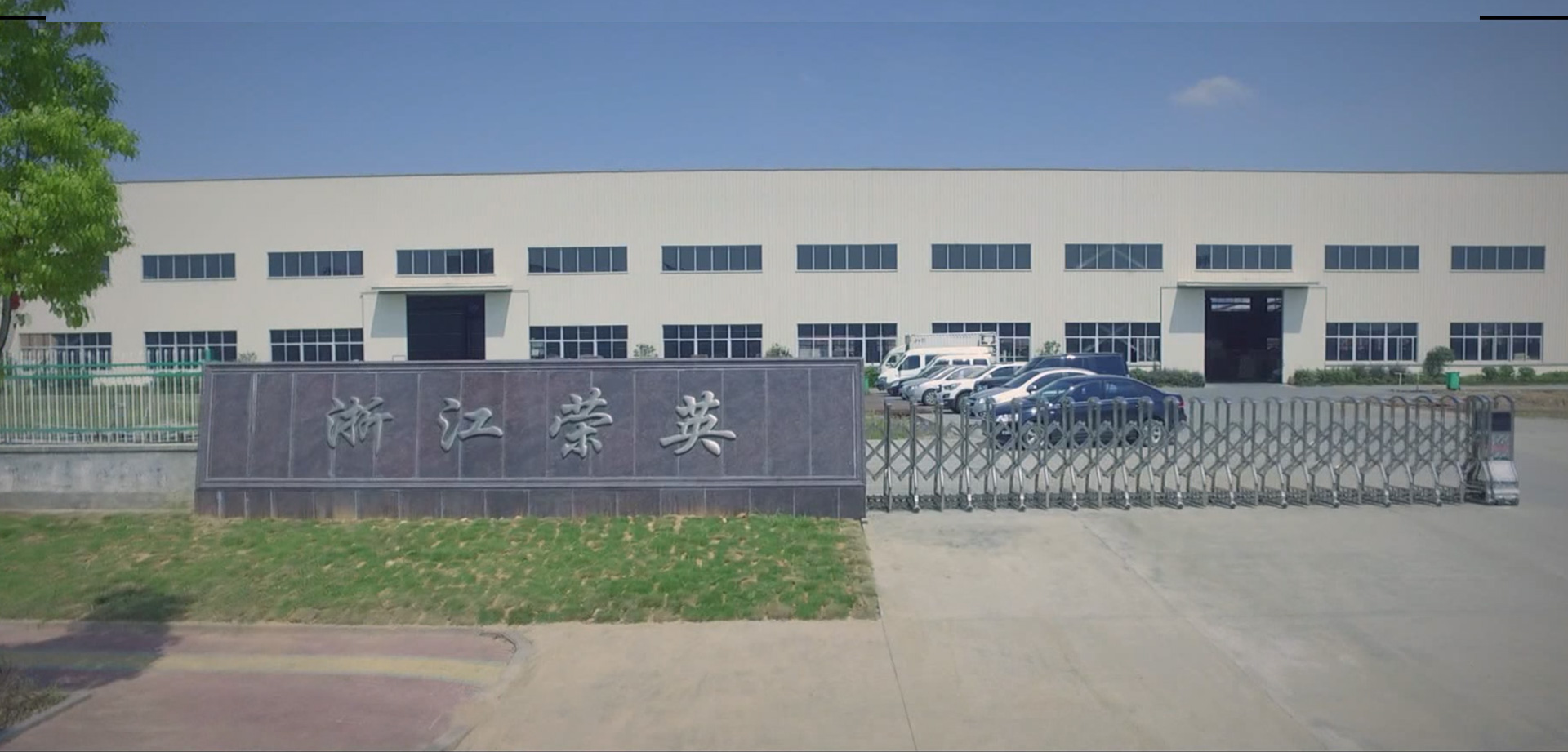
As China DP Disc Brake Chamber Manufacturers and DP Disc Brake Chamber Suppliers, Zhejiang Rongzhan Machinery Co., Ltd. specialize in the production of spring brake chambers and service brake chambers for trucks and trailers. Backed by stable production capacity, strict quality control systems, and extensive export experience, our products are widely supplied to overseas markets and OEM customers worldwide. Rongzhan is committed to reliable quality, consistent performance, and long-term partnerships. We provide customers with cost-effective solutions and dependable service.
-
 0Year Established
 -
 0+Number of Employees
 -
 0SetsAnnual Production Volume
 -
0SetsAnnual Export Volume
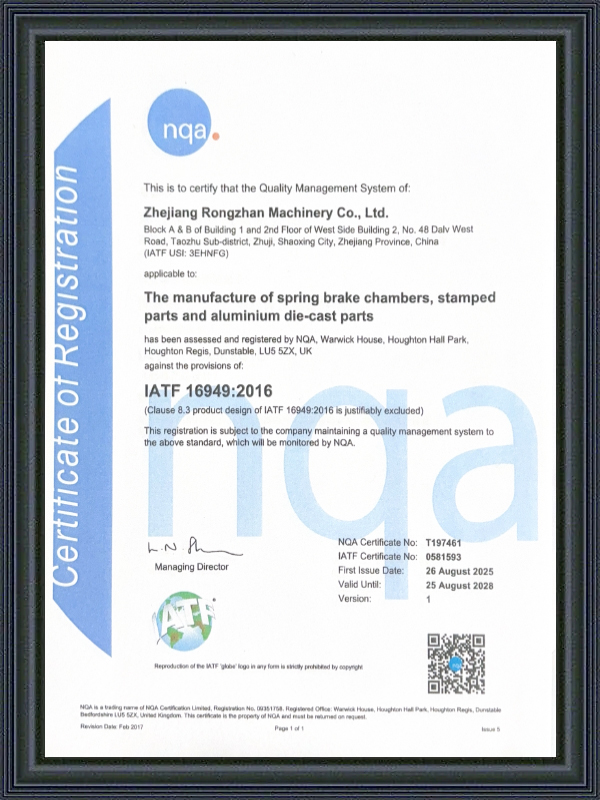
Certificate Of Honor

News
-
If you are qualifying a wedge brake chamber factory, settle five things before you talk about price: control over the wedge and roller components, test data produced on the wedge platform itself, pre-delivery inspection discipline, written interface dimensions, and the ability to repeat the same pa...
-
Two suppliers quote the same Type 20 service wedge brake chamber, and one is 20 percent cheaper. Six months later, the fleet that took the cheaper quote is replacing chambers early, re-adjusting stroke and paying freight twice. The saving never appeared on the invoice. It hid in the diaphragm compo...
-
Every S-Cam brake chamber you buy, whether you are a fleet maintenance director or an OEM purchasing engineer, is a bet on the factory that built it. The same Type 24 or Type 30 part number can behave very differently depending on the quality of the aluminum housing, the diaphragm compound, and the...
DP Disc Brake Chamber Industry knowledge
Comparative Technical Analysis: DP Disc Brake Chambers Versus Diaphragm-Type Disc Brake Chambers
The progression of commercial vehicle foundation brakes has placed increasing demands on the pneumatic actuators that drive wheel-end hardware. As heavy-duty fleets transition to air disc brake systems to achieve more stable deceleration profiles, selecting the appropriate actuator design becomes a critical engineering choice. The industry relies on two primary mechanical configurations to actuate disc calipers: the standard diaphragm-type disc brake chamber and the dual-piston or dual-performance disc brake chamber, commonly classified as the DP disc brake chamber. While both systems utilize compressed air to generate linear pushrod thrust, their internal mechanics, force distribution principles, and spatial constraints follow entirely different design paths. Evaluating these differences allows fleet operators, transport managers, and original equipment manufacturers to choose the correct component for specific load conditions and maintenance cycles. As a specialized manufacturer of commercial vehicle brake system components, Zhejiang Rongzhan Machinery Co., Ltd. analyzes these distinct mechanical configurations to build stable, uniform solutions for global transport platforms.
Internal Power Transmission Architecture and Mechanical Moving Elements
The core difference between these two actuator designs centers on the internal hardware components responsible for capturing air pressure and converting it into mechanical motion. A standard diaphragm-type disc brake chamber utilizes a flexible rubber or elastomeric disc held between two steel housing shells, which stretches and flexes forward when compressed air fills the pressure cavity. This flexing action directly moves a central pressure plate connected to the pushrod. In contrast, a DP disc brake chamber replaces this flexible rubber barrier with an integrated dual-performance structural arrangement or guided internal piston mechanism. This configuration relies on rigid metallic pressure surfaces fitted with low-friction perimeter seals that slide linearly within a precision-machined bore, preventing the material stretching or shape distortion that naturally occurs in rubber diaphragms over thousands of operating cycles.
| Actuator Type | Primary Internal Moving Part | Sealing Method | Structural Guidance Mechanism |
| Diaphragm Disc Chamber | Flexible elastomeric membrane | Clamped perimeter edge seal | Unguided pushrod plate connection |
| DP Disc Brake Chamber | Rigid metallic pressure plates | Sliding peripheral composite seals | Integrated axial sleeve alignment guides |
Linear Output Force Consistency Throughout the Stroke Range
Output force profiles vary considerably between the two technologies as the pushrod extends toward its maximum design limits. In a traditional diaphragm configuration, the net mechanical force output decreases marginally as the pushrod travels further because the rubber membrane must stretch against its own material tension, absorbing a small portion of the available pneumatic energy. A DP disc brake chamber maintains an unvaried force curve across its entire structural stroke range because the rigid pressure surfaces present an identical effective surface area regardless of pushrod position. This uniform force development translates directly to the internal caliper eccentric levers, ensuring that the brake pads press against the rotor with the exact same clamping force at the beginning of pad life as they do when the friction material is near its replacement wear limit.
Volumetric Air Consumption and System Initialization Times
Air brake system efficiency is also influenced by the internal clearance volume, or dead air space, present inside the actuator housing before pressure initialization occurs. Standard diaphragm housings often require a larger initial volume of compressed air to expand the flexible membrane and fill the deep curves of the outer shell, which can introduce a brief pneumatic lag time during rapid application cycles. The internal architecture of a DP disc brake chamber is engineered to minimize this inactive internal volume, requiring a smaller cubic volume of air to build the pressure threshold needed to initiate pushrod travel. This reduced volumetric requirement speeds up system initialization times, providing commercial vehicle operators with a quicker brake application response and lowering the frequency of compressor engagement cycles across long-haul highway routes.
| Performance Parameter | Diaphragm Actuator Behavior | DP Actuator Behavior |
| Force Trajectory | Slight reduction near full travel extension | Completely linear throughout the full stroke path |
| Internal Clearance Space | Higher due to structural membrane flexing needs | Minimized via tight internal component tolerance |
| Resistance to Side-Loading | Vulnerable to off-center shaft wear | High due to internal tracking alignment sleeves |
| Thermal Age Degradation | Subject to rubber hardening and cracking | Maintained through heat-stabilized sliding seals |
Thermal Resilience and Structural Longevity Under High Duty Cycles
Air disc braking systems generate intense thermal energy at the wheel end, which conducts directly through the caliper assembly and into the front face of the brake chamber housing. Under continuous high-frequency braking conditions, this conducted heat can cause standard rubber diaphragms to dry out, harden, and develop micro-fissures, leading to sudden pressure leaks and a loss of service brake capacity. Because a DP disc brake chamber utilizes rigid pressure surfaces paired with heat-stabilized synthetic composite seals, it offers enhanced resistance to thermal aging and structural degradation. This heat resilience is a key reason why heavy-duty fleet operators specify dual-performance configurations for vehicles running severe vocational routes. Zhejiang Rongzhan Machinery Co., Ltd. incorporates these high-grade synthetic materials within its strict quality control systems to safeguard component reliability across diverse environmental transport zones.
Chassis Integration and Fleet Maintenance Interchangeability
Integrating advanced actuator technology into modern commercial vehicle fleets requires complete backward and forward hardware compatibility to prevent complex workshop re-engineering. DP disc brake chambers are designed to match the universal flange mounting patterns, stud center dimensions, and pneumatic inlet port sizes found on standard diaphragm models. This engineering compliance allows international transport operators and trailer manufacturers to install these units as direct replacements or factory upgrades without altering the original caliper brackets or pneumatic supply plumbing. Zhejiang Rongzhan Machinery Co., Ltd. leverages its stable production capacity and extensive export experience to supply these cost-effective, dependable solutions to overseas markets and OEM customers worldwide, supporting long-term fleet partnerships through verified structural alignment and predictable component performance.
FAQ
Q: How does the rigid internal pressure surface of a DP disc brake chamber eliminate the force degradation common in standard diaphragm models near full extension?
A: A standard diaphragm disc chamber experiences material stretching and structural flexing as the pushrod extends, absorbing a portion of the pneumatic energy and reducing net output force. A DP disc brake chamber utilizes rigid pressure surfaces combined with sliding peripheral seals, ensuring that the effective working area remains unvaried and the mechanical output force stays completely linear throughout the entire stroke path.
Q: Why does a DP disc brake chamber decrease the initialization time of the vehicle air brake system during high-frequency application?
A: The internal design of a DP disc brake chamber is engineered with tight component tolerances that minimize inactive clearance space, or dead air volume, inside the cylinder. Because there is less empty housing volume to populate before the pushrod moves, a smaller cubic volume of compressed air is required to reach the pressure activation threshold, accelerating the response time of the caliper pads.
Q: What allows a DP disc brake chamber to resist thermal age hardening during heavy-duty vocational operations?
A: Air disc calipers conduct intense radiant heat to the actuator casing during severe deceleration events, which can dry out and crack standard rubber diaphragms. A DP disc brake chamber circumvents this vulnerability by replacing the flexible elastomer membrane with metallic pressure plates and heat-stabilized synthetic composite sliding seals that maintain their structural integrity and airtight seal at elevated operating temperatures.
Q: How do the integrated axial sleeve alignment guides in a DP disc brake chamber defend the system against pushrod side-loading?
A: Heavy-duty truck chassis vibrations and angular movements can introduce severe lateral or off-center forces onto the pushrod. The DP disc brake chamber addresses this by utilizing internal tracking alignment sleeves that restrict the internal components to a strictly linear travel axis, preventing side-loading from distorting the perimeter seals or causing uneven friction against the cylinder bore.
Q: Can global fleet operators integrate DP disc brake chambers from Zhejiang Rongzhan Machinery Co., Ltd. into trailers originally configured with standard diaphragm units?
A: Yes, these dual-performance actuators are engineered to match standard international flange mounting profiles, stud center dimensions, and pneumatic inlet port positions. This design compliance ensures that products from Zhejiang Rongzhan Machinery Co., Ltd. function as direct, cost-effective replacement upgrades without requiring modifications to existing caliper brackets or pneumatic supply lines.

- WHY US
- Company Profile
- Certifications
- News
- PRODUCTS
- S-Cam Type Brake Chamber
- DISC Brake Chamber
- Wedge Brake Chamber
- Piggyback Brake Chamber
- Brake Chamber Repair Kits
- MANUFACTURING
- Customer Service
- Factory Tour
-
-
No.90 Zhancheng Avenue, Zhuji City, Zhejiang Province, China

-
rongzhan@zjrongzhan.com / judith@zjrongzhan.com

-
+86-15258814607

-
- CONTACT


