

 русский
 Español
 عربى



Service Wedge Brake Chamber Suppliers: A Fleet Buyer's Vetting Checklist
Content
- 1 What a Service Wedge Brake Chamber Actually Does
- 2 Six Checks That Decide Fit, Performance and Service Life
- 3 How to Screen a Supplier Before You Release a Batch
- 4 Where Wedge Chambers Sit in a Full Brake Chamber Programme
- 5 Cost, Lead Time and Total Landed Price
- 6 Sampling, Storage and the Reorder Risk
Two suppliers quote the same Type 20 service wedge brake chamber, and one is 20 percent cheaper. Six months later, the fleet that took the cheaper quote is replacing chambers early, re-adjusting stroke and paying freight twice. The saving never appeared on the invoice. It hid in the diaphragm compound, the wedge roller interface, the push rod length and the fact that nobody tested the unit at low temperature before it was packed.
The conclusion first: when you compare service wedge brake chamber suppliers, price is the last thing to check, not the first. A supplier worth a long-term order can show three things on paper: a chamber built to your original stroke, push rod, port and mounting dimensions; test reports covering temperature, performance and service life; and inspection records that follow the part from raw material to the sealed carton.
What a Service Wedge Brake Chamber Actually Does
Air does the same job in every drum brake, but the route it takes differs. In an S-cam system, the chamber push rod moves a slack adjuster that rotates a camshaft. In a wedge system, the push rod drives a wedge between two rollers, and the rollers push the brake shoes outward against the drum. Fewer joints, a shorter force path, and far less tolerance for a chamber whose stroke is off.
The service side of the assembly is the part that works every time the driver touches the pedal. The spring brake side, where one is fitted, holds the vehicle for parking and emergency stops. That split is why a service wedge chamber is defined by four dimensions: stroke, push rod and clevis, air port thread, and mounting pattern. A chamber that bolts on but strokes differently changes shoe clearance and brake timing, and it usually shows up first as uneven lining wear on one axle.
Six Checks That Decide Fit, Performance and Service Life
Put these on one sheet and attach it to your RFQ. Most rejected wedge chamber orders fail on one of the first three rows.
| Check | Typical options | What goes wrong | How to verify |
|---|---|---|---|
| Stroke type | Standard, long stroke, three stroke | Wrong stroke changes shoe clearance and brake timing | Measure push rod travel at application pressure against the OEM figure |
| Push rod and clevis | Long rod, welded clevis, threaded rod | A clevis that does not match cannot be adjusted correctly | Check thread pitch, rod length and clevis bore against the old part |
| Air port and thread | M22 port, Voss interface, M18 hole | Leaks or cross-threaded fittings at installation | Run a thread gauge over the port and inspect the sealing face |
| Diaphragm compound | Compounds chosen for cold, temperate or hot climates | Hardening or cracking, and a slow loss of stroke | Ask for high and low temperature test data, not a material name |
| Mounting and clamp band | Bolt spacing, band diameter, orientation | Loosening under vibration or contact with the suspension | Trial fit one unit before releasing a batch |
| Repair kit match | DD and DP kit ranges | A kit that will not fit the chamber body in service | Cross-check the kit number against the chamber model you buy |
The pattern matters. The first three rows are dimensional and can be confirmed with a drawing, a gauge and a trial fit. The last three are material and design decisions that only appear in service, so a temperature and service life report carries more weight than a data sheet claim. Chambers working through rapid temperature swings are a useful test case, and the failure modes are described in this note on how heavy duty brake chambers handle thermal cycling.
How to Screen a Supplier Before You Release a Batch
A brake chamber audit is shorter than most buyers expect. OEMs and fleets tend to score the same seven points.
- Certification: IATF 16949 as the baseline for OEM supply, with documentation matching the standard you buy against.
- Test capability: an in-house laboratory that issues high and low temperature, performance and service life reports quickly, instead of sending samples out for weeks.
- Inspection coverage: checks from incoming raw material to finished product, with 100 percent inspection before delivery.
- Capacity and flexibility: high annual output for large orders, plus smaller batches accepted without a heavy surcharge.
- Supply chain control: in-house die-casting and stamping, which cut subcontractor risk and hold pricing through a price review.
- Customisation: order archiving, custom drawings, and options for material, surface treatment and packaging.
- Export experience: proven supply to Europe and North America, with documents and support in the buyer's language.
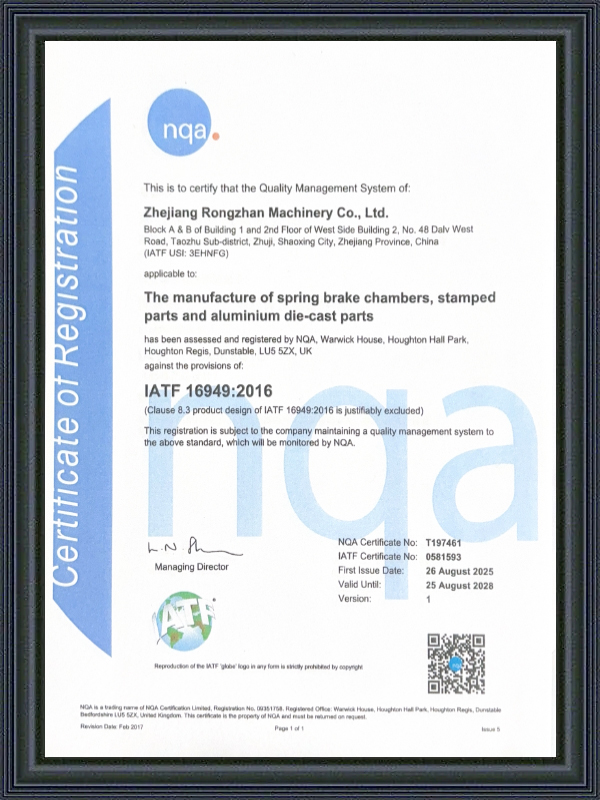
Zhejiang Rongzhan Machinery, the commercial vehicle brake chamber manufacturer behind this site, fits that profile. Its company profile states IATF 16949 certification, an in-house laboratory, annual output above three million sets and its own aluminium die-casting and stamping shops, with products supplied to overseas markets and OEM customers. How a supplier describes its own process tells you what to ask the next candidate to prove in the same words.
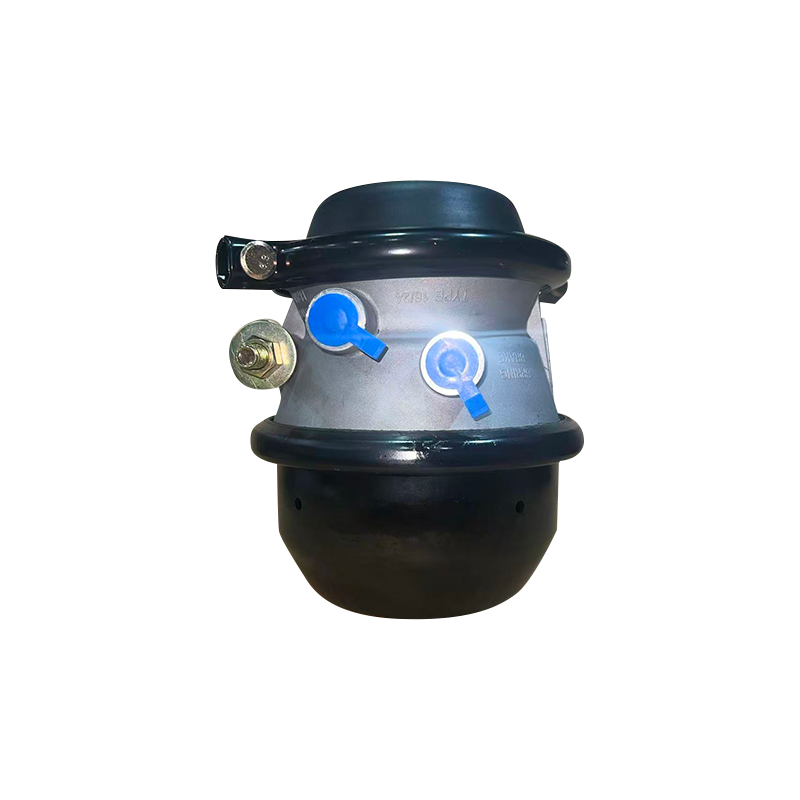
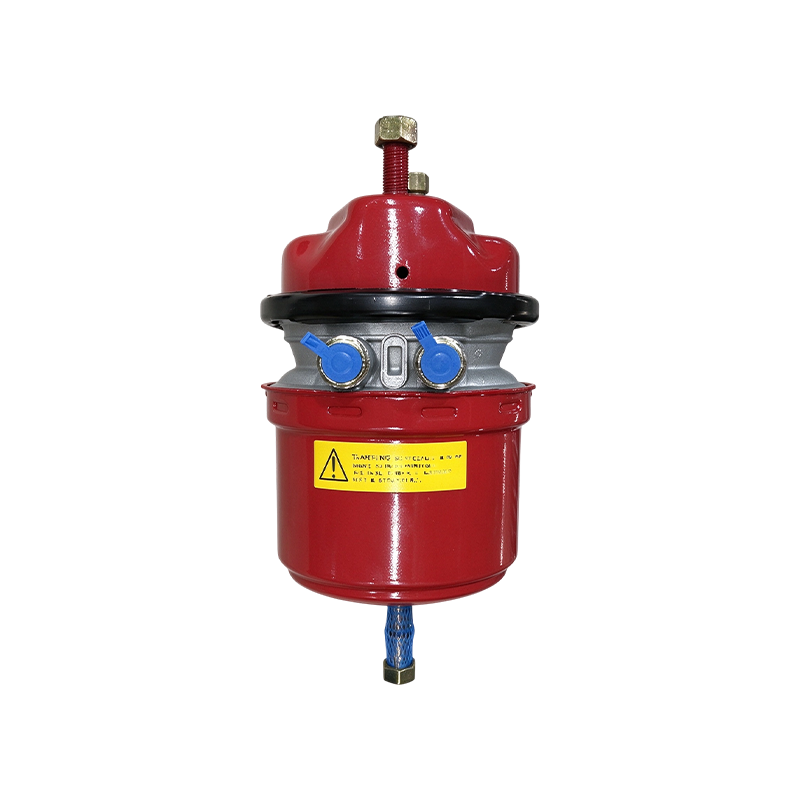
 Custom Service Wedge Brake Chamber for Commercial VehiclesSingle-cavity pneumatic service actuator for wedge-actuated commercial vehicle foundation brakes, suited to mixed fleets and front steer or trailer axles without parking retention.View Product →
Where Wedge Chambers Sit in a Full Brake Chamber Programme
Most fleets and OEMs do not buy a single chamber type. A mixed operation may run S-cam chambers on one axle group, wedge chambers on another and long stroke piggyback units elsewhere. Buying all of them from one manufacturer keeps port threads, diaphragm compounds and inspection standards consistent, which shortens incoming inspection and makes reorders safer.
Brake chamber families at a glance
- Brake chambers
- S-Cam type: DD, DP and single chambers
- Disc type: single, DD and DP disc chambers
- Wedge type: service wedge and DP wedge chambers
- Piggyback: standard and long stroke versions
- Repair kits: DD and DP kits
Inside the wedge family, catalogues normally split into service wedge chambers and DP wedge versions, which use a different internal layout for a different force curve. The two can look nearly identical from the outside, so ask for a marked drawing and an archived part number before the first order. Mixing them is one of the most common reorder errors in wedge brake systems.
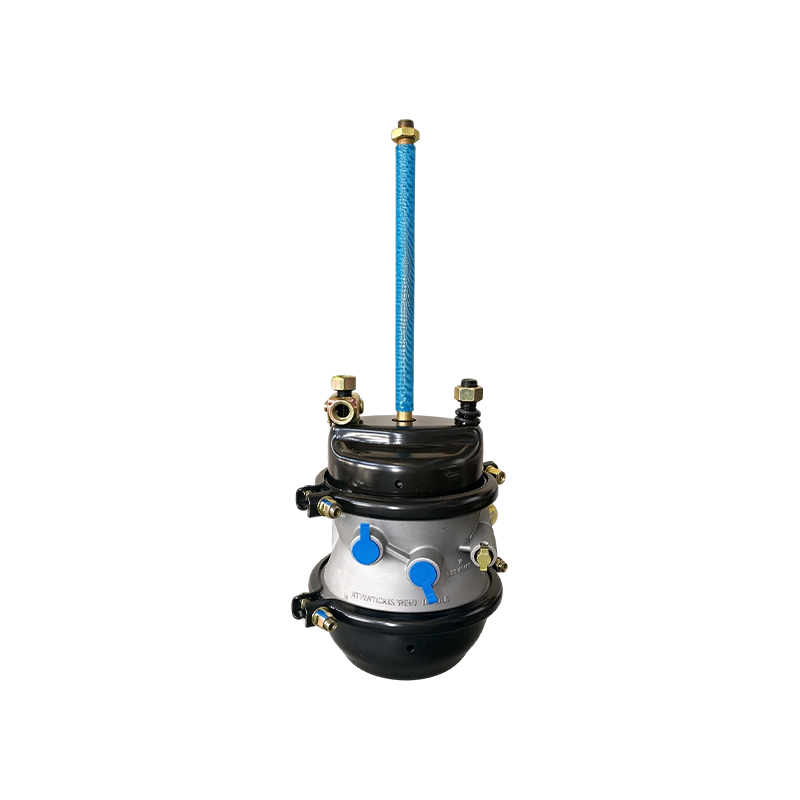
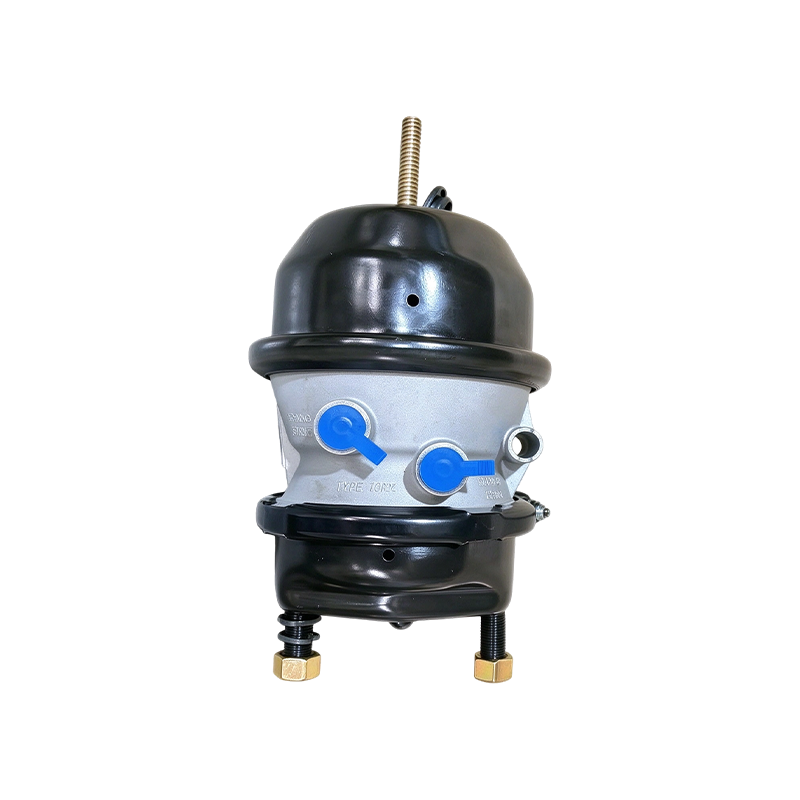
DP Wedge Brake Chamber for Heavy-Duty Commercial VehiclesDual-piston DP wedge actuator for heavy-duty commercial vehicles, with compact profile and enclosed wedge protection for low-chassis or severe-duty applications.View Product →Cost, Lead Time and Total Landed Price
Unit price is one line in the landed cost of a brake chamber. Add freight, because chambers are bulky and heavy; incoming inspection time; line downtime when a batch fails a fit check; and the labour to replace a chamber that fails in service. A supplier that controls more of its own production, for example with in-house die-casting and stamping, removes one layer of subcontractor margin and one layer of traceability risk at the same time. That advantage survives an annual price review, unlike a temporary discount.
Capacity works the same way. A manufacturer producing more than three million sets a year can absorb a large OEM order, and one that also schedules smaller batches can take a fleet top-up without pushing lead time into a full production cycle. Ask for both numbers: annual capacity and the smallest batch accepted without a surcharge.
Illustrative supplier scorecard weighting
The percentages above are a suggested weighting, not a measurement of any particular supplier. Adjust them to your own risk profile: a fleet with one workshop will weight delivery reliability higher, while an OEM building to a drawing will weight test documentation higher.
Sampling, Storage and the Reorder Risk
Two failures repeat across almost every brake chamber programme, and neither is about the chamber itself.
The first is sampling. A supplier can deliver a perfect first article and drift six months later if the drawings used to build it were never archived. Ask how order records and custom drawings are stored, and whether a repeat order is made to the revision you approved. Material, surface treatment and packaging choices belong in that written record, not in a verbal agreement.
The second is aftermarket supply. A service wedge chamber usually outlives its diaphragm, so fleets need repair kits in the same port thread and stroke family as the chambers they run. A supplier with both the chamber and the kit in its catalogue keeps that consistent; a trader sourcing from several factories often cannot. Storage matters too: rubber ages, so keep shelf stock out of direct sun and away from heat sources, and rotate it first in, first out.
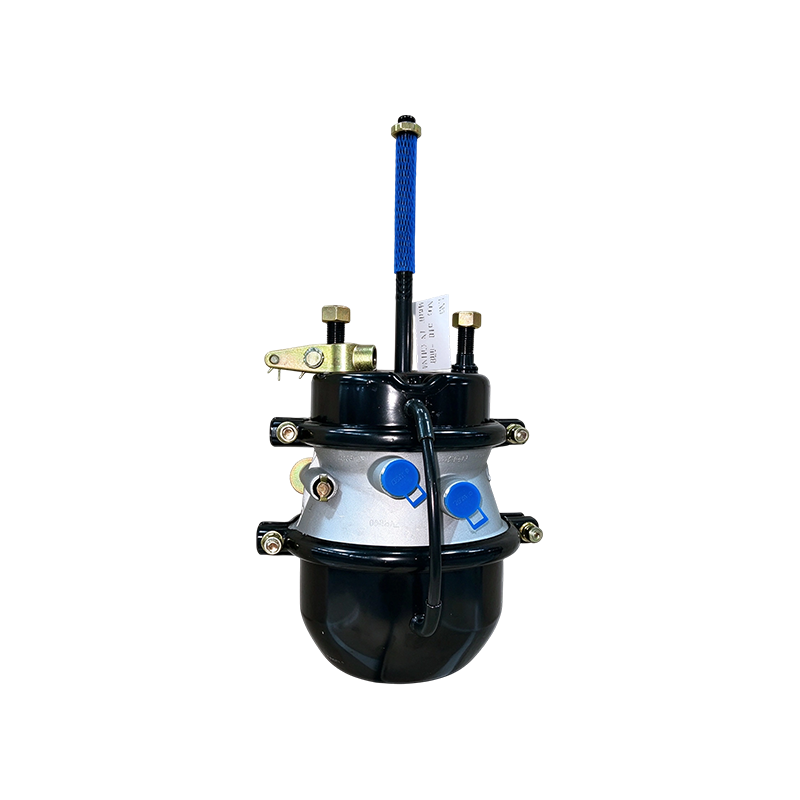
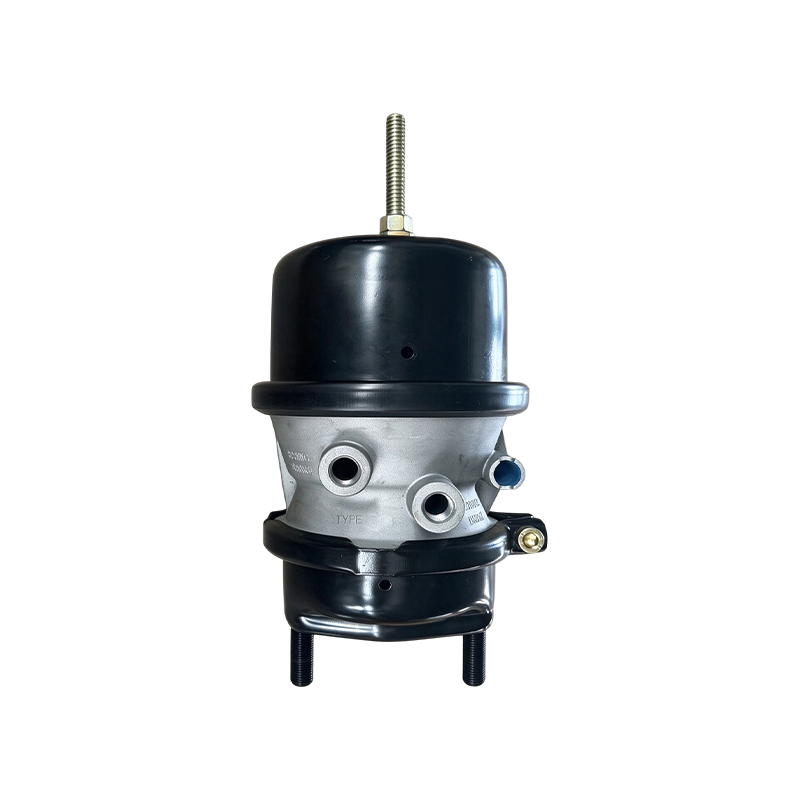
Brake Chamber Repair Kits for Trucks and TrailersAftermarket repair kits with diaphragms, pushrods and seals to restore brake chamber performance without replacing the full assembly on trucks, trailers and buses.View Product →Choosing among service wedge brake chamber suppliers comes down to evidence. Before you release a batch, ask for a marked drawing that shows stroke, push rod length and port thread, temperature and service life reports from the supplier's own laboratory, an inspection plan that ends in 100 percent pre-delivery checks, and one sample unit for a trial fit. Put those four items in the RFQ, and most of the risk leaves the conversation before price negotiation starts.



-
If you are qualifying a wedge brake chamber factory, settle five things before you talk about price...
-
When a driver presses the brake pedal on a commercial truck or trailer, a sequence of events begins ...
-
QUICK ANSWER A disc brake chamber converts compressed air pressure into the mechanical force that ...
-
Piggyback Brake Chamber: What It Does and Why Specs Matter When a trailer sits overnight and you he...
-
Ask any fleet maintenance manager who has rebuilt a spring brake actuator and they will tell you th...
-
A fleet running 40-ton tractors can feel the difference between two nominally identical S-cam brake...

- WHY US
- Company Profile
- Certifications
- News
- PRODUCTS
- S-Cam Type Brake Chamber
- DISC Brake Chamber
- Wedge Brake Chamber
- Piggyback Brake Chamber
- Brake Chamber Repair Kits
- MANUFACTURING
- Customer Service
- Factory Tour
-
-
No.90 Zhancheng Avenue, Zhuji City, Zhejiang Province, China

-
rongzhan@zjrongzhan.com / judith@zjrongzhan.com

-
+86-15258814607

-
- CONTACT


