

 русский
  Español
  عربى
عربى 

INQUIRY NOW

-
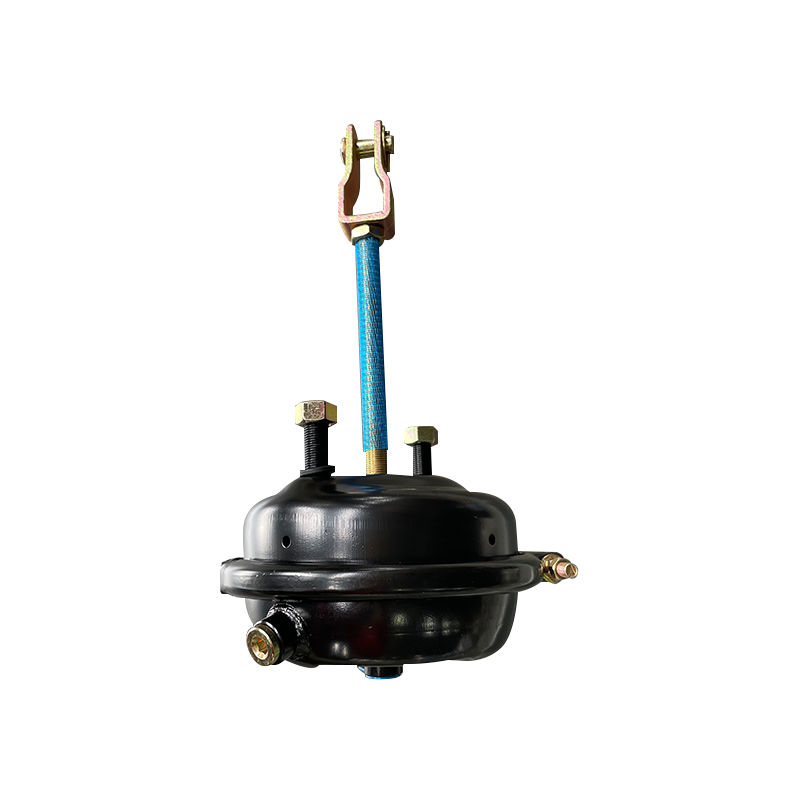



T30 Brake Chamber With Long Stroke
-
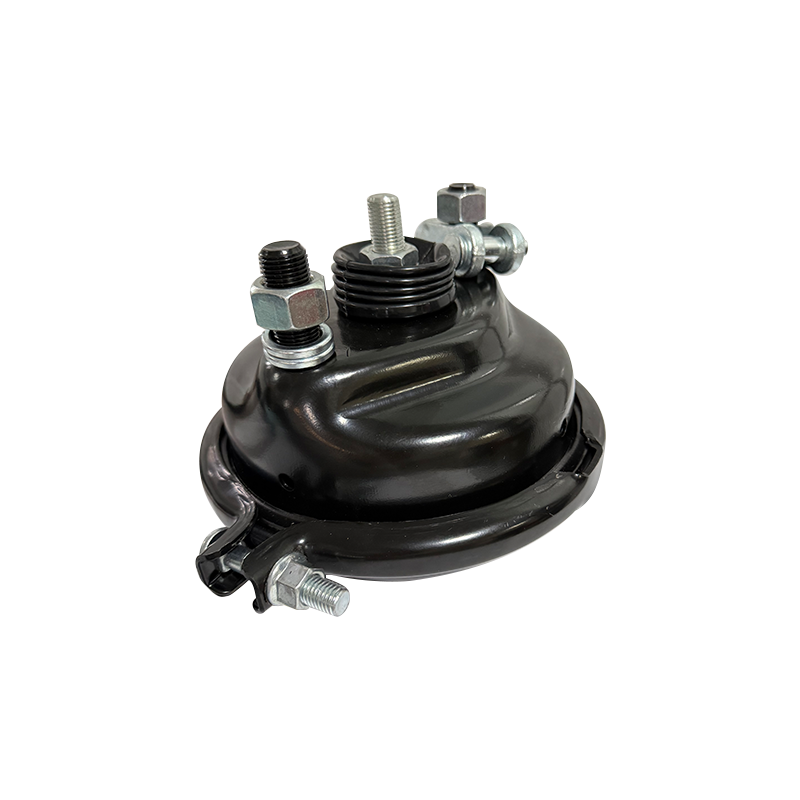
T24 Single Brake Chamber TATA Truck
-
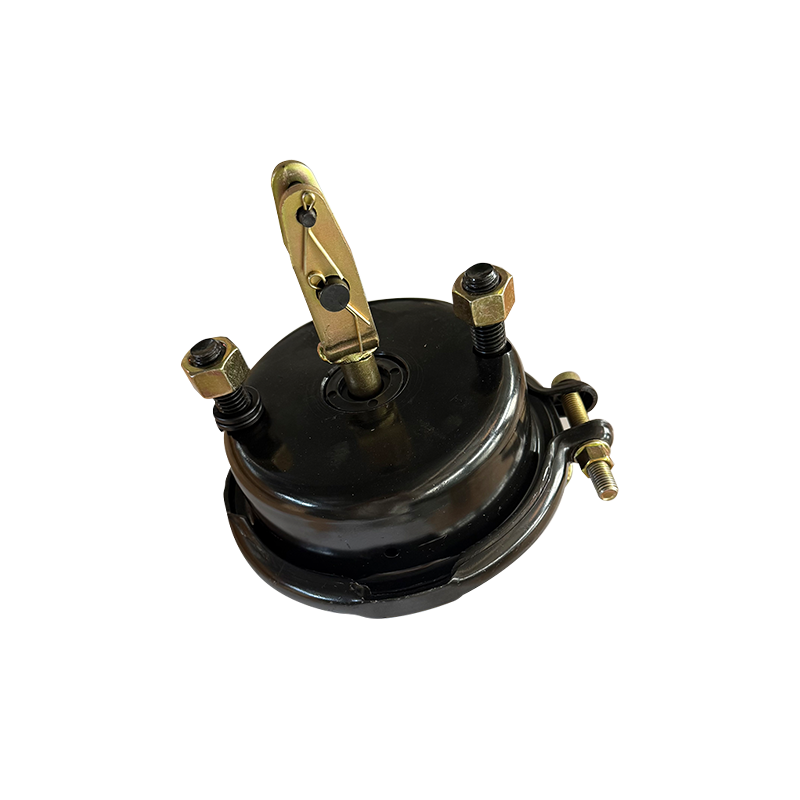
T20 Universal Standard Brake Chamber 20SCLW2
-
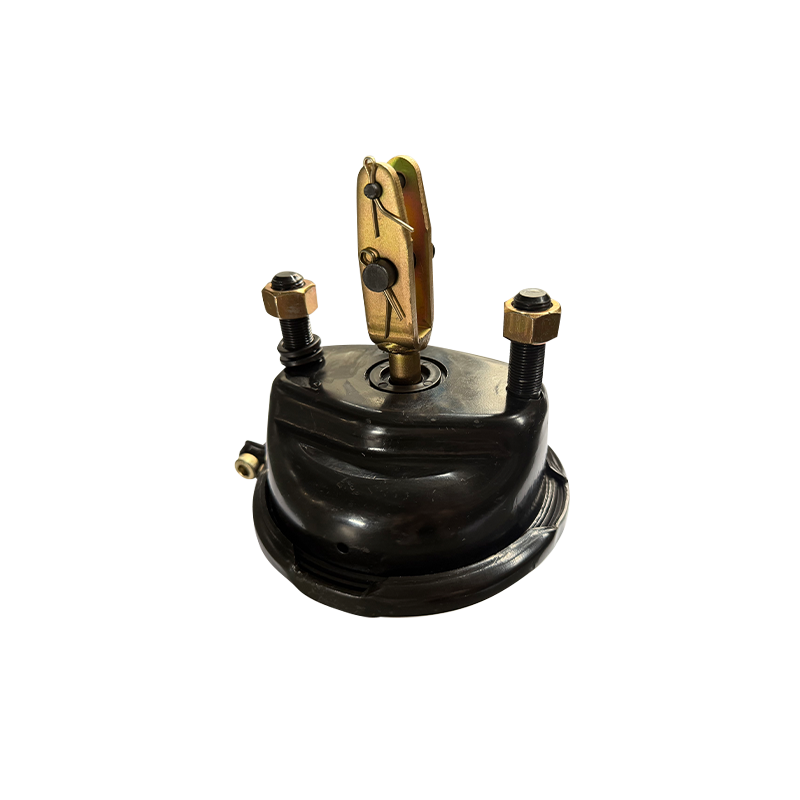
T16 Compact-Optimized Single-Chamber Brake Actuator 16LCW
-
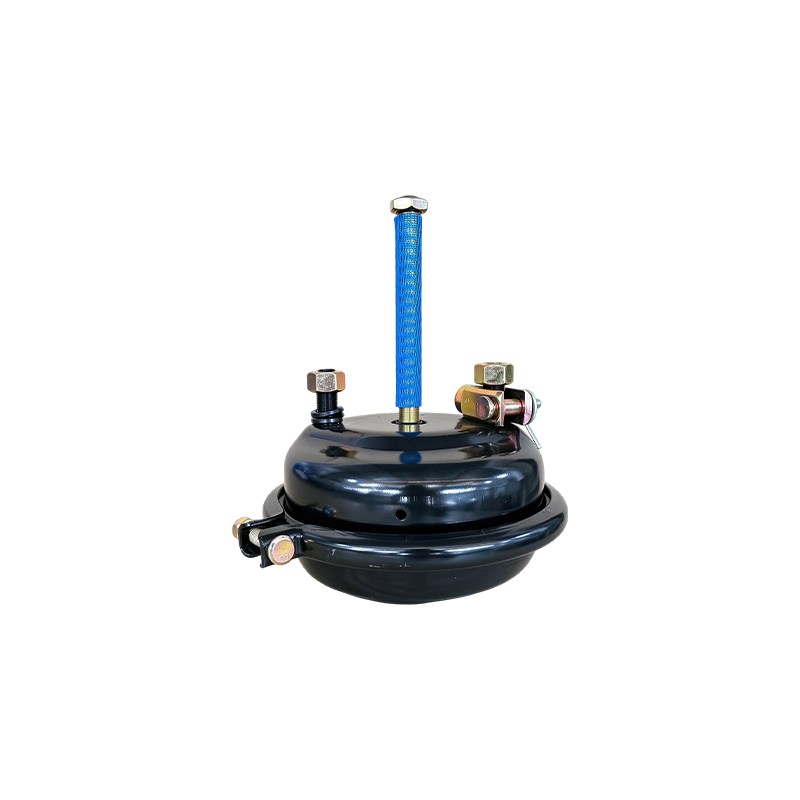
T30 Clamp-Mount Standard Brake Chamber
-
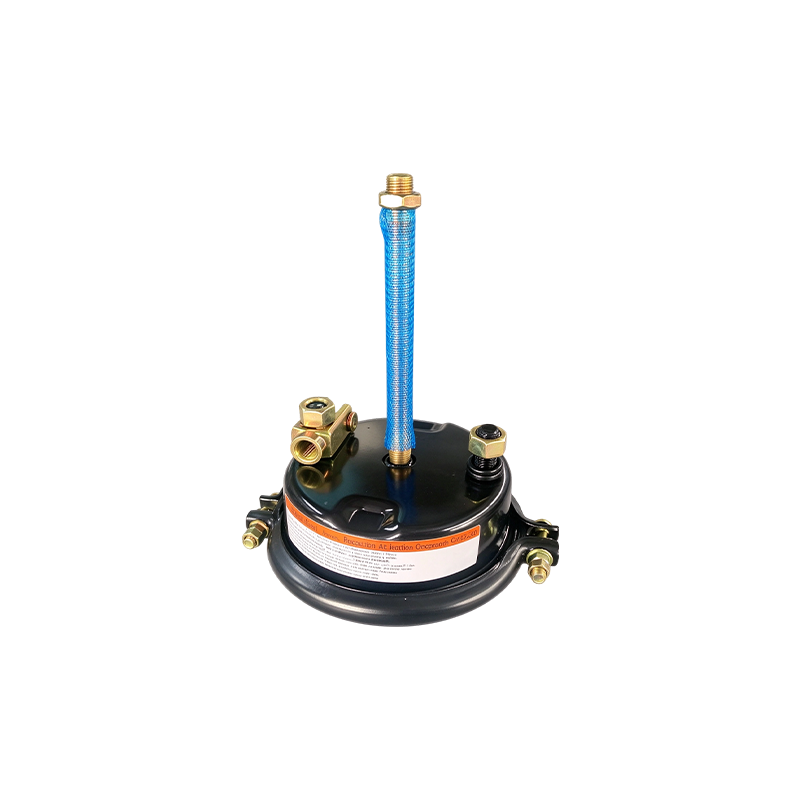
T24 Clamp-Mount Standard Brake Chamber (Black)
-
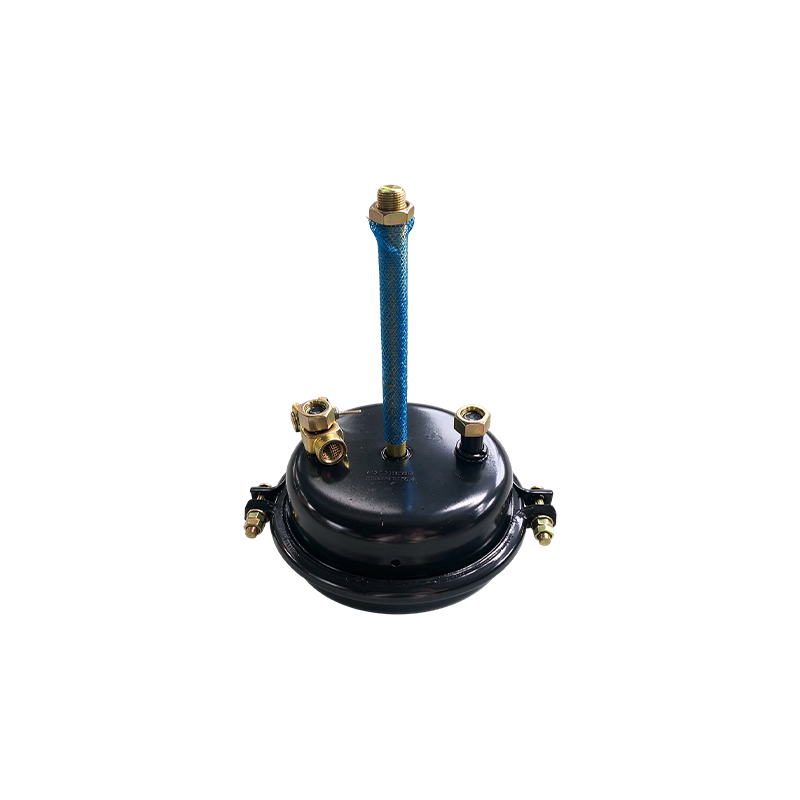
T30 Single-Hole Long Stroke Brake Chamber (2.25in)
-
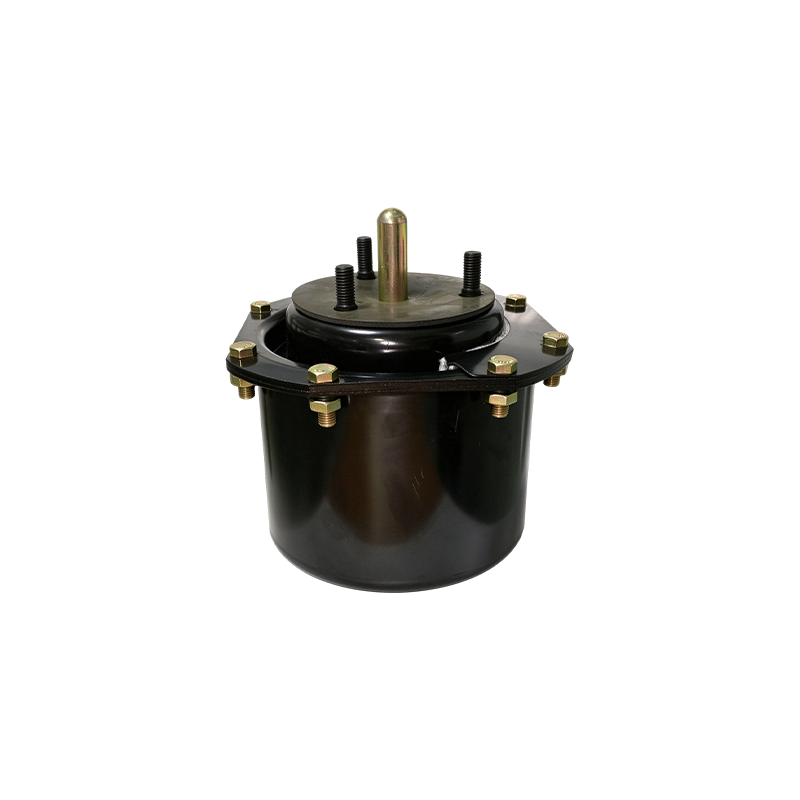
Flange-Mount Single Brake Chamber (Black)
-
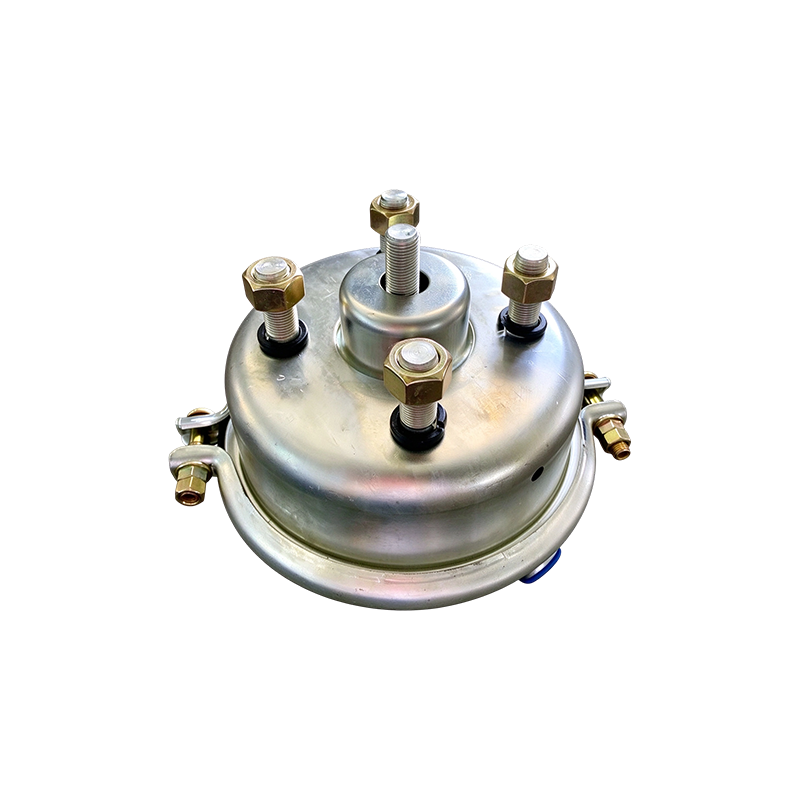
Flange-Mount Single Brake Chamber (Zinc-Plated)
-
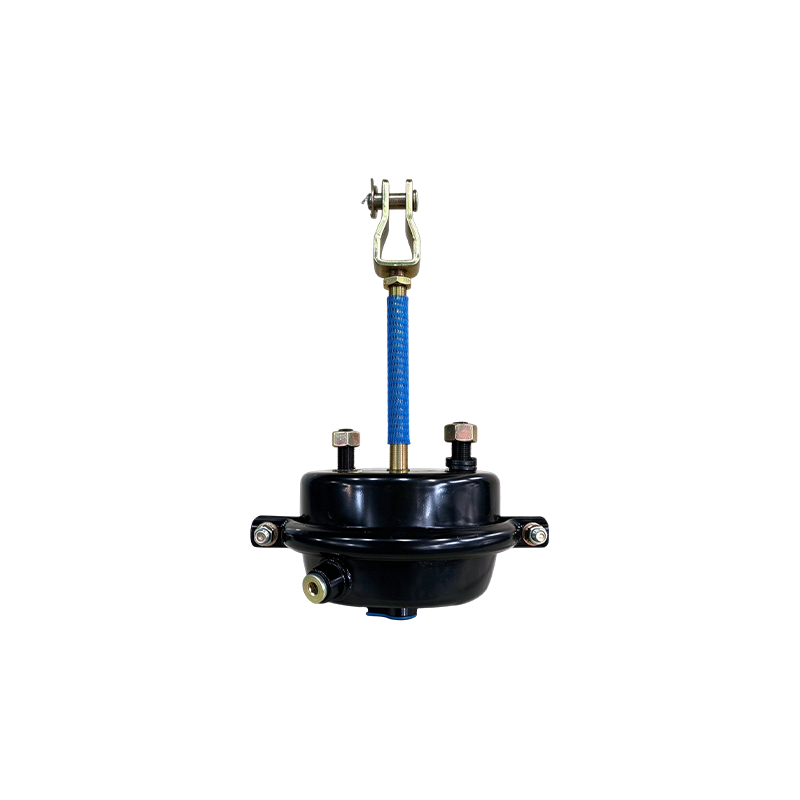
T24K Two-Hole Long Stroke Brake Chamber (3in)
The Single Brake Chamber is a high-performance braking component designed for installation on a vehicle's front axle or chassis; it features a compact structure that facilitates easy maintenance and replacement. Its rear housing is equipped with an air port that connects to the vehicle's pneumatic lines, integrating seamlessly into the braking system to deliver precise and efficient braking control. Comprising core components such as the top cover, diaphragm, clamp ring, push rod, and return spring, this brake chamber is suitable for a wide range of vehicles—including light-duty trucks, heavy-duty trucks, buses, and agricultural machinery—thereby meeting the diverse requirements of a broad spectrum of vehicle models.
The product offers two distinct connection methods: The "Double Clamp" method provides flexible adaptability across various vehicle types, allowing users to adjust the installation angle as needed for effortless assembly, disassembly, and replacement. Conversely, the "Single Clamp" method is ideal for vehicles with limited chassis space or for high-end models, offering a secure, tight connection that ensures safe and reliable installation. By varying the diaphragm size, the Single Brake Chamber is available in different model variants; furthermore, a long-stroke version is offered to provide superior braking solutions for high-specification vehicles or those operating under specific, demanding conditions. To cater to the diverse demands of the market, the company also possesses the expertise to supply products in various color combinations, offering customers greater flexibility in their maintenance operations and vehicle customization efforts.
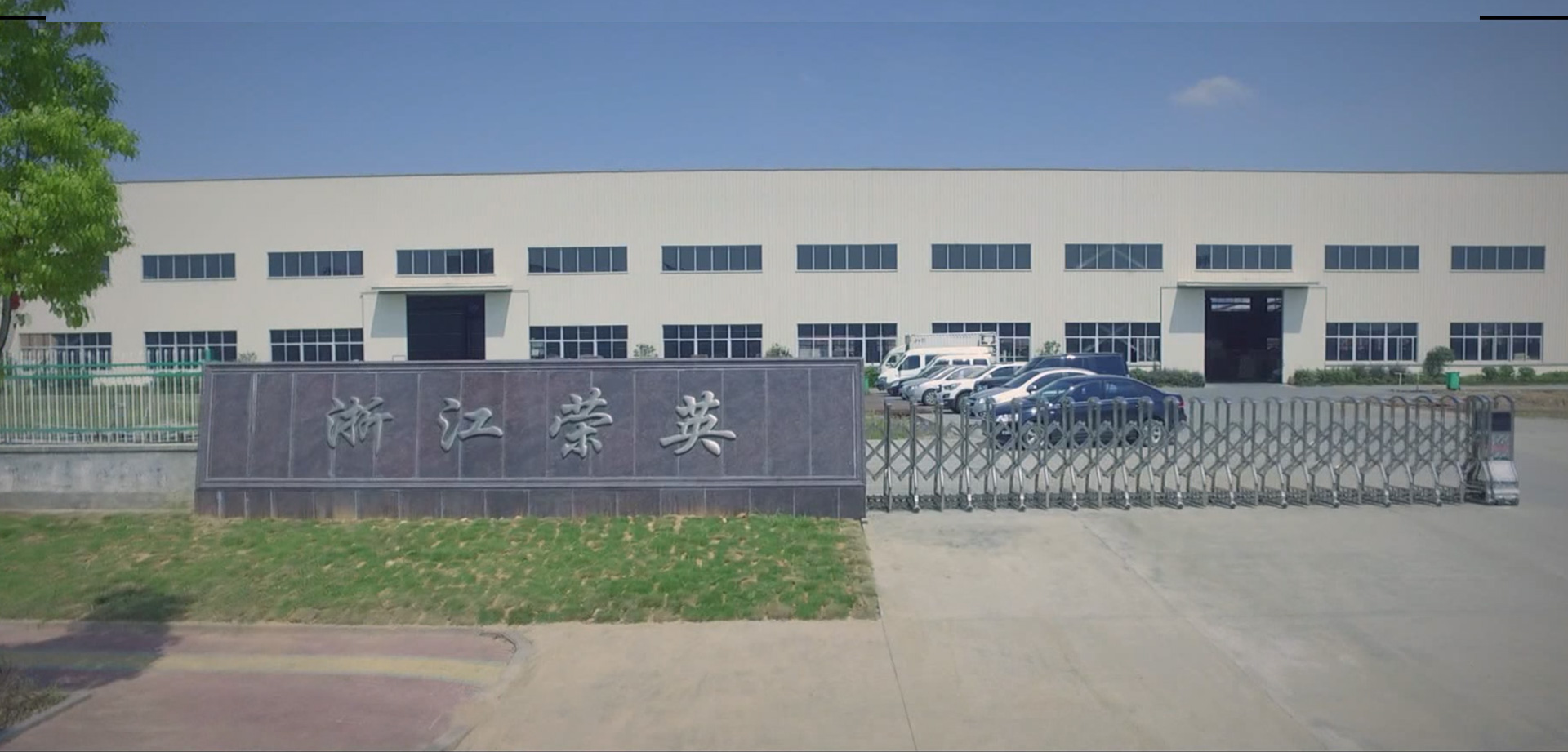
RONGZHAN
BRAKE COMPONENTS
As China Single Brake Chamber Manufacturers and Single Brake Chamber Suppliers, Zhejiang Rongzhan Machinery Co., Ltd. specialize in the production of spring brake chambers and service brake chambers for trucks and trailers. Backed by stable production capacity, strict quality control systems, and extensive export experience, our products are widely supplied to overseas markets and OEM customers worldwide. Rongzhan is committed to reliable quality, consistent performance, and long-term partnerships. We provide customers with cost-effective solutions and dependable service.
-
 0Year Established
 -
 0+Number of Employees
 -
 0SetsAnnual Production Volume
 -
0SetsAnnual Export Volume
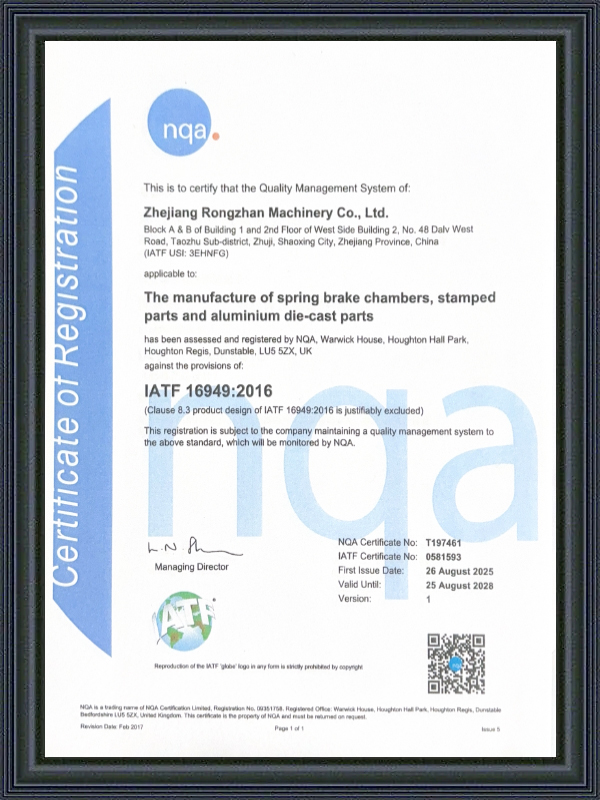
Certificate Of Honor

News
-
If you are qualifying a wedge brake chamber factory, settle five things before you talk about price: control over the wedge and roller components, test data produced on the wedge platform itself, pre-delivery inspection discipline, written interface dimensions, and the ability to repeat the same pa...
-
Two suppliers quote the same Type 20 service wedge brake chamber, and one is 20 percent cheaper. Six months later, the fleet that took the cheaper quote is replacing chambers early, re-adjusting stroke and paying freight twice. The saving never appeared on the invoice. It hid in the diaphragm compo...
-
Every S-Cam brake chamber you buy, whether you are a fleet maintenance director or an OEM purchasing engineer, is a bet on the factory that built it. The same Type 24 or Type 30 part number can behave very differently depending on the quality of the aluminum housing, the diaphragm compound, and the...
Single Brake Chamber Industry knowledge
Functional and Application Differences Between Single Brake Chambers and Double Spring Brake Chambers
Commercial vehicle air brake systems rely on distinct pneumatic components to handle different operational demands, specifically active vehicle deceleration and stationary vehicle parking. The two primary categories of actuators used to manage these demands are the single brake chamber, often called a service brake chamber, and the double brake chamber, universally known as a spring brake chamber. While both units convert compressed air into mechanical force, their internal structures, structural complexities, and operational responsibilities differ completely. Choosing the correct unit requires an understanding of vehicle design, axle placement, and regulatory demands. As an established manufacturer of commercial vehicle brake system components, Zhejiang Rongzhan Machinery Co., Ltd. produces both types of chambers to support international transport fleets and global trailer manufacturers.
Structural Design and Mechanical Composition
The primary variation between the two configurations lies within their internal hardware compartments. A single brake chamber consists of a single housing section containing a flexible rubber diaphragm, a return spring, and a pushrod assembly. It features one air inlet port and relies entirely on a constant supply of compressed air from the foot valve to push the diaphragm forward and stroke the brakes. A double brake chamber combines two separate functional modules into a single tandem unit. The front portion acts identically to a service chamber for operational braking, while the rear portion houses a high-tension mechanical coil spring and a second diaphragm. This tandem configuration requires two separate air delivery lines and an independent control valve to operate the separate chambers, making the double unit much larger and structurally heavier than its single counterpart.
| Technical Feature | Single Brake Chamber | Double Spring Brake Chamber |
| Internal Housing Sections | Single Compartment | Tandem Dual Compartments |
| Air Port Configuration | One Service Inlet Port | One Service Port and One Parking Port |
| Mechanical Emergency Spring | Absent | Present (Heavy Coil Spring) |
| Overall Housing Length | Shorter Axial Footprint | Extended Axial Footprint |
Operational Dynamics and System Actuation Methods
The two types of actuators function using opposite pressure philosophies during vehicle operation. A single brake chamber applies mechanical force only when the system receives positive air pressure. When the driver releases the brake pedal, air vents out from the chamber, and the small internal return spring pushes the diaphragm back to its resting state, releasing the vehicle brakes. A double brake chamber utilizes a negative pressure management system for its parking section. The heavy internal coil spring remains mechanically compressed under constant air pressure while the vehicle is driving. When the driver pulls the parking brake valve or if the vehicle suffers an unexpected loss of system air pressure, the air inside the parking section escapes, allowing the large spring to expand instantly and force the pushrod forward to lock the wheels.
Axle Allocation and Practical Vehicle Applications
Due to these distinct functional variations, single and double chambers are assigned to different locations on trucks, tractors, and trailers. Single brake chambers are typically installed on steer axles where parking brakes are rarely required and where precise weight distribution and minimal component size are preferred. They are also utilized on specific trailer axles when regional safety regulations permit trailing configurations that combine service-only axles with spring-brake-equipped axles. Double brake chambers are mandatory on drive axles and primary trailer axles because they provide the mechanical clamping force needed to park a fully loaded vehicle safely on a steep grade without relying on continuous pneumatic pressure. Zhejiang Rongzhan Machinery Co., Ltd. addresses these specific allocation needs by supplying tailored production volumes of both single and dual-chamber solutions to overseas markets.
| Application Parameter | Single Brake Chamber Setup | Double Spring Brake Chamber Setup |
| Primary Axle Placement | Front Steering Axles / Auxiliary Axles | Rear Drive Axles / Primary Trailer Axles |
| Parking Capacity | None | Full Stationary Parking Capability |
| Emergency Braking Role | No Function During Air Loss | Applies Brakes Automatically Upon Air Loss |
| Maintenance Safety Protocol | Standard Servicing Measures | Requires Strict Mechanical Caging Procedures |
Safety Risks and Emergency Braking Capabilities
The presence of the emergency spring module creates a major safety distinction between the two components during a sudden pneumatic failure. If a main supply line ruptures and a vehicle relies solely on a single brake chamber setup across all axles, the system loses all braking force, presenting an immediate operational hazard. A double brake chamber acts as a fail-safe mechanism during these emergency situations. Because the parking spring requires air pressure to remain compressed, any uncontrolled pressure drop below a specific threshold causes the spring to overcome the remaining air resistance and automatically engage the foundation brakes to bring the vehicle to a controlled halt. This automated mechanical backup explains why international safety standards mandate a specific ratio of spring-actuated chambers on commercial transport assets.
Maintenance Procedures and Mechanical Handling Requirements
The procedural steps for servicing these units require different technical safety protocols due to the stored energy levels inside the housings. Servicing a single brake chamber is relatively straightforward, as technicians only need to release system pressure and remove the clamp band to swap out a worn rubber diaphragm. Servicing a double brake chamber requires severe caution because the internal parking spring is held under hundreds of pounds of mechanical force. Prior to removing or adjusting a double unit, a technician must insert a specialized steel caging bolt into the rear housing and wind it down completely to lock the spring in a compressed state. Zhejiang Rongzhan Machinery Co., Ltd. integrates clear warning labels and reliable caging systems across its entire spring chamber line to support safe fleet maintenance and minimize workplace risks for worldwide customers.
FAQ
Q: Why are steering axles predominantly equipped with a single brake chamber rather than a double spring brake chamber?
A: Steering axles require precise weight distribution, maximum clearance for wheel turning angles, and a reduced component footprint to maintain optimal handling. Since a single brake chamber provides only service braking via direct air application and lacks the heavy, bulky emergency spring section found in dual chambers, it fits comfortably within the tight spatial constraints of front axle assemblies without adding unnecessary weight to the steering geometry.
Q: How does a technician determine if an air leak is originating from a single brake chamber diaphragm or the surrounding pneumatic line fittings?
A: To isolate the leak, a technician should apply constant air pressure to the service line while applying a specialized leak-detection solution around the chamber's outer clamp band and the airline connections. If bubbles form specifically along the seam of the clamp band or through the exhaust holes at the base of the unit, it indicates that the internal rubber diaphragm of the single brake chamber is ruptured or degraded and requires replacement.
Q: What are the consequences of installing a single brake chamber with an incorrect pushrod length on a trailer axle?
A: Installing a pushrod that is cut too short prevents the slack adjuster from returning to its correct rest position, which can cause the brakes to drag, overheat, and accelerate lining wear. Conversely, a pushrod that is too long will limit the available stroke travel, preventing the single brake chamber from delivering adequate mechanical force to expand the brake shoes fully against the drum during sudden application.
Q: How does Zhejiang Rongzhan Machinery Co., Ltd. ensure its single brake chamber models withstand severe environmental exposure in overseas markets?
A: Zhejiang Rongzhan Machinery Co., Ltd. subjects all chamber housings to strict quality control systems, including advanced anti-corrosion surface coatings. The internal return springs and hardware are manufactured from high-tensile steel designed to resist road salt, moisture, and extreme temperature cycling, ensuring that our products maintain consistent performance and a long operational lifespan for global OEM and aftermarket customers.
Q: Can a single brake chamber be used to substitute a damaged front section of a double spring brake chamber?
A: No, a standard single brake chamber cannot be used as a direct patch or internal replacement part for a double spring brake chamber. While they share similar service-side principles, the double chamber relies on an integrated, specific tandem housing design, unique internal sealing walls, and specialized long-stroke components that are structurally inseparable from the emergency spring module.

- WHY US
- Company Profile
- Certifications
- News
- PRODUCTS
- S-Cam Type Brake Chamber
- DISC Brake Chamber
- Wedge Brake Chamber
- Piggyback Brake Chamber
- Brake Chamber Repair Kits
- MANUFACTURING
- Customer Service
- Factory Tour
-
-
No.90 Zhancheng Avenue, Zhuji City, Zhejiang Province, China

-
rongzhan@zjrongzhan.com / judith@zjrongzhan.com

-
+86-15258814607

-
- CONTACT


