

 русский
  Español
  عربى
عربى 

INQUIRY NOW

-




Universal Brake Chamber Clamp (7 Sizes)
-
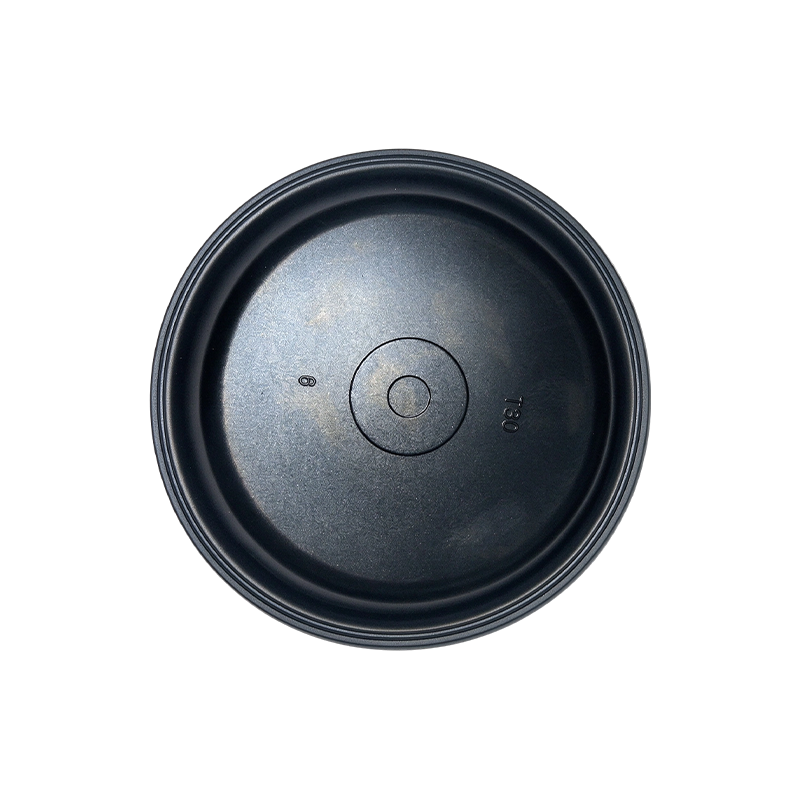
Universal Brake Chamber Diaphragm (5 Sizes)
-
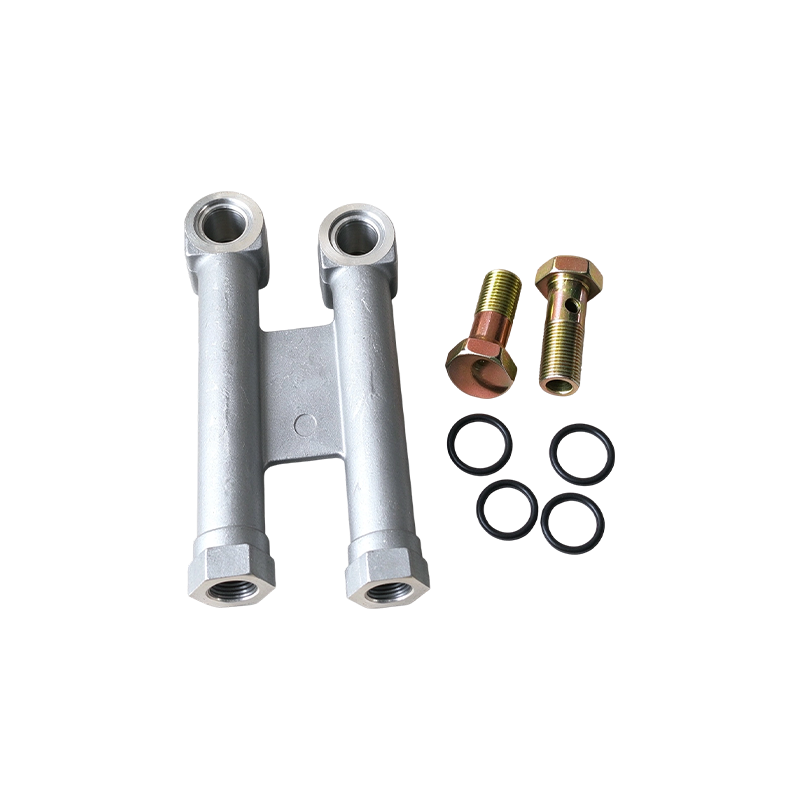
H-Pipe Connector Assembly
-
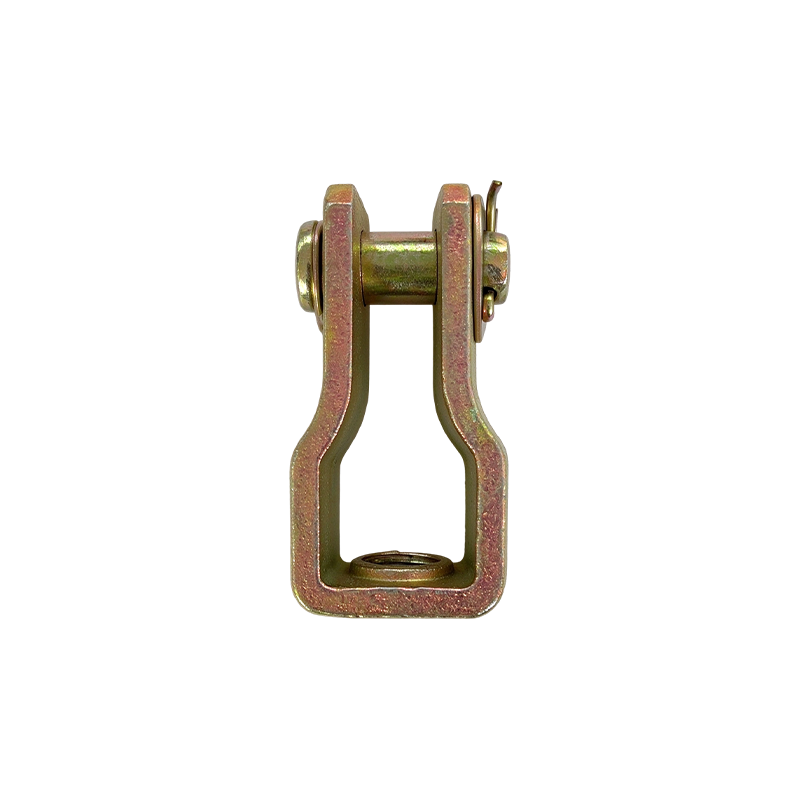
Push Rod Clevis Fork
The DD Brake Chamber Repair Kit is a comprehensive maintenance solution designed specifically for dual-diaphragm brake chambers. Offering a one-stop service, the kit includes the top cover, diaphragm, main spring, and other critical components. This repair kit enables users to replace aged or worn core parts without the need to replace the entire brake chamber, thereby reducing maintenance costs while simultaneously enhancing repair efficiency and safety.
Prior to leaving the factory, the repair kit undergoes rigorous testing to ensure that all components feature precise dimensions and stable performance. These parts are designed to match the original brake chamber perfectly, guaranteeing the reliability and durability of the braking system following replacement. Constructed from high-quality materials, the kit features a diaphragm with excellent elasticity and sealing properties, as well as a durable and reliable main spring, ensuring stable operation under heavy loads, frequent start-stop cycles, and complex working conditions. By utilizing this repair kit, users can quickly complete replacement procedures in a safe and standardized environment, minimizing downtime while extending the service life of the brake chamber and associated systems.
RONGZHAN
BRAKE COMPONENTS
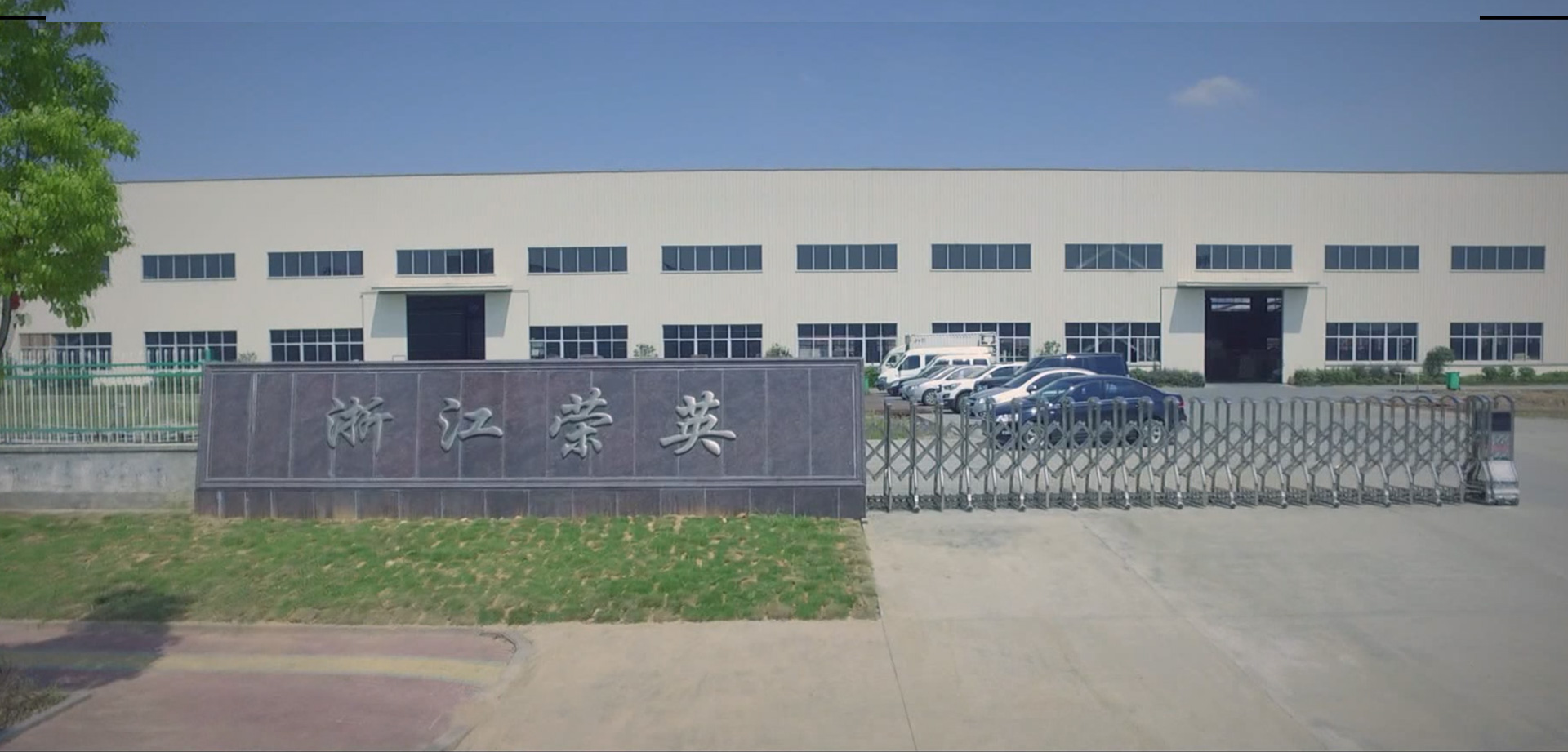
As China DD Brake Chamber Repair Kit Manufacturers and DD Brake Chamber Repair Kit Suppliers, Zhejiang Rongzhan Machinery Co., Ltd. specialize in the production of spring brake chambers and service brake chambers for trucks and trailers. Backed by stable production capacity, strict quality control systems, and extensive export experience, our products are widely supplied to overseas markets and OEM customers worldwide. Rongzhan is committed to reliable quality, consistent performance, and long-term partnerships. We provide customers with cost-effective solutions and dependable service.
-
 0Year Established
 -
 0+Number of Employees
 -
 0SetsAnnual Production Volume
 -
0SetsAnnual Export Volume
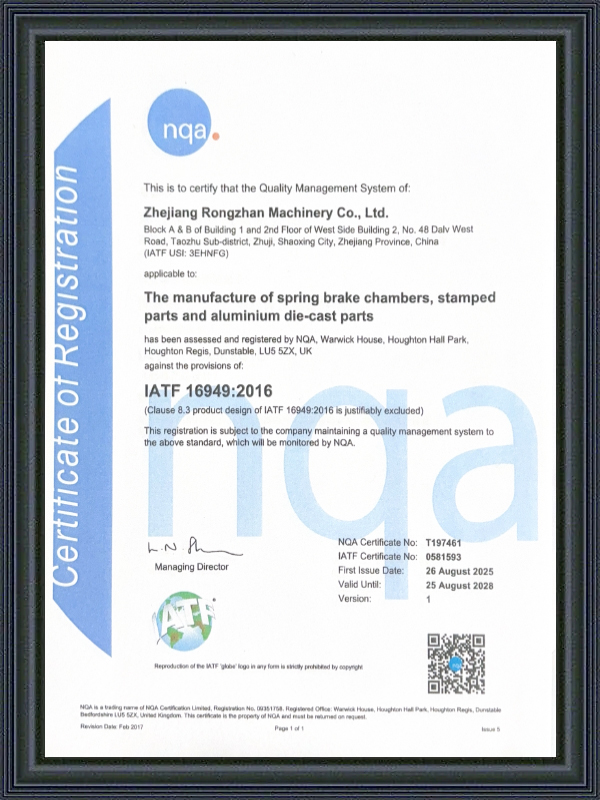
Certificate Of Honor

News
-
If you are qualifying a wedge brake chamber factory, settle five things before you talk about price: control over the wedge and roller components, test data produced on the wedge platform itself, pre-delivery inspection discipline, written interface dimensions, and the ability to repeat the same pa...
-
Two suppliers quote the same Type 20 service wedge brake chamber, and one is 20 percent cheaper. Six months later, the fleet that took the cheaper quote is replacing chambers early, re-adjusting stroke and paying freight twice. The saving never appeared on the invoice. It hid in the diaphragm compo...
-
Every S-Cam brake chamber you buy, whether you are a fleet maintenance director or an OEM purchasing engineer, is a bet on the factory that built it. The same Type 24 or Type 30 part number can behave very differently depending on the quality of the aluminum housing, the diaphragm compound, and the...
DD Brake Chamber Repair Kit Industry knowledge
Low-Temperature Material Integrity and Polymer Cross-Linking Mechanics in Compressed Air Actuator Overhaul Components
Pneumatic foundation brake actuators on heavy-duty commercial vehicles operate under severe environmental conditions, moving from high-heat wheel-end environments during long downhill braking events to sub-zero ambient temperatures during high-latitude winter routes. A primary vulnerability in air brake architecture is the physical state change that occurs within the internal sealing membranes and O-rings when exposed to extreme thermal drops, particularly the threshold of minus 40 degrees Celsius. At this temperature, standard elastomeric compounds lose their flexible physical properties, transitioning from a pliable rubber state to a rigid, glass-like structure that is highly susceptible to structural fracture. Utilizing specialized maintenance materials, such as those found in a designated DD brake chamber repair kit, is a key method for ensuring that vehicle pneumatic circuits remain airtight under extreme winter conditions. Evaluating the underlying polymer chemistry, structural cross-linking parameters, and sealing mechanics reveals how these rubber elements resist degradation in sub-zero transport corridors. Manufacturing entities like Zhejiang Rongzhan Machinery Co., Ltd. leverage disciplined quality control systems to supply these temperature-stabilized components to global transport networks and original equipment manufacturer channels.
The Glass Transition Temperature Threshold and Polymeric Molecular Behavior
The primary factor determining whether a rubber component will maintain structural integrity at minus 40 degrees Celsius is its specific glass transition temperature. In standard nitrile rubber or conventional elastomeric formulations, the molecular polymer chains slide smoothly past each other at room temperature, providing the flexibility needed to expand and contract with incoming compressed air pressure. As the ambient temperature drops toward the glass transition point, the kinetic energy within these polymer chains diminishes, causing the molecular bonds to contract and restrict internal movement. Once the material drops past its specific transition limit, the polymer matrix enters a brittle state where any sudden mechanical deflection causes the chains to snap rather than bend. The elastomeric elements integrated into a professional DD brake chamber repair kit are formulated with specialized plasticizers and custom copolymer ratios that depress the transition value well below the minus 40 degrees Celsius line, ensuring that the molecular chains maintain adequate kinetic movement under extreme thermal loads.
| Elastomer Base Compound | Typical Glass Transition Temp Range | Flexibility Behavior at Minus 40 Degrees | Primary Structural Application |
| Standard Nitrile Rubber (NBR) | Minus 30 to Minus 35 Celsius | Undergoes structural crystallization; high risk of cracks | General-purpose temperate seals |
| Low-Temperature NBR / Epichlorohydrin | Minus 45 to Minus 55 Celsius | Retains pliable flex matrix; moves without splitting | Extreme-climate service diaphragms |
| Standard Silicone Formulations | Minus 60 to Minus 70 Celsius | Highly flexible but exhibits low tensile tear resistance | Static static seals; uncommon for high-pressure stroke |
Mechanical Deflection Stress and Cyclic Flex Fatigue At Extreme Sub-Zero Limits
When a vehicle is operational in arctic environments, the service diaphragm inside the pneumatic actuator undergoes severe mechanical deflection every time the operator applies the foot valve. If the rubber material has developed localized hardening due to the ambient cold, this forced deflection introduces high internal shear stress along the clamped outer perimeter flange. This stress leads to microscopic surface fissures that propagate into deep structural tears over repeated pressure cycles, culminating in a sudden loss of service brake pressure. High-grade replacement kits prevent this crack propagation by utilizing synthetic polymers that resist low-temperature crystallization. This structural stability ensures that the diaphragm rolls smoothly against the internal housing steps rather than creasing sharply, preserving consistent pneumatic response times across the vehicle axle array.
Compression Set Retention and Perimeter Sealing Integrity
Beyond the flexible service diaphragm, a dual-diaphragm or double-diaphragm actuator requires secondary internal seals, such as the O-rings and lip seals that wrap around the internal push tubes and center isolation walls. At minus 40 degrees Celsius, hardened rubber loses its elastic memory, a characteristic measured as high compression set retention. When a cold seal is deformed by the movement of an internal piston, the hardened material cannot expand quickly enough to fill the sealing gap as the shaft retracts, creating a temporary clearance space that allows high-pressure air to escape into the adjacent atmospheric chamber. Specialized rubber components engineered for these kits are optimized for low compression set values, meaning they maintain active outward radial sealing tension against the machined steel walls even when chilled to the minus 40 degrees Celsius limit, preventing internal air bypassing during initial morning fleet operations.
| Environmental Hazard Element | Impact on Non-Stabilized Polymers | Stabilized Repair Kit Mitigation Outcome |
| Continuous Cold Exposure | Polymer crystallization; localized material hardening | Maintains stable Durometer hardness rating |
| Rapid Pneumatic Pressurization | Brittle fracture along high-stress flex zones | Distributes linear tensile load evenly across the flex arc |
| Salt and Chemical De-Icing Fluids | Accelerated chemical leaching and polymer swelling | Resists chemical absorption, preserving structural dimensions |
| Mechanical Shaft Friction | Hardened seals score the cylinder bore surface | Pliable seal lips slide smoothly with low friction metrics |
Resistance to Chemical Leaching from Winter Road De-Icing Agents
The operational environment of a commercial trailer chassis during winter involves constant exposure to highly corrosive chemical de-icing agents, including calcium chloride and magnesium chloride solutions sprayed onto highway surfaces. These chemicals form an airborne mist that can migrate through the actuator breather holes, coming into direct contact with the internal rubber seals. If the elastomer formulation is unstable, these chemical compounds leach out the internal plasticizing oils, accelerating the hardening process and causing the rubber to shrink and split prematurely. Components manufactured under strict quality parameters, such as those supplied by Zhejiang Rongzhan Machinery Co., Ltd., use chemically inert base polymers that prevent de-icing solutions from extracting the critical low-temperature plasticizers, safeguarding the structural composition of the seals over multiple winter seasons.
Global Aftermarket Logistics and Fleet Maintenance Standardization
For international transport fleets managing logistics corridors across northern territories, standardizing on replacement parts with verified sub-zero material parameters is a vital step toward reducing unsprung component failures and maintaining regulatory safety scores. Utilizing a certified DD brake chamber repair kit backed by documented temperature testing allows workshop supervisors to perform reliable cylinder overhauls without the logistical uncertainty of unbranded alternatives. This engineering consistency supports long-term fleet distribution networks by ensuring that every overhauled actuator delivers uniform mechanical thrust and stable pneumatic containment under the most demanding winter weather profiles across the globe.
FAQ
Q: How do the elastomeric parts in a DD brake chamber repair kit avoid becoming brittle and snapping at minus 40 degrees Celsius?
A: The rubber parts in these specialized kits are formulated with advanced low-temperature plasticizers and specific copolymer ratios that depress the glass transition temperature well below the minus 40 degrees Celsius threshold. This prevents the polymer matrix from crystallizing and turning brittle, allowing the membranes to maintain flexible moving properties under extreme winter conditions.
Q: Why is low compression set retention a critical requirement for the internal O-rings included in a DD brake chamber repair kit?
A: At extreme sub-zero temperatures, standard rubber loses its elastic memory and hardens, failing to expand quickly when the internal shafts slide. Rebuild components engineered for these kits focus on low compression set metrics, ensuring the internal seal lips retain continuous outward radial tension against the cylinder bores to eliminate morning air leakage and pressure bypassing.
Q: What design features protect the service diaphragms in these overhaul kits from premature perimeter tearing during high-frequency winter operations?
A: When chilled by arctic weather, non-stabilized rubber creates high internal shear stress when forced to flex. The replacement diaphragms feature optimized rolling geometric contours that distribute linear tensile loads evenly across the flex arc rather than creasing sharply against the housing steps, which eliminates localized stress fissures and extends service lifespans.
Q: How do the components in a DD brake chamber repair kit resist structural degradation caused by chemical road de-icers?
A: Winter highway maintenance relies on corrosive calcium and magnesium chloride sprays that can drift into actuator breather holes and leach oils out of standard rubber, causing shrinkage. The seals manufactured under these precise configurations utilize chemically inert base polymers that prevent de-icing solutions from extracting critical plasticizers, keeping the seals structurally intact.
Q: Can international transport fleets use DD brake chamber repair kits from Zhejiang Rongzhan Machinery Co., Ltd. to standardize maintenance across mixed axle arrays?
A: Yes, these kits are produced under strict quality control systems to match international original equipment manufacturer dimensions and sealing profiles perfectly. Sourcing these components from Zhejiang Rongzhan Machinery Co., Ltd. allows global operators to conduct dependable axle overhauls that guarantee uniform pneumatic performance and full safety compliance in extreme climates.

- WHY US
- Company Profile
- Certifications
- News
- PRODUCTS
- S-Cam Type Brake Chamber
- DISC Brake Chamber
- Wedge Brake Chamber
- Piggyback Brake Chamber
- Brake Chamber Repair Kits
- MANUFACTURING
- Customer Service
- Factory Tour
-
-
No.90 Zhancheng Avenue, Zhuji City, Zhejiang Province, China

-
rongzhan@zjrongzhan.com / judith@zjrongzhan.com

-
+86-15258814607

-
- CONTACT


