

 русский
  Español
  عربى
عربى 

INQUIRY NOW

information to be updated
The DP Brake Chamber Repair Kit is a comprehensive maintenance solution designed specifically for piston-type (plug-type) brake chambers, offering a one-stop package that includes the top cover, bottom shell, aluminum center body, spring, and other critical components. This kit enables users to replace aged or worn core parts without the need to replace the entire brake chamber, thereby reducing costs while simultaneously enhancing maintenance efficiency and operational safety.
Manufactured using high-precision processes, the product ensures that all components achieve a perfect dimensional match with the original brake chamber, thereby preserving the performance and reliability of the braking system. The piston and spring are crafted from high-strength, durable materials capable of withstanding heavy loads, frequent start-stop cycles, and demanding road conditions, ensuring a smooth and stable braking process. The design of the aluminum center body and bottom shell reinforces overall structural integrity while facilitating easy disassembly and assembly, thereby minimizing maintenance downtime. The comprehensive configuration of the DP Brake Chamber Repair Kit not only streamlines the maintenance workflow but also guarantees airtight sealing and the longevity of internal components, effectively extending the service life of both the brake chamber and the entire braking system.
RONGZHAN
BRAKE COMPONENTS
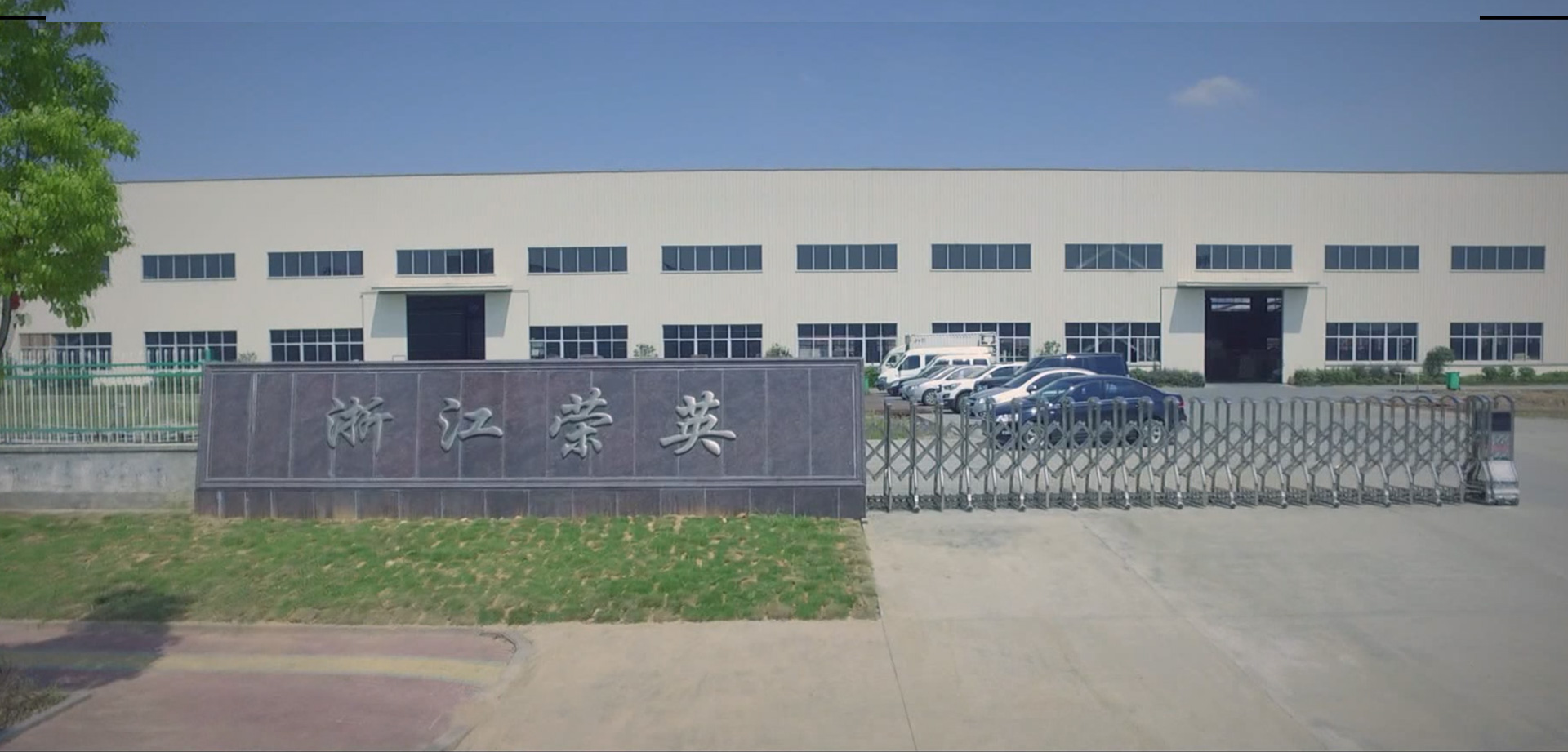
As China DP Brake Chamber Repair Kit Manufacturers and DP Brake Chamber Repair Kit Suppliers, Zhejiang Rongzhan Machinery Co., Ltd. specialize in the production of spring brake chambers and service brake chambers for trucks and trailers. Backed by stable production capacity, strict quality control systems, and extensive export experience, our products are widely supplied to overseas markets and OEM customers worldwide. Rongzhan is committed to reliable quality, consistent performance, and long-term partnerships. We provide customers with cost-effective solutions and dependable service.
-
 0Year Established
 -
 0+Number of Employees
 -
 0SetsAnnual Production Volume
 -
0SetsAnnual Export Volume
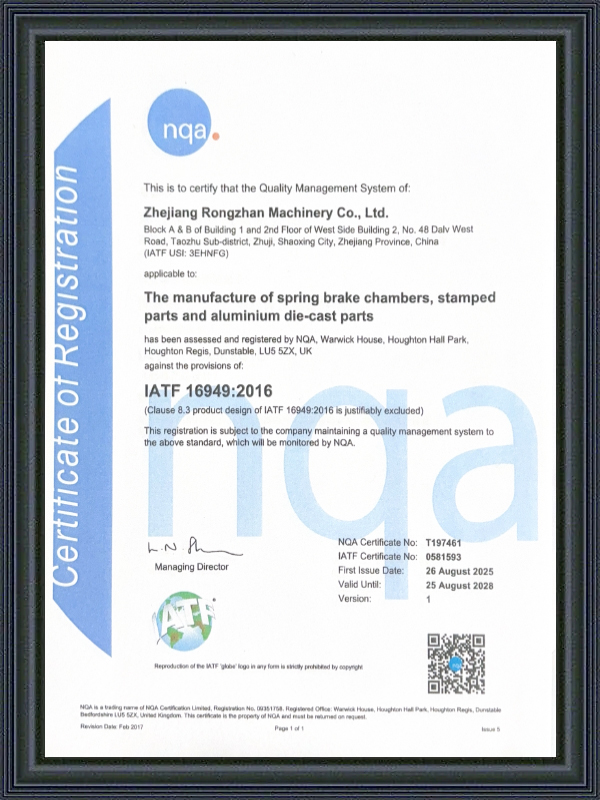
Certificate Of Honor

News
-
If you are qualifying a wedge brake chamber factory, settle five things before you talk about price: control over the wedge and roller components, test data produced on the wedge platform itself, pre-delivery inspection discipline, written interface dimensions, and the ability to repeat the same pa...
-
Two suppliers quote the same Type 20 service wedge brake chamber, and one is 20 percent cheaper. Six months later, the fleet that took the cheaper quote is replacing chambers early, re-adjusting stroke and paying freight twice. The saving never appeared on the invoice. It hid in the diaphragm compo...
-
Every S-Cam brake chamber you buy, whether you are a fleet maintenance director or an OEM purchasing engineer, is a bet on the factory that built it. The same Type 24 or Type 30 part number can behave very differently depending on the quality of the aluminum housing, the diaphragm compound, and the...
DP Brake Chamber Repair Kit Industry knowledge
The Mechanical Dynamics of Return Springs in Dual-Performance Actuator Overhaul Kits
Pneumatic foundation brakes on commercial transport vehicles rely on a balanced relationship between air pressure application and mechanical force retraction. When an operator releases the brake pedal, the compressed air within the actuator cylinder must exhaust rapidly to allow the friction linings to separate from the rotating drum or disc hardware. A critical component responsible for driving this structural retraction is the internal return spring. Within specialized dual-piston or dual-performance systems, utilizing an engineered component like a DP brake chamber repair kit ensures that the internal moving parts return to their zero-point rest positions without mechanical lag. If a return spring suffers from material fatigue or improper force calibration, the pushrod will fail to retract fully, leading to continuous brake shoe drag, high thermal spikes, and premature lining wear. Sourcing replacement components from a verified supplier like Zhejiang Rongzhan Machinery Co., Ltd., which utilizes disciplined quality control systems, helps international fleets maintain precise axle actuation parameters and reliable vehicle deceleration profiles.
Linear Compression Resistance and Retraction Force Curves
The primary function of the return spring inside a dual-performance actuator is to counteract the linear thrust generated by incoming compressed air and immediately pull the internal pressure plates back once that pressure drops. The spring must possess a precisely calibrated linear compression rate, or spring rate, that stores sufficient mechanical energy during the brake application stroke without creating excessive resistance that would reduce net braking force. In standard kits, unverified spring steel can suffer from rapid relaxation under load, losing its structural elasticity over repeated cycles. A professional-grade DP brake chamber repair kit features return springs engineered with a linear force curve that remains uniform throughout the entire pushrod travel range, guaranteeing that the retraction mechanism delivers identical pulling force at the maximum stroke extension as it does during partial applications.
| Spring Performance Metric | Standard Aftermarket Replacement Spring | DP Repair Kit Calibrated Spring |
| Initial Seat Tension Stability | Prone to settling, lowering the initial retraction speed | Maintains stable pre-load tension over continuous cycles |
| Lateral Coil Alignment | Higher risk of buckling against internal walls | Precision-ground ends ensure straight axial compression |
| Frictional Energy Loss | High due to structural rubbing and surface abrasion | Low due to specialized low-friction anti-corrosion barriers |
| Thermal Relaxation Resistance | Softens when exposed to conducted wheel-end heat | Maintains exact structural spring rate up to high thermal limits |
Preventing Lateral Spring Buckling and Internal Housing Abrasion
When a coil spring is compressed along a linear path, it naturally experiences lateral forces that try to push the center coils sideways, a phenomenon known as buckling. If a return spring buckles inside the brake chamber housing, the outer surface of the coils will rub heavily against the internal steel walls or the flexible elastomeric diaphragm. This constant contact creates friction that slows down the pushrod retraction time, causing the brake pads to drag against the rotor or drum interface. High-grade repair kits eliminate this hazard by utilizing springs with precision-ground flat ends and integrated center guidance stabilization. This manufacturing accuracy ensures that the spring compresses along a strict co-axial path, eliminating lateral displacement and preventing abrasive wear against the protective internal epoxy lining of the actuator shell.
Eliminating Wheel-End Brake Drag and Thermal Lining Glazing
Brake drag occurs when the friction material remains in light contact with the spinning drum or disc after the driver has released the service brake valve. This continuous contact generates intense, localized thermal energy that quickly glazes the friction linings, reducing their coefficient of friction and increasing the risk of severe brake fade during subsequent stopping events. The return spring in a professional DP overhaul kit is engineered to overcome the residual resistance within the automatic slack adjusters and internal caliper linkages. By providing a prompt and powerful return stroke, the spring breaks the contact between the lining and the drum instantly, conserving fuel economy metrics across the fleet and keeping wheel-end operating temperatures within safe structural limits during long-haul transport operations.
| Operational Condition | Fatigued or Mismatched Spring Consequences | Calibrated Return Spring Benefits |
| Pedal Release Phase | Pushrod hesitates, causing brief lining contact | Instant retraction separates friction components immediately |
| High-Heat Descent | Spring softens, leading to severe trailing axle drag | Resists thermal relaxing, maintaining release consistency |
| Moisture Ingress Exposure | Rust scaling causes coil locking and binding failure | Zinc-phosphate or epoxy coatings prevent oxidation scaling |
Metallurgical Heat Treatment and Environmental Oxidation Barriers
The operating environment inside a commercial trailer brake chamber involves exposure to intense heat conducted from the wheel hub, as well as moisture and road salt that enter through the housing ventilation breathers. To prevent the return spring from losing its structural tension due to thermal stress or snapping from rust corrosion, the wire material must undergo specialized processing. The springs included in repair kits from production facilities like Zhejiang Rongzhan Machinery Co., Ltd. are manufactured from high-purity oil-tempered steel wire that undergoes shot-peening to enhance fatigue resistance. The finished coils are then treated with a thick zinc-phosphate or anti-corrosion epoxy layer that prevents oxidation from creating localized stress fractures, ensuring long-term structural integrity over multiple winter seasons.
Fleet Standardization and Roadside Inspection Safety Compliance
For international transport fleets, maintaining a strict rebuilding protocol using verified components is a critical element of operational safety tracking. Roadside commercial vehicle inspections monitor pushrod travel distances and brake release timing to detect dragging or sluggish actuators, which can result in immediate safety citations and out-of-service violations. Utilizing a complete DP brake chamber repair kit ensures that the renewed actuator duplicates the original equipment manufacturer design parameters exactly. This consistency ensures that the axle group maintains uniform application and release synchronization, supporting long-term fleet partnerships through verified component performance and dependable technical alignment across all international logistics corridors.
FAQ
Q: Why does the specific linear spring rate of the return spring in a DP brake chamber repair kit play a critical role in preventing brake lining glazing?
A: When the operator releases the pneumatic valve, the return spring must instantly provide enough mechanical tension to pull the pressure plates back to center. If the spring rate relaxes or fatigues, the pushrod hesitates, causing the friction pads to drag against the drum or disc; this continuous light contact generates intense localized heat that glazes the linings and accelerates thermal brake fade.
Q: How does the precision-ground end design of the return spring in the DP overhaul kit protect the internal housing lining from abrasive wear?
A: Traditional spring coils can buckle laterally under compression, causing the metal wire to rub directly against the inner cylinder walls or the rubber diaphragm. The return springs included in the DP kit feature precision-ground flat ends that enforce a strict co-axial compression path, eliminating sideways shifting and protecting the protective internal epoxy layer of the chamber shell.
Q: What processing methods ensure that the metal components within a DP brake chamber repair kit resist structural tension loss when exposed to conducted wheel-end heat?
A: The return springs are manufactured from high-purity, oil-tempered steel wire that undergoes structural shot-peening treatments to maximize cyclic fatigue resistance. This metallurgical processing creates a protective layer of compressive surface stress, allowing the spring to maintain its exact calibrated tension curves even when working near high-temperature wheel hubs during long downhill transport routes.
Q: In what way does the anti-corrosion barrier on the DP kit's internal spring prevent unexpected coil binding during winter operations?
A: Moisture and road salts can easily enter the brake chamber through the ventilation breather holes, causing standard untreated steel to develop heavy rust scaling that binds the coils together. The springs in these specialized kits are fully encapsulated in a thick zinc-phosphate or anti-corrosion epoxy layer, which isolates the raw metal from chemical winter de-icers and prevents oxidation fractures.
Q: How does utilizing verified component kits from Zhejiang Rongzhan Machinery Co., Ltd. help international fleets eliminate synchronization lag across their commercial trailer axles?
A: Mixing unbranded or mismatched return springs can introduce minor timing variations where some pushrods retract faster than others, creating uneven torque distribution and combination vehicle instability. Sourcing complete DP overhaul kits from Zhejiang Rongzhan Machinery Co., Ltd. ensures that all internal tolerances and tension ratings duplicate original equipment specifications perfectly, maintaining stable pneumatic release synchronization across all global logistics corridors.

- WHY US
- Company Profile
- Certifications
- News
- PRODUCTS
- S-Cam Type Brake Chamber
- DISC Brake Chamber
- Wedge Brake Chamber
- Piggyback Brake Chamber
- Brake Chamber Repair Kits
- MANUFACTURING
- Customer Service
- Factory Tour
-
-
No.90 Zhancheng Avenue, Zhuji City, Zhejiang Province, China

-
rongzhan@zjrongzhan.com / judith@zjrongzhan.com

-
+86-15258814607

-
- CONTACT


