

 русский
  Español
  عربى
عربى 

INQUIRY NOW

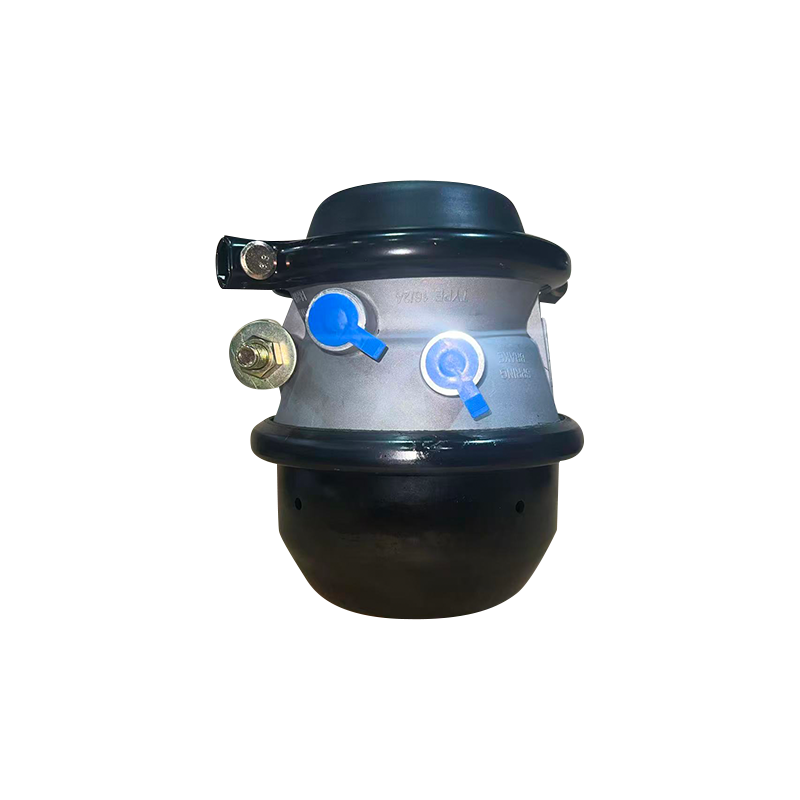



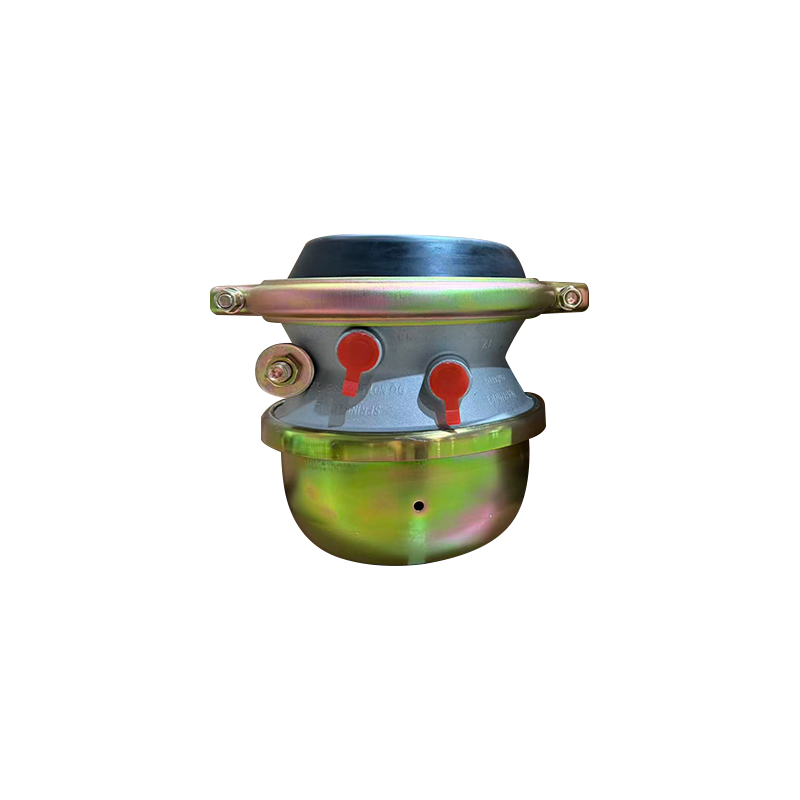
The Piggyback Series Repair Kit is specifically designed for enclosed-type brake chambers, aiming to provide users with a safer and more efficient maintenance solution. This series allows for the replacement of critical worn components without the need to replace the entire brake chamber assembly, thereby saving costs and minimizing vehicle downtime. Each unit comes pre-installed with a Caging Bolt mechanism, enabling users to easily complete component replacements during vehicle installation without requiring additional manual operations; this reduces labor costs while simultaneously enhancing the safety and efficiency of the maintenance process.
The Piggyback Repair Kit is suitable for a wide range of commercial vehicles—including light-duty trucks, heavy-duty trucks, trailers, and buses—and is compatible with various types of brake chambers. Its design ensures not only a precise dimensional match between the replacement parts and the original brake chamber but also features optimized internal components to enhance durability and reliability. Through a scientifically engineered structural configuration, the Piggyback Repair Kit maintains the integrity and sealing performance of the braking system during the replacement process, preventing the ingress of dust, moisture, or contaminants, and effectively extending the service life of both the brake chamber and the vehicle's drivetrain.
RONGZHAN
BRAKE COMPONENTS
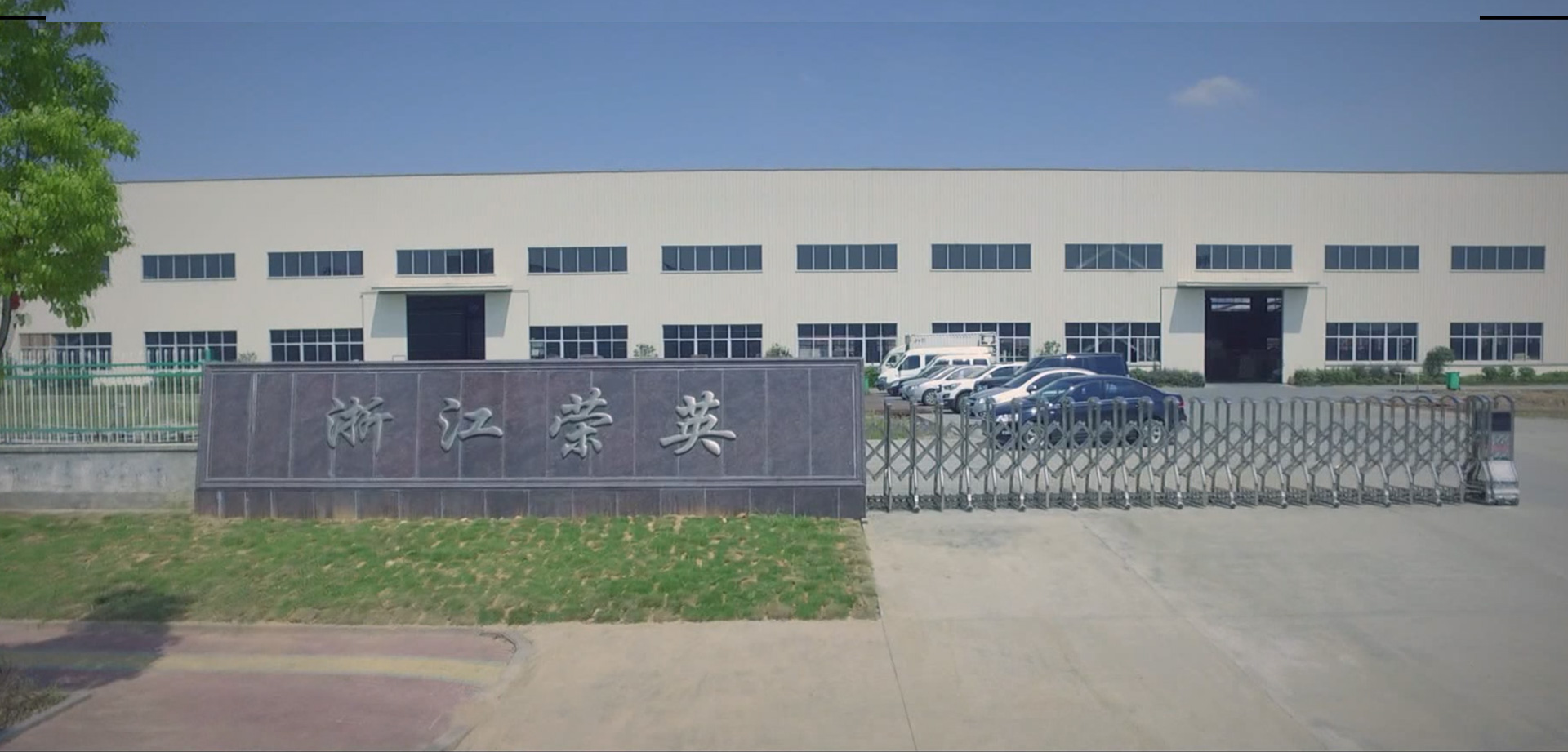
As China Aluminum Spring Brake Chamber Manufacturers and Spring Brake Actuators Suppliers, Zhejiang Rongzhan Machinery Co., Ltd. specialize in the production of spring brake chambers and service brake chambers for trucks and trailers. Backed by stable production capacity, strict quality control systems, and extensive export experience, our products are widely supplied to overseas markets and OEM customers worldwide. Rongzhan is committed to reliable quality, consistent performance, and long-term partnerships. We provide customers with cost-effective solutions and dependable service.
-
 0Year Established
 -
 0+Number of Employees
 -
 0SetsAnnual Production Volume
 -
0SetsAnnual Export Volume
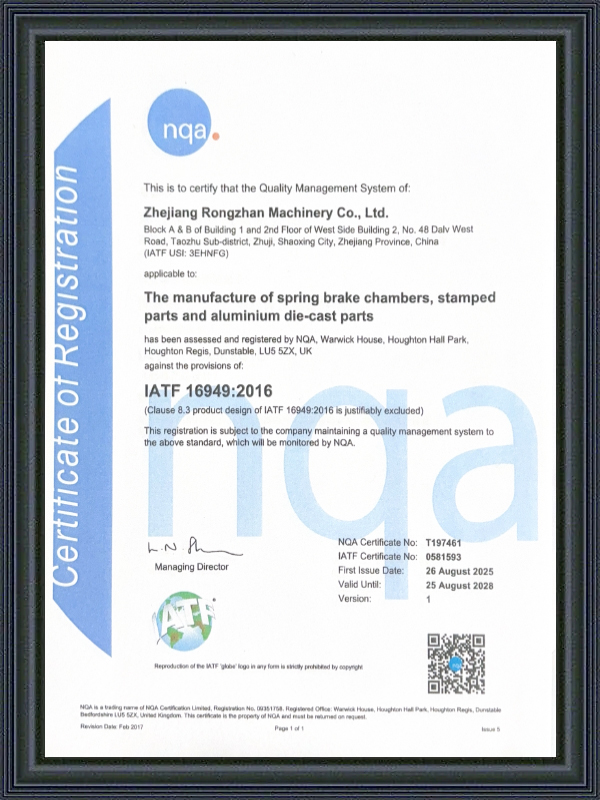
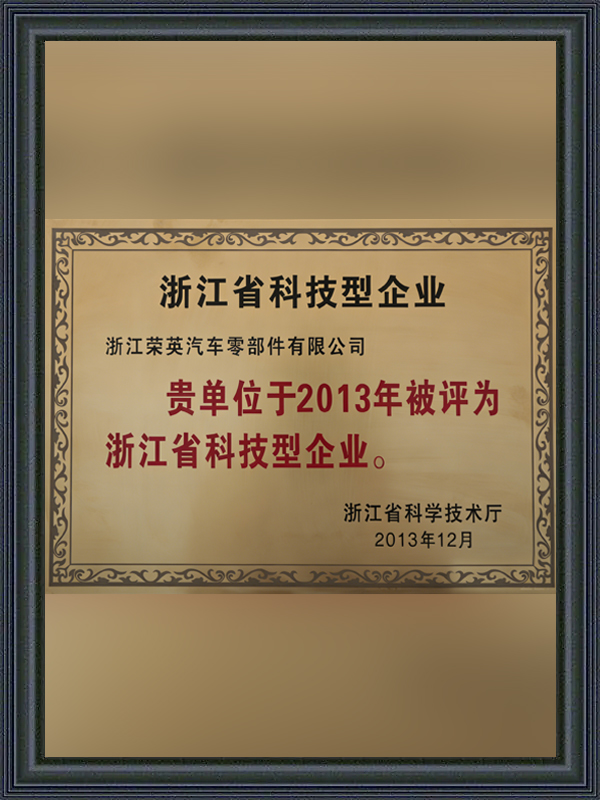
Certificate Of Honor
News
-
If you are qualifying a wedge brake chamber factory, settle five things before you talk about price: control over the wedge and roller components, test data produced on the wedge platform itself, pre-delivery inspection discipline, written interface dimensions, and the ability to repeat the same pa...
-
Two suppliers quote the same Type 20 service wedge brake chamber, and one is 20 percent cheaper. Six months later, the fleet that took the cheaper quote is replacing chambers early, re-adjusting stroke and paying freight twice. The saving never appeared on the invoice. It hid in the diaphragm compo...
-
Every S-Cam brake chamber you buy, whether you are a fleet maintenance director or an OEM purchasing engineer, is a bet on the factory that built it. The same Type 24 or Type 30 part number can behave very differently depending on the quality of the aluminum housing, the diaphragm compound, and the...
Piggyback Industry knowledge
Structural Safety Design and Power Spring Containment Mechanisms in Piggyback Actuators
Pneumatic parking brake actuators on heavy commercial transport vehicles store immense potential energy within their emergency release systems. The primary component responsible for this energy retention is the internal power spring, which exerts thousands of pounds of mechanical force to keep a vehicle immobilized when air pressure is exhausted. In a piggyback spring brake chamber configuration, which represents the rear replacement module containing the parking spring and middle diaphragm section, this stored energy poses a significant handling challenge for maintenance personnel and fleet technicians. If the outer housing shells separate accidentally during installation or replacement, the uncontrolled release of the power spring can result in catastrophic equipment damage and severe workplace injury. Overcoming these operational hazards requires strict engineering designs that mechanically lock the spring inside the cylinder housing regardless of external service choices.
Tamper-Resistant Permanently Sealed Housing Enclosures
The primary barrier preventing an accidental spring escape in a piggyback spring brake chamber is the implementation of a permanently sealed or tamper-resistant outer housing configuration. Older generations of spring actuators relied on mechanical steel clamping rings secured by bolts to hold the rear spring cup to the center wall section, which could be turned and removed by mistake during routine diaphragm servicing. Modern professional-grade piggyback modules replace these removable clamps with a mechanical rollover crimp or spun-steel flange lock that permanently rolls the edge of the heavy-gauge steel cap over the internal center section. This rolled-steel profile cannot be breached with standard hand tools or impact wrenches, ensuring that the power spring remains securely encapsulated within its steel chamber even if a technician unbolts the main service chamber clamp on the vehicle axle. Zhejiang Rongzhan Machinery Co., Ltd. monitors this permanent crimping parameter through automated hydraulic forming lines to ensure uniform structural engagement across every production batch.
| Housing Security Element | Removable Bolted Clamp Ring Design | Permanently Spun Rollover Lock Architecture |
| Structural Separation Risk | Higher if mounting bolts are removed under tension | Eliminated through cold-formed steel edge wrapping |
| Service Accessibility Bounds | Allows dangerous access to the high-force spring | Restricts access entirely to the safe service diaphragm side |
| Field Vibration Resilience | Bolts can loosen under prolonged chassis resonance | Solid continuous flange avoids localized structural torque |
Internal Mechanical Caging Rod Retraction Locks
When a piggyback spring brake chamber is shipped from the factory or prepared for installation onto an existing service chamber base, the internal power spring must be compressed mechanically to allow structural alignment of the internal push tube components. This compression is maintained by a heavy-duty threaded caging bolt, or release rod, that passes through a precision-fit aperture in the center of the rear steel cap. This caging rod features a t-shaped retention head that mechanical engages with the internal spring pressure plate. By winding the exterior nut clockwise against a reinforced steel pressure washer, the technician draws the internal plate backward, compressing the spring and locking its energy away from the external interface. This mechanical link keeps the spring stable, preventing it from exerting outward force against the casing joint while the technician positions the piggyback module onto the trailer axle assembly.
Reinforced Center Isolation Wall and Guide Tube Sleeves
The internal architecture of a piggyback spring brake chamber utilizes a thick, structural center wall that separates the rear emergency spring cavity from the forward service diaphragm chamber. This center wall must withstand not only continuous pneumatic pressure variations but also the direct axial thrust of the power spring during parking events. To prevent the spring from shifting out of alignment or buckling laterally—which could cause uneven force distribution and stress cracks along the outer cylinder walls—the center section incorporates deep-drawn structural guidance sleeves or thick internal piston columns. These heavy-gauge steel columns isolate the lateral movement of the spring coils, ensuring that all stored energy remains directed along a single linear operational path and reducing internal frictional wear against the outer shell liner.
| Safety Mechanism Component | Mechanical Failure Consequence | Engineered Structural Mitigation Strategy |
| Rear Steel Cap Flange | Explosive shell splitting under spring load | Deep-drawn heavy steel with high-tonnage crimp profiles |
| Threaded Caging Assembly | Sudden spring expansion during manual alignment | High-tensile rolled threads with hardened steel washers |
| Internal Piston Guide | Coil buckling causing internal housing abrasion | Precision-machined guidance bores to isolate shifting loads |
| Breather Port Ventilation | Internal vacuum building or moisture corrosion | Filtered exhaust paths to allow clean pressure exchange |
High-Tensile Steel Wire Selection and Stress-Relief Treatment
The structural integrity of the containment housing is directly affected by the quality and behavior of the spring steel wire itself. If a spring wire splits or suffers a sudden clean break due to hidden material defects, the severed coils can twist abnormally and punch through standard sheet steel casing walls. Professional piggyback spring brake chamber variants manage this vulnerability by utilizing high-purity chrome silicon steel wire that undergoes strict multi-stage oil tempering and precision shot-peening treatments. This processing modifies the micro-structural matrix of the metal surface, building a protective compressive layer that resists rapid crack propagation. Zhejiang Rongzhan Machinery Co., Ltd. incorporates these metallurgical standards within its strict quality control systems, ensuring that the internal springs maintain uniform force retention without premature structural collapse across long-distance transit cycles.
Global Distribution Compliance and OEM Interchangeability Standards
Supplying piggyback replacement components to international transport operators and commercial trailer builders requires strict adherence to standardized structural dimensioning and safety verification procedures. International safety regulations require that all piggyback modules pass drop testing and severe over-pressure bursting evaluations before receiving commercial classification. These design controls ensure that the replacement modules match original equipment parameters, allowing for cost-effective maintenance intervention without sacrificing fleet security. Zhejiang Rongzhan Machinery Co., Ltd. leverages its extensive export experience and stable production capacity to supply verified, dependable solutions that meet these global safety mandates, reinforcing long-term commercial partnerships through consistent product performance and reliable component containment logic.
FAQ
Q: Why does the permanently spun rollover lock architecture on a piggyback spring brake chamber offer higher handling safety than a traditional bolted clamp ring?
A: Traditional bolted clamp rings can be accidentally unbolted by technicians during routine diaphragm maintenance, risking an explosive release of the high-force parking spring. A permanently spun rollover or crimped flange lock physically deforms the heavy-gauge steel casing edge over the center section during factory assembly, creating a tamper-resistant enclosure that ensures the power spring remains safely encapsulated during field installation.
Q: How does the integrated mechanical caging rod prevent sudden spring expansion while a technician mounts the piggyback module onto a trailer axle base?
A: The caging rod passes through a reinforced aperture in the rear cap and mechanically engages the internal spring pressure plate via a t-shaped retention head. By winding the exterior caging nut clockwise against a hardened steel washer, the internal power spring is drawn backward into a compressed state, completely neutralizing its outward kinetic thrust and holding it stable while the module is aligned with the service chamber.
Q: What role do the internal guide tube sleeves in the center isolation wall play in protecting the piggyback spring brake chamber housing from lateral buckling stresses?
A: When the heavy power spring expands during a parking event, the immense structural force can cause the wire coils to shift or buckle laterally. The center isolation wall of the piggyback module integrates heavy-duty structural guide tube sleeves that isolate the spring's movement along a strict linear axis, preventing internal component misalignment and eliminating abrasive frictional wear against the outer cylinder lining.
Q: Why are high-purity chrome silicon steel wire and shot-peening treatments necessary for the internal springs used in piggyback chambers exported by Zhejiang Rongzhan Machinery Co., Ltd.?
A: If standard spring steel wire suffers a sudden structural fracture from cyclic fatigue, the severed coils can twist out of alignment and breach the sheet steel housing walls. Zhejiang Rongzhan Machinery Co., Ltd. enforces strict quality control systems using multi-stage oil-tempered chrome silicon steel that is precision shot-peened to build a surface layer of compressive stress, which effectively prevents micro-cracks from propagating into catastrophic field snaps.
Q: Can a replacement piggyback spring brake chamber from Zhejiang Rongzhan Machinery Co., Ltd. be interchanged safely with standard international OEM service bases?
A: Yes, these replacement modules are manufactured to match universal international dimensional specifications, center push tube configurations, and sealing flange profiles. This precise compliance ensures that components from Zhejiang Rongzhan Machinery Co., Ltd. serve as direct, cost-effective, and dependable field upgrades that seal perfectly onto original factory equipment bases without requiring complex modification or changing localized plumbing networks.

- WHY US
- Company Profile
- Certifications
- News
- PRODUCTS
- S-Cam Type Brake Chamber
- DISC Brake Chamber
- Wedge Brake Chamber
- Piggyback Brake Chamber
- Brake Chamber Repair Kits
- MANUFACTURING
- Customer Service
- Factory Tour
-
-
No.90 Zhancheng Avenue, Zhuji City, Zhejiang Province, China

-
rongzhan@zjrongzhan.com / judith@zjrongzhan.com

-
+86-15258814607

-
- CONTACT


