

 русский
  Español
  عربى
عربى 

INQUIRY NOW

-
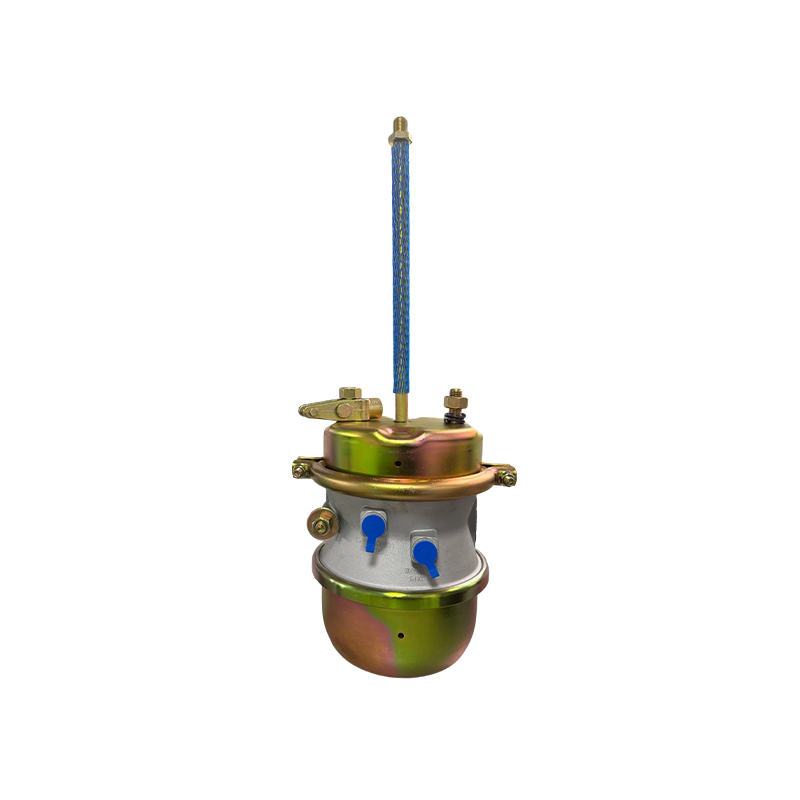



T3030 Long Stroke with Welded Clevis Brake Chamber GC3030LS4CW
-
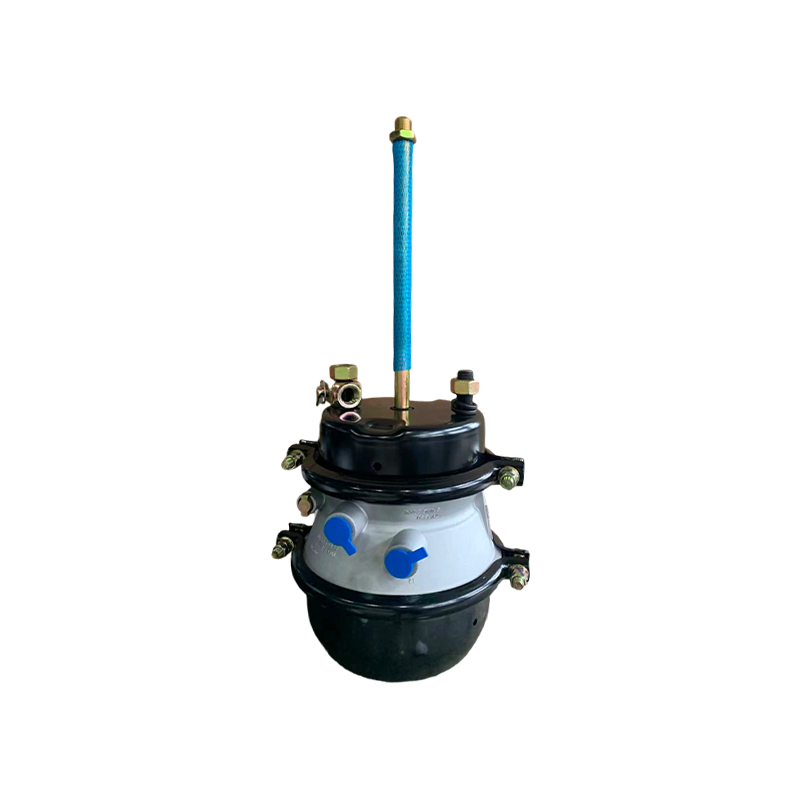
T2430 Long rod black brake chamber
-
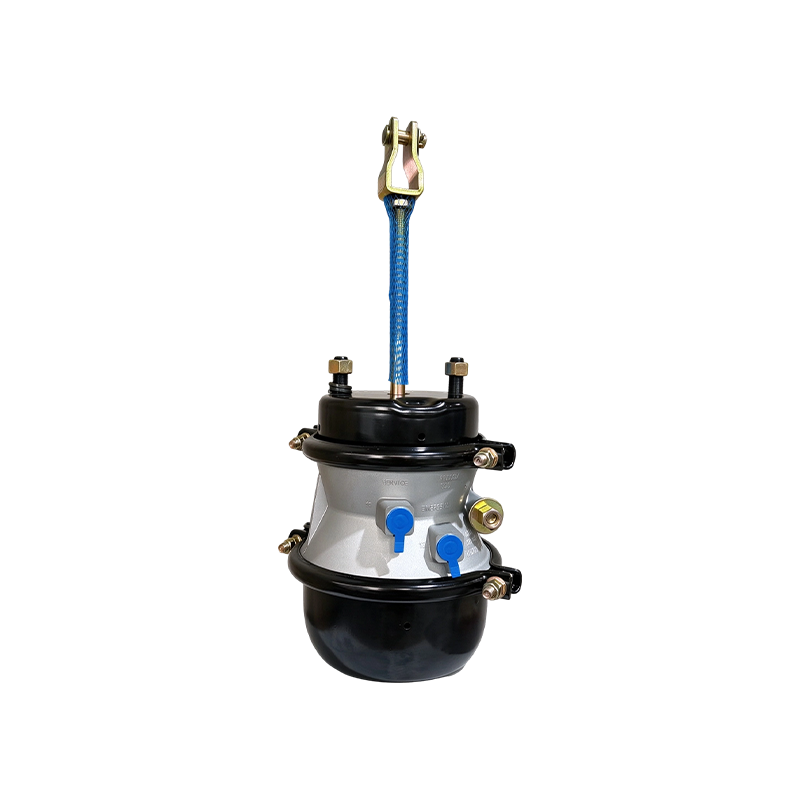
T24/30K Double-Clamp Long Stroke DD Brake Chamber
-
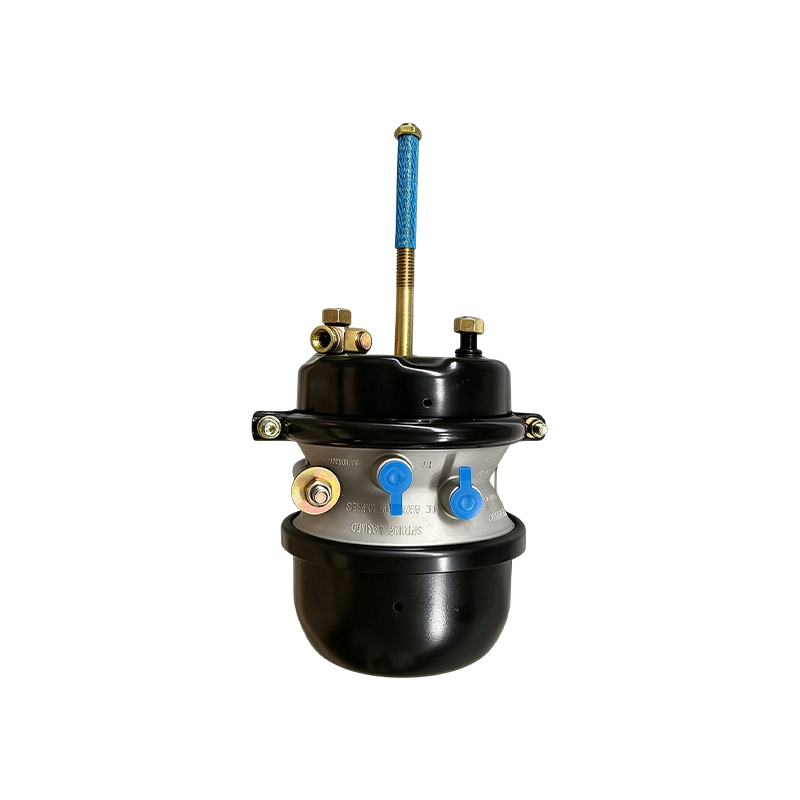
T30/30 Fully Sealed DD Brake Chamber
-
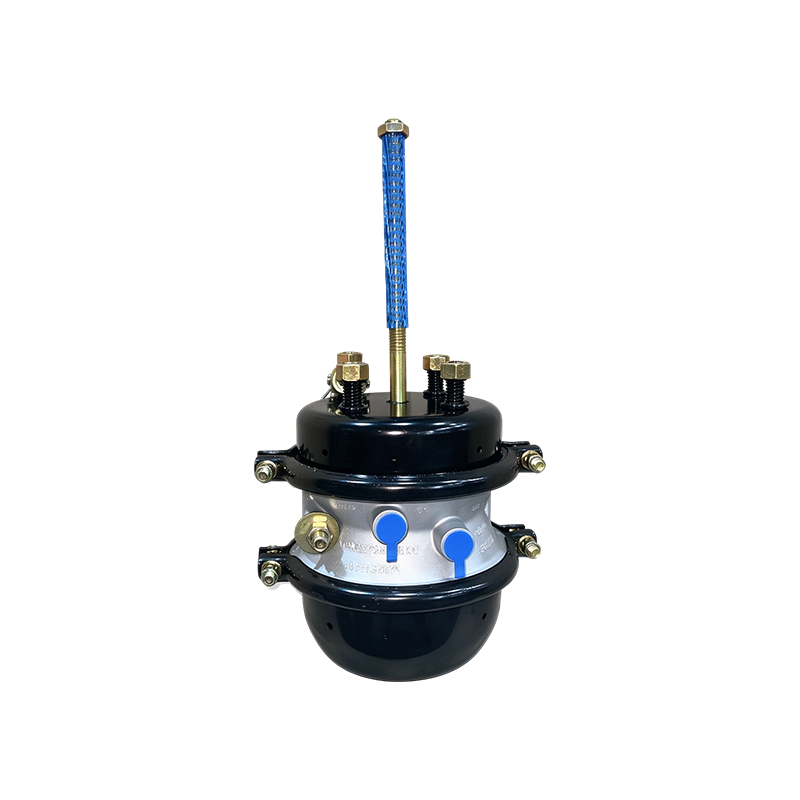
T30/30 Four-Stud Flange DD Brake Chamber
-
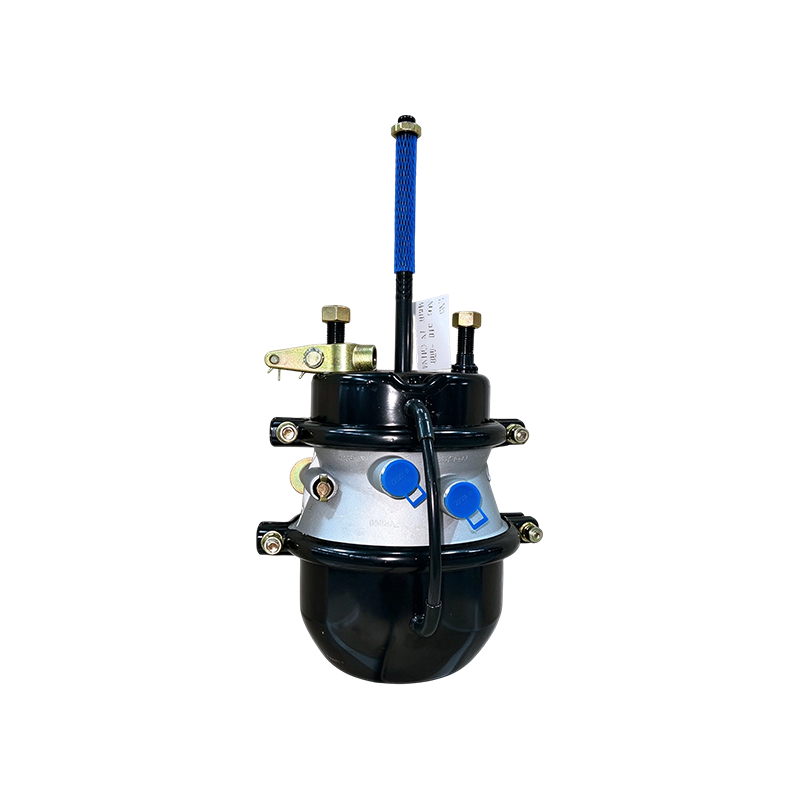
T24/30 DD Brake Chamber (South America Market)
-
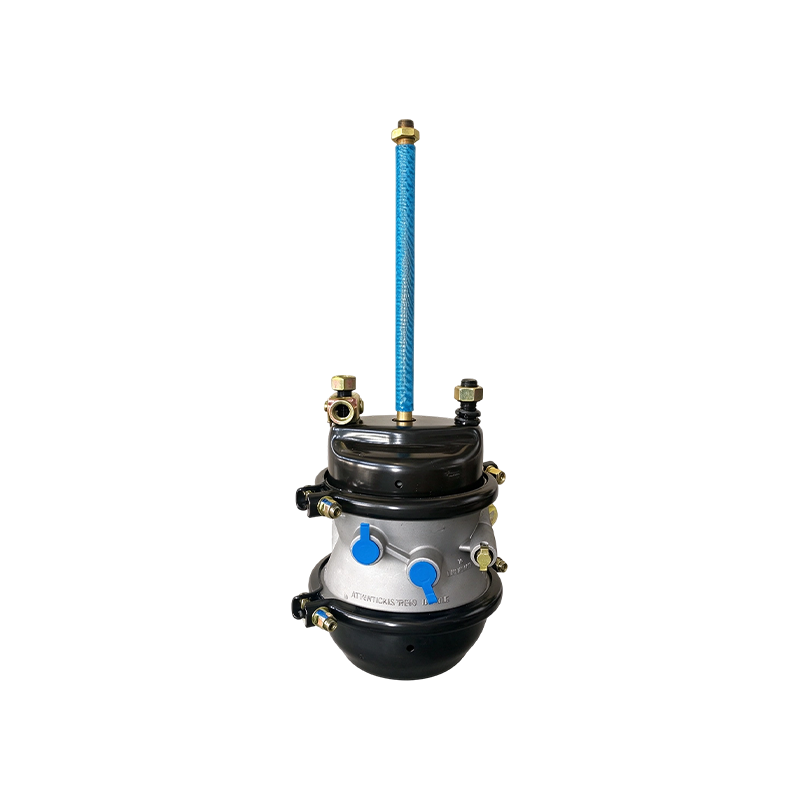
T20/24 Compact DD Brake Chamber (Asia Market)
The Double Diaphragm brake chamber is a high-performance braking component mounted on a vehicle's axle; it connects to the slack adjuster via a clevis, thereby directly engaging with the vehicle's braking system. During braking, compressed air enters the upper and lower chambers through ports 11 or 12, actuating the diaphragm; this drives the pushrod to engage the slack adjuster, thereby achieving precise and reliable braking. Easy to install and compatible with a wide range of vehicle models, this product offers diverse braking solutions for light-duty trucks, heavy-duty trucks, and specialized vehicles.
The DD brake chamber offers various connection methods to meet diverse requirements: models utilizing a clamp-band connection allow users to easily replace individual components, effectively reducing maintenance costs; conversely, models featuring a "Sealed" connection simplify the structural design while ensuring safety, thereby enhancing maintenance efficiency. The product also offers a choice of stroke lengths, which can be distinguished by the shape of the air port on the aluminum center section: a square air port indicates a long-stroke configuration, suitable for heavy-duty trucks subject to continuous high-load operation; a circular air port indicates a standard-stroke configuration, suitable for the majority of vehicle models.
The aluminum center section of the DD brake chamber is equipped with a caging bolt, allowing for easy locking during main spring replacement—a feature that significantly enhances both the convenience and safety of installation and maintenance procedures. Furthermore, the company offers various surface finish options to satisfy diverse customer preferences regarding product aesthetics. Thanks to its precision engineering, versatile configurations, and operational convenience, the DD brake chamber delivers stable and reliable braking performance across a wide spectrum of operating conditions, serving as a robust safeguard for vehicle safety.
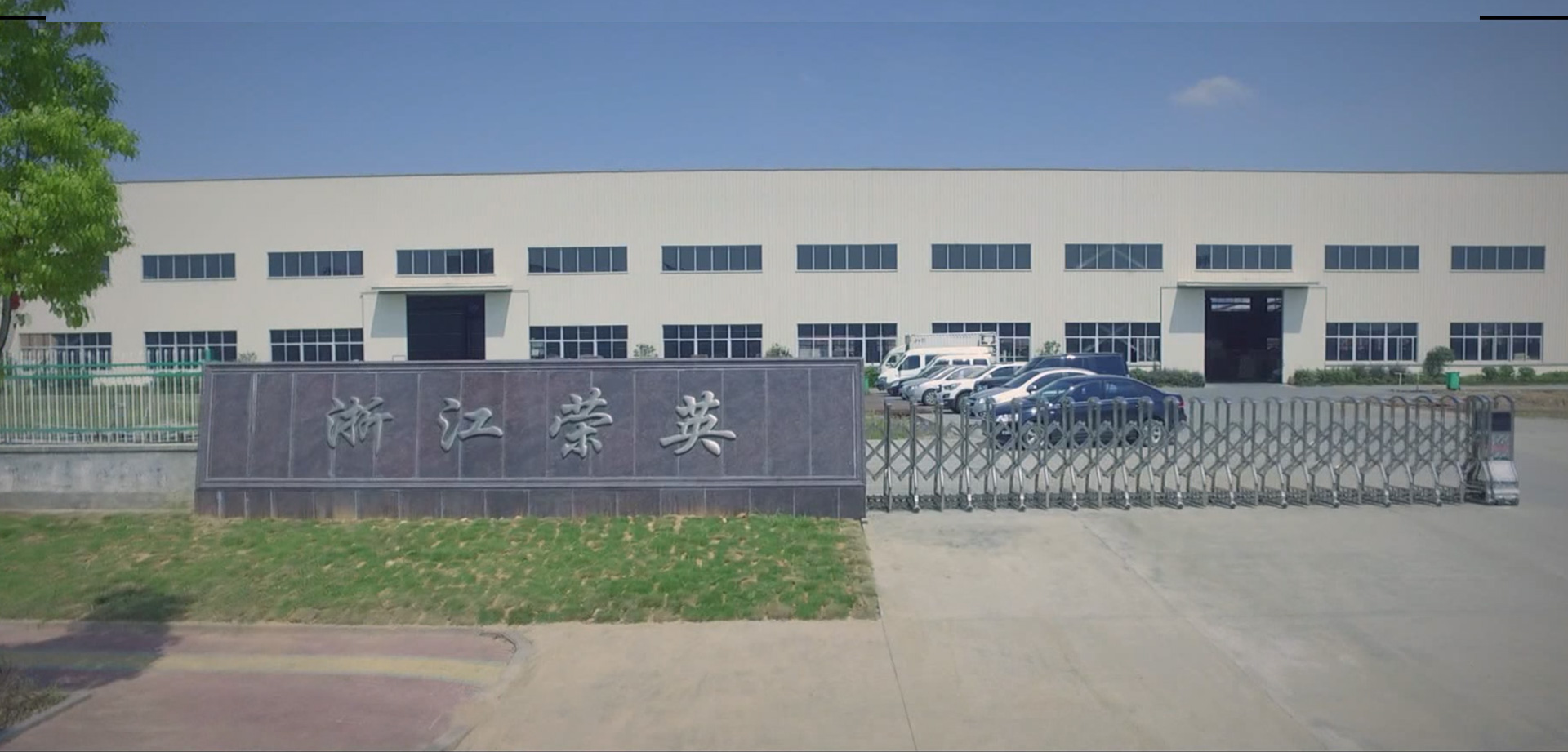
RONGZHAN
BRAKE COMPONENTS
As China DD Brake Chamber Manufacturers and DD Brake Chamber Suppliers, Zhejiang Rongzhan Machinery Co., Ltd. specialize in the production of spring brake chambers and service brake chambers for trucks and trailers. Backed by stable production capacity, strict quality control systems, and extensive export experience, our products are widely supplied to overseas markets and OEM customers worldwide. Rongzhan is committed to reliable quality, consistent performance, and long-term partnerships. We provide customers with cost-effective solutions and dependable service.
-
 0Year Established
 -
 0+Number of Employees
 -
 0SetsAnnual Production Volume
 -
0SetsAnnual Export Volume
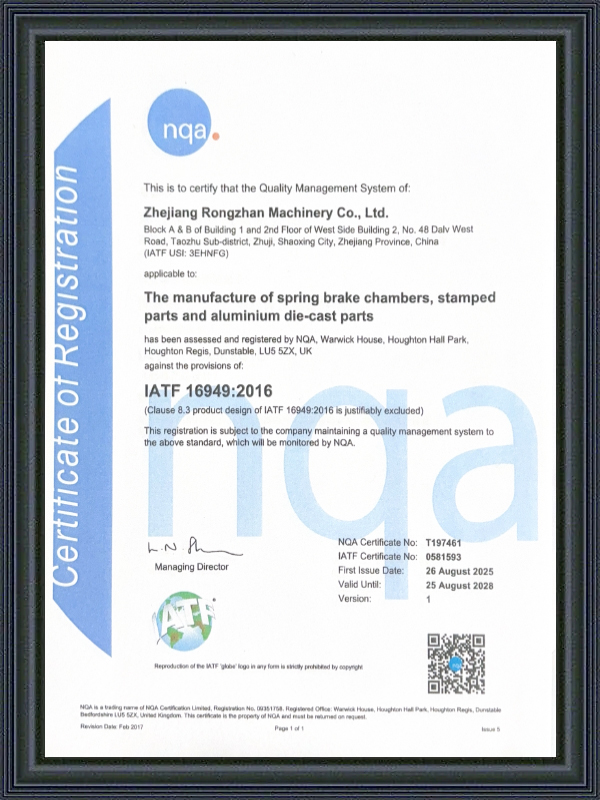
Certificate Of Honor

News
-
If you are qualifying a wedge brake chamber factory, settle five things before you talk about price: control over the wedge and roller components, test data produced on the wedge platform itself, pre-delivery inspection discipline, written interface dimensions, and the ability to repeat the same pa...
-
Two suppliers quote the same Type 20 service wedge brake chamber, and one is 20 percent cheaper. Six months later, the fleet that took the cheaper quote is replacing chambers early, re-adjusting stroke and paying freight twice. The saving never appeared on the invoice. It hid in the diaphragm compo...
-
Every S-Cam brake chamber you buy, whether you are a fleet maintenance director or an OEM purchasing engineer, is a bet on the factory that built it. The same Type 24 or Type 30 part number can behave very differently depending on the quality of the aluminum housing, the diaphragm compound, and the...
DD Brake Chamber Industry knowledge
The Operational Mechanics and Structural Integration of a DD Brake Chamber in Commercial Vehicles
The pneumatic braking network of a heavy duty commercial vehicle requires independent mechanisms to manage dynamic deceleration and stationary immobilization. To save structural space and reduce mechanical complexity, modern engineering utilizes a dual-diaphragm actuator, commonly referred to as a DD brake chamber or spring brake chamber. This component houses two distinct operational systems within a single tandem casing, allowing a single pushrod to execute both service braking and parking brake functions. Understanding how these separate pneumatic and mechanical forces interact inside the chamber housing is essential for fleet mechanics, transport engineers, and component specifiers. As a dedicated manufacturer of commercial vehicle brake system components, Zhejiang Rongzhan Machinery Co., Ltd. builds these specialized dual-compartment actuators to support the performance and safety requirements of global transport fleets.
Dual-Compartment Architecture and Internal Layout
A DD brake chamber is constructed by connecting two separate functional housings into a inline tandem configuration. The front section, which sits closest to the slack adjuster link, is the service brake chamber, housing a standard rubber diaphragm and a light return spring. Directly behind this compartment sits the parking brake section, which contains a secondary diaphragm and a heavy duty, high-tensile steel coil spring held under extreme mechanical compression. A solid internal center wall physically isolates these two chambers from one another while allowing a central push tube to pass through to transfer force from the rear section to the front pushrod. Zhejiang Rongzhan Machinery Co., Ltd. utilizes strict quality control systems to assemble these multi-stage steel stampings, ensuring the center seals prevent any cross-leakage of compressed air between the separate operational zones.
| Chamber Section | Primary Internal Components | Energy Source for Actuation | Operational Purpose |
| Front Service Module | Service Diaphragm, Return Spring, Pushrod | Regulated Compressed Air (Positive Pressure) | Dynamic Deceleration during Driving |
| Rear Parking Module | Parking Diaphragm, Heavy Coil Spring, Caging Bolt | Mechanical Spring Tension (Negative Pressure) | Stationary Parking and Emergency Braking |
The Positive Pressure Mechanics of Service Braking
During normal driving conditions, the heavy spring in the rear parking compartment remains fully compressed and inactive because the system maintains constant pneumatic pressure against the parking diaphragm to counteract the spring force. When the truck operator presses down on the foot pedal to slow the vehicle, regulated compressed air enters exclusively through the front service port. This air pressure forces the front service diaphragm forward, compressing the light internal return spring and driving the pushrod outward toward the slack adjuster. As soon as the driver lifts their foot from the pedal, the foot valve vents the compressed air out of the front service port, allowing the internal return spring to instantly push the diaphragm and pushrod back to their original resting positions, releasing the brakes and allowing the wheels to rotate freely.
The Fail-Safe Principles of Parking and Emergency Activation
The parking brake function operates on an inversion principle, relying on the removal of pneumatic pressure rather than its application. When the truck driver pulls the dashboard parking valve to park the vehicle, or if an unexpected system failure causes a sudden loss of main reservoir air pressure, the compressed air holding back the rear parking diaphragm is exhausted through the tractor control lines. Deprived of pneumatic resistance, the heavy internal coil spring expands with significant force, driving the internal push tube forward through the center wall. This tube presses directly against the service diaphragm assembly, forcing the main pushrod outward to apply the foundation brakes. Because this clamping force is maintained entirely by raw mechanical spring tension, the truck remains locked in place indefinitely without requiring any remaining air pressure inside the system.
| Vehicle Operating State | Service Port Status | Parking Port Status | Internal Spring Condition |
| Normal Driving (Brakes Released) | No Air Pressure (0 PSI) | Constant Air Pressure (System PSI) | Fully Compressed (Inactive) |
| Active Service Deceleration | Regulated Air Pressure Applied | Constant Air Pressure (System PSI) | Fully Compressed (Inactive) |
| Stationary Vehicle Parking | No Air Pressure (0 PSI) | Air Pressure Exhausted (0 PSI) | Fully Expanded (Mechanically Applied) |
| Sudden Pneumatic Line Failure | Air Pressure Depleted | Air Pressure Automatically Lost | Uncontrolled Expansion (Emergency Stop) |
Mechanical Caging Mechanisms for Maintenance Safety
Because the internal parking spring inside a DD brake chamber stores massive mechanical energy when compressed, servicing or replacing these units requires strict adherence to safe handling protocols. If a vehicle experiences a complete air loss on the highway and needs to be towed, the spring brakes will lock automatically, preventing the wheels from turning. To bypass this mechanical lock safely, a specialized steel caging bolt must be inserted into the rear cap of the chamber housing. By winding this threaded bolt clockwise, a technician manually draws the internal pressure plate backward, mechanically compressing and locking the heavy spring away from the push tube. Zhejiang Rongzhan Machinery Co., Ltd. incorporates clear instruction markings and high-strength caging hardware across its entire production line, allowing maintenance personnel to deactivate the emergency section safely during replacement cycles.
Integration with Modern Fleet Maintenance Programs
Implementing dual-diaphragm actuators across commercial truck and trailer architectures significantly lowers parts inventory requirements while ensuring stable stopping distances under diverse payload weights. Maintaining these tandem units involves checking pushrod travel limits, keeping the internal housing drain holes free of blockages, and using diagnostic solution sprays to verify that the center wall seals have not degraded over time. The manufacturing approach of Zhejiang Rongzhan Machinery Co., Ltd. focuses on balancing stable production capacity with careful quality inspections, delivering dependable, cost-effective replacement components that fit directly into standard global fleet maintenance configurations without requiring custom retrofitting or structural bracket adjustments.
FAQ
Q: What happens inside a DD brake chamber if the center wall seal degrades over a long period of operation?
A: If the internal center wall seal degrades, compressed air will leak between the service chamber and the parking chamber. This cross-leakage can cause the parking brake to partially release when you apply the service brakes, or conversely, air from the parking line can migrate into the service line, leading to erratic brake timing, dragging shoes, and unexpected thermal strain on the drums.
Q: Why is it critical to inspect the structural alignment of the internal push tube within a dual-diaphragm actuator during routine maintenance?
A: The internal push tube must travel perfectly straight through the center isolation wall to transfer the heavy mechanical spring force to the main pushrod. If the tube becomes misaligned due to severe chassis vibrations or external housing damage, it will bind inside the center bore, preventing the emergency brakes from fully applying or failing to retract completely when air pressure is restored.
Q: How does the mechanical caging mechanism safely deactivate the heavy emergency spring inside a DD brake chamber during vehicle towing?
A: When a vehicle experiences a complete loss of system air, the heavy parking spring automatically expands and locks the wheels. By inserting a specialized threaded steel caging bolt into the rear cap of the housing and winding it clockwise, a technician mechanically pulls the internal pressure plate backward, compressing the spring away from the push tube to allow the wheels to spin freely for safe recovery.
Q: How does Zhejiang Rongzhan Machinery Co., Ltd. ensure the internal high-tensile springs of its dual-diaphragm units resist fatigue under extreme thermal fluctuations?
A: Zhejiang Rongzhan Machinery Co., Ltd. utilizes strict quality control systems and proprietary shot-peening treatments on all emergency coil springs. This manufacturing precision relieves internal material stresses and provides stable structural resistance against the rapid temperature spikes and sub-zero environments encountered by our global OEM and aftermarket customers in overseas markets.
Q: Can a DD brake chamber be adjusted manually if the vehicle is equipped with an automatic slack adjuster?
A: No, the chamber itself does not feature an adjustment mechanism; it simply delivers linear force. When paired with an automatic slack adjuster, the adjuster manages the pushrod stroke dynamically. Technicians should never manually alter the pushrod length or adjust the system at the chamber to fix an out-of-specification stroke, as this indicates a fault in the automatic adjuster clutch or excessive wear on the brake lining.

- WHY US
- Company Profile
- Certifications
- News
- PRODUCTS
- S-Cam Type Brake Chamber
- DISC Brake Chamber
- Wedge Brake Chamber
- Piggyback Brake Chamber
- Brake Chamber Repair Kits
- MANUFACTURING
- Customer Service
- Factory Tour
-
-
No.90 Zhancheng Avenue, Zhuji City, Zhejiang Province, China

-
rongzhan@zjrongzhan.com / judith@zjrongzhan.com

-
+86-15258814607

-
- CONTACT


