

 русский
 Español
 عربى



How to Choose an ADB Brake Chamber Factory: Quality, Testing, and Cost
Content
A purchasing manager once dismissed a low-priced ADB brake chamber factory because its sample failed a simple leak test at -40°C. That single finding saved the fleet from a season of roadside failures. When buying brake chambers, the cheapest quote is not the real cost. The factory's process controls, testing depth, and material choices determine whether the product performs for five years or five months.
What "ADB" Means in Brake Chamber Specification
In commercial vehicle braking, "ADB" usually refers to a spring brake actuator that combines a service brake chamber with a spring brake section. It is the standard component that provides parking and emergency braking force on air-braked trucks and trailers. In some product lines, the ADB designation appears in specific models such as piggyback chambers, where the spring brake is mounted above the service diaphragm to fit tight chassis layouts.
The term also connects to air disc brake systems, where the chamber must match the shorter stroke and higher clamp force of disc calipers. A reliable factory should be able to produce both conventional S-cam and disc-compatible chambers, and should offer clear specifications for stroke, mounting ports, and diaphragm ratings.
Critical Criteria for Vetting an ADB Brake Chamber Factory
Start with the factory's quality system, then look at its testing capability, production processes, and ability to adapt to your drawings.
Certification and Quality System
IATF 16949 certification is the minimum threshold for OEM supply. It shows the factory has documented procedures for risk management, change control, and traceability. Ask to see the scope of the certificate: does it cover the exact product family you are procuring, such as spring brake chambers or piggyback units? A certificate alone is not a guarantee, but its absence should be a red flag.
Testing Capability
A true manufacturing partner maintains an in-house laboratory and runs tests at temperature extremes, pressure cycles, and service life conditions. Do not accept a general "tested per industry standards" statement. Ask for the actual report format and the pass-fail criteria they use. Factories with fast turnaround on high- and low-temperature tests are more likely to catch material defects before shipment.
| Check | Acceptance Lookout | Why It Matters |
|---|---|---|
| Leak test at extremes | Chamber holds rated pressure without bubbles or pressure drop for at least 10 minutes | A tiny leak at room temperature becomes a failure at -40°C |
| Stroke verification | Long-stroke models provide at least the published stroke, e.g., 3.0 in or 76 mm | Wrong stroke causes drag or insufficient brake release |
| Port and fitting torque | M22, Voss, and M18 ports are clean, threaded consistently, and sealed without leakage | Leaks at the port are a common source of warranty claims |
| Corrosion protection | Housing and springs show an even e-coat or zinc finish with no bare edges | Road salt attacks exposed steel and shortens life |
| Diaphragm durometer | Rubber hardness stays within ±5 Shore A of specification after heat aging | Soft diaphragms fail fast; hard ones leak more easily |
Material and Process Control
Housing porosity is one of the most common hidden defects in brake chambers. A factory that operates its own aluminum die-casting and stamping shops can control porosity at the source. Ask how they machine the sealing flange and whether they use a secondary operation to ensure flatness. If those processes are outsourced, the factory must provide evidence that it inspects incoming castings and finished dimensions.
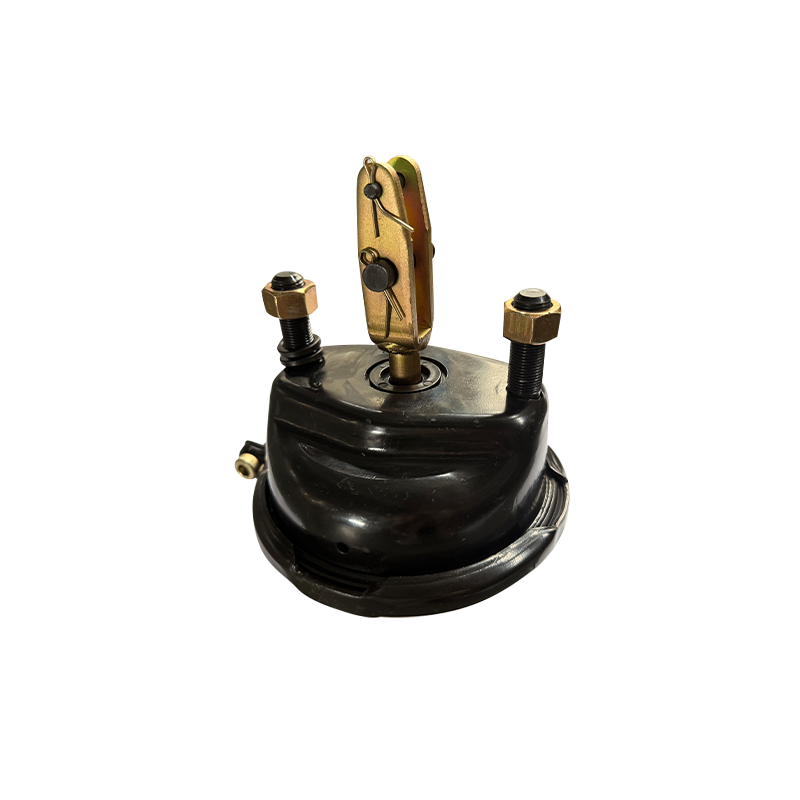
If your application uses the common S-cam interface, the chamber must match the existing bracket and clevis. A factory that offers welded-clevis construction, like the T3030 long-stroke chamber, simplifies installation on severe-service vehicles.
 T3030 Long Stroke Brake Chamber with Welded ClevisThis chamber suits S-cam applications with a welded clevis for simplified installation on severe-service vehicles. Its sealed housing and long-stroke design address durability concerns highlighted in the surrounding discussion.View Product →
Manufacturing Details That Make or Break Reliability
The difference between a durable ADB brake chamber and one that fails at 10,000 miles often hides in the housing and diaphragm.
Aluminum die casting quality determines porosity and surface finish. A factory with its own die-casting and stamping lines can control porosity and avoid the hidden cost of outsourcing. Ask how they manage sealing surfaces. A properly machined flat flange prevents internal leakage between the service and spring sections. Similarly, the internal air seal must handle constant pressure cycling without extrusion; this is a major source of diaphragm failure in cold climates.
One way to judge a factory's competence is by its willingness to share test data. Companies that run high- and low-temperature tests, cycle tests, and salt-spray tests will usually provide the report before sampling. For a closer look at the sealing mechanisms, the company's technical article on heavy-duty brake chamber sealing performance explains how surface finish and rubber compound interact under pressure.
Long-Stroke and Piggyback Configurations for Tight Installations
Space constraints are the main reason fleets switch from a standard service brake chamber to a long-stroke or piggyback design. Long-stroke chambers provide extra release travel for worn brakes, while piggyback units place the spring brake above the service diaphragm to save vertical space on air-ride suspensions or low-frame trailers.
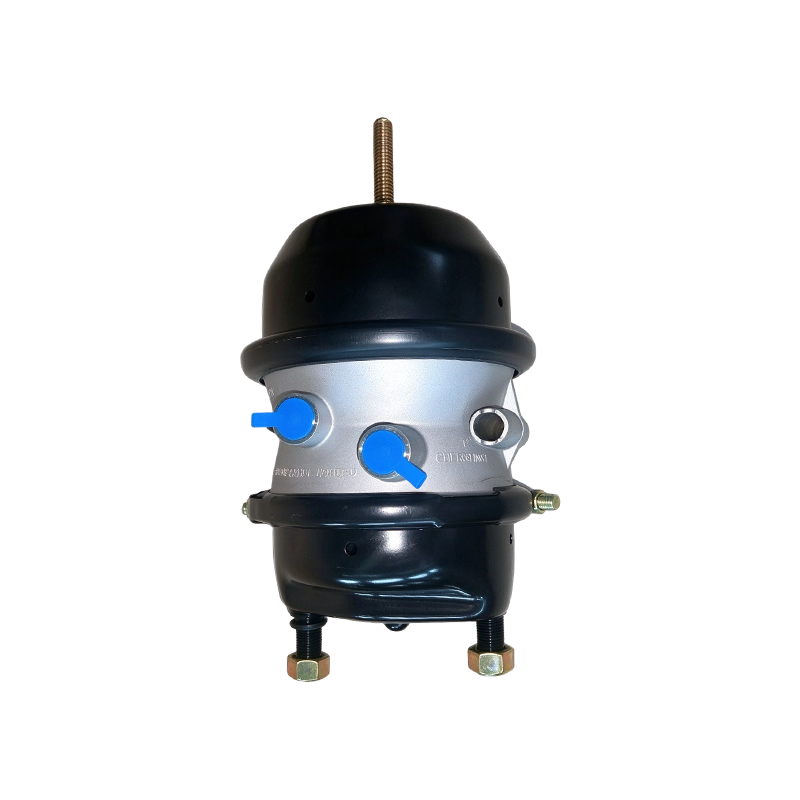
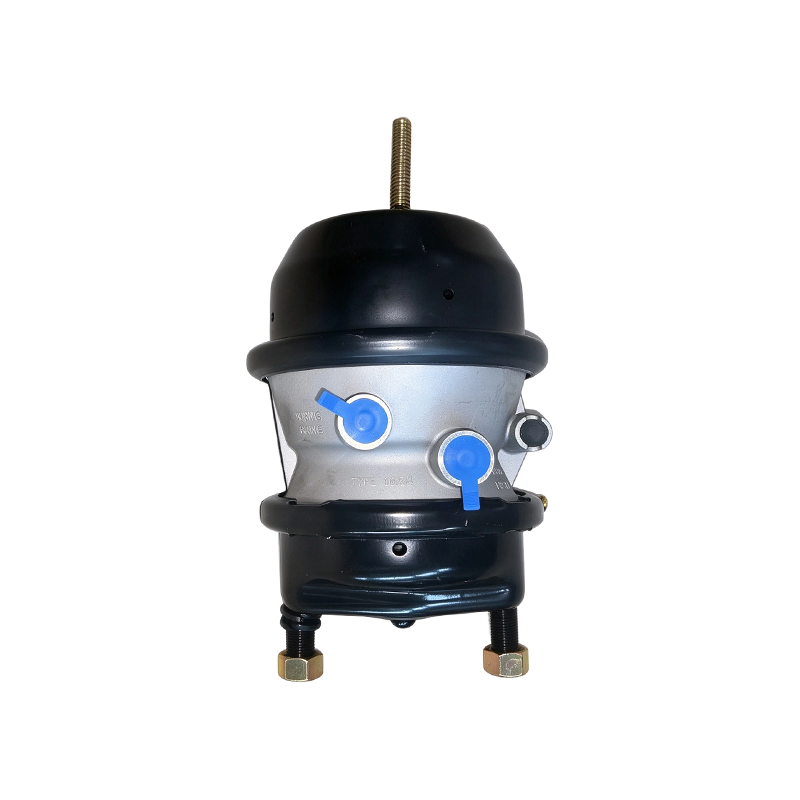
A factory that understands these applications should offer a range of stroke and port options: standard release travel for general linehaul, long stroke for off-highway and refuse duty, and M22 or Voss ports to match your existing air system. The ADB1624 piggyback chamber is an example of a precision-engineered unit that fits where traditional configurations cannot.
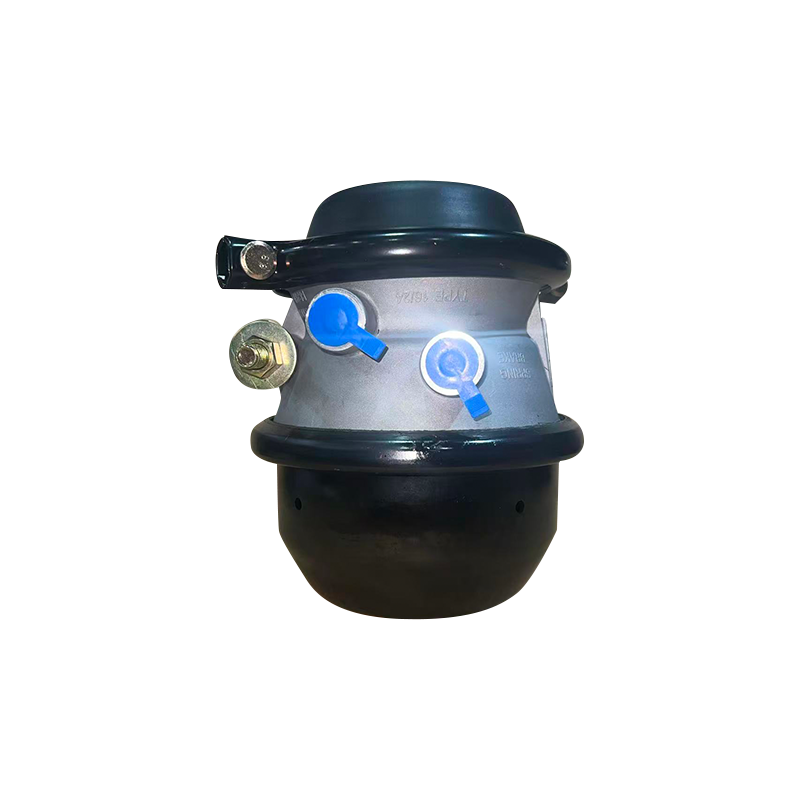 ADB1624 Piggyback Precision Control ChamberThis piggyback chamber offers a compact solution for tight spaces, as noted in the preceding text. It provides precise control, modular maintenance, and customization options to match stroke and port requirements.View Product →
Before choosing a configuration, confirm the chamber's stroke and whether it uses a diaphragm or piston design. A factory that produces both types under one roof can usually answer sizing questions faster than one that only assembles from bought parts.
How to Validate a Factory Before Committing
Start with a request for quotation that includes your full engineering data: stroke, port type, spring set load, and expected operating temperature range. Then evaluate the factory's response in three steps.
- Ask for test reports from their in-house laboratory, not just the product certificate.
- Request a pre-production sample run of 20–50 units and test them on your own bench or vehicle.
- Conduct an on-site audit or use a third-party inspector to verify the production lines and quality gates.
A factory with its own laboratory and 100% final inspection can show you data for each batch. A factory that relies on purchased components and final visual checks cannot answer detailed questions about diaphragm aging, spring fatigue, or housing porosity. That is the difference between a supplier and a manufacturing partner.
If you need to understand how a manufacturer controls sealing and process consistency across batches, reading the company's own background page can reveal whether it operates its own foundry and stamping shop or simply assembles bought parts.
Choosing an ADB brake chamber factory is not about finding the lowest price. It is about verifying that the factory can control materials, processes, and tests that determine field reliability. Look for IATF 16949, a real laboratory, 100% final inspection, and a product range that matches your vehicle configuration. If you do that, the factory you select will be the one that keeps your vehicles stopping safely, season after season.
Recommended Products



-
If you are qualifying a wedge brake chamber factory, settle five things before you talk about price...
-
Direct Comparison Summary A Heavy Duty Brake Chamber generally delivers superior sealing performanc...
-
A brake chamber is caged by threading the manual caging bolt through the chamber's push rod housing...
-
Every S-Cam brake chamber you buy, whether you are a fleet maintenance director or an OEM purchasin...
-
An OEM purchasing manager once sent us a DP brake chamber that had been pulled off a prototype vehi...
-
A heavy duty brake chamber that fails at 200,000 miles instead of 600,000 miles is rarely a design ...

- WHY US
- Company Profile
- Certifications
- News
- PRODUCTS
- S-Cam Type Brake Chamber
- DISC Brake Chamber
- Wedge Brake Chamber
- Piggyback Brake Chamber
- Brake Chamber Repair Kits
- MANUFACTURING
- Customer Service
- Factory Tour
-
-
No.90 Zhancheng Avenue, Zhuji City, Zhejiang Province, China

-
rongzhan@zjrongzhan.com / judith@zjrongzhan.com

-
+86-15258814607

-
- CONTACT


