

 русский
 Español
 عربى



Custom DP Brake Chamber: Ports, Stroke, and Build Options Fully Explained
Content
An OEM purchasing manager once sent us a DP brake chamber that had been pulled off a prototype vehicle. The stroke was correct and the diaphragm was intact, but the port did not match the truck's air line and the push rod was 12 mm too short for the slack adjuster geometry. The part was not defective; it was simply a stock unit that had never been asked whether the vehicle's bracket, connector, and stroke demand were different. That is the real reason the DP brake chamber custom market exists: to make the chamber fit the vehicle instead of forcing the vehicle to accept a standard part.
Here is the conclusion up front. A custom DP brake chamber is the right move when the port type, stroke, push-rod geometry, housing finish, or test documentation of a standard unit does not fit your application. The factory that controls its own die-casting, stamping, and laboratory testing is the one that will deliver a genuinely custom part rather than a modified stock unit.
What a DP Brake Chamber Is and When Custom Becomes Necessary
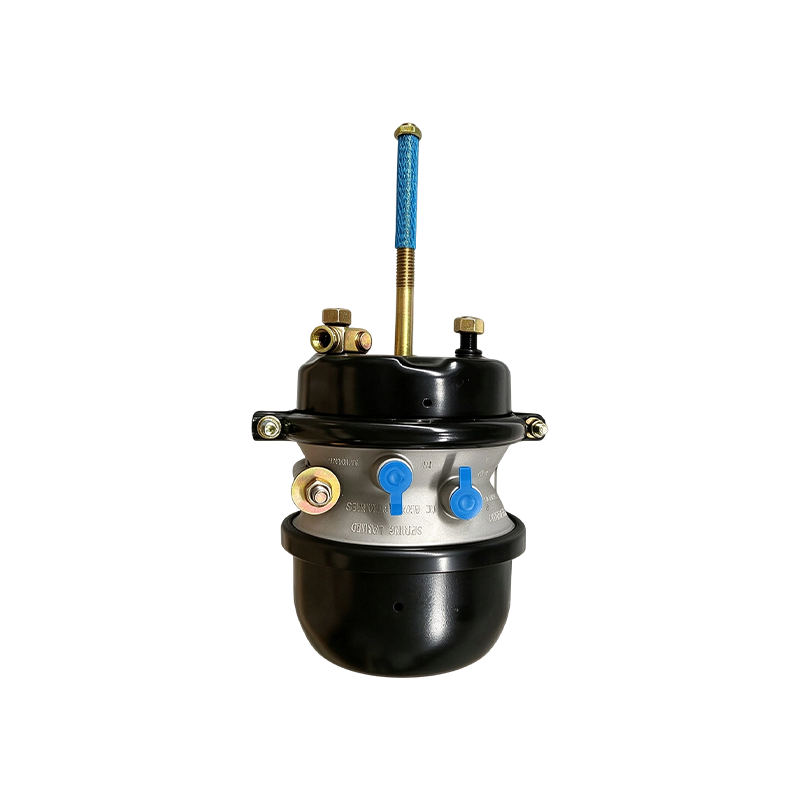
DP brake chambers belong to the S-Cam brake chamber family, which also includes DD (double-diaphragm) and single service chambers. A DP unit uses a diaphragm for the service brake application and a piston-style spring unit for parking and emergency braking. The piston-style parking section makes the overall package more compact than a double-diaphragm design, which is why DP chambers show up frequently on European tractors and trailers where axle space is limited.
Custom is not a luxury in these situations; it is a requirement:
- Your air system uses Voss connectors while the standard chamber comes with an M22 port.
- The push rod length or clevis geometry needs to change to align with the slack adjuster.
- The available mounting clearance forces a shorter body or a different port orientation.
- The vehicle operates in a salt-heavy region and needs a specific surface protection.
Five Specifications That Define a Custom DP Brake Chamber
1. Port Type and Connection
The port is the first mismatch most buyers discover. DP chambers are commonly produced with an M22 x 1.5 female port or a Voss-type connection. M22 is the conventional metric port used with standard air fittings; Voss is a plug-in connector widely specified on European-made tractors and trailers because it saves assembly time and reduces cross-threading risk. If your fleet standardizes on Voss, a stock M22 chamber forces an adapter, adding a leak point and extra labor. Specifying the port at the factory removes that risk completely.
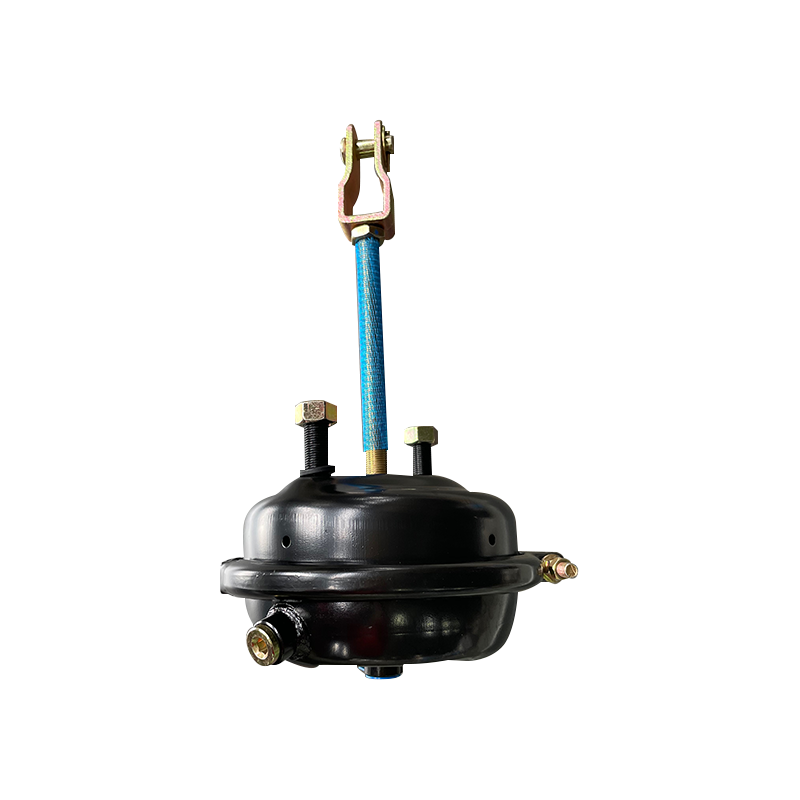
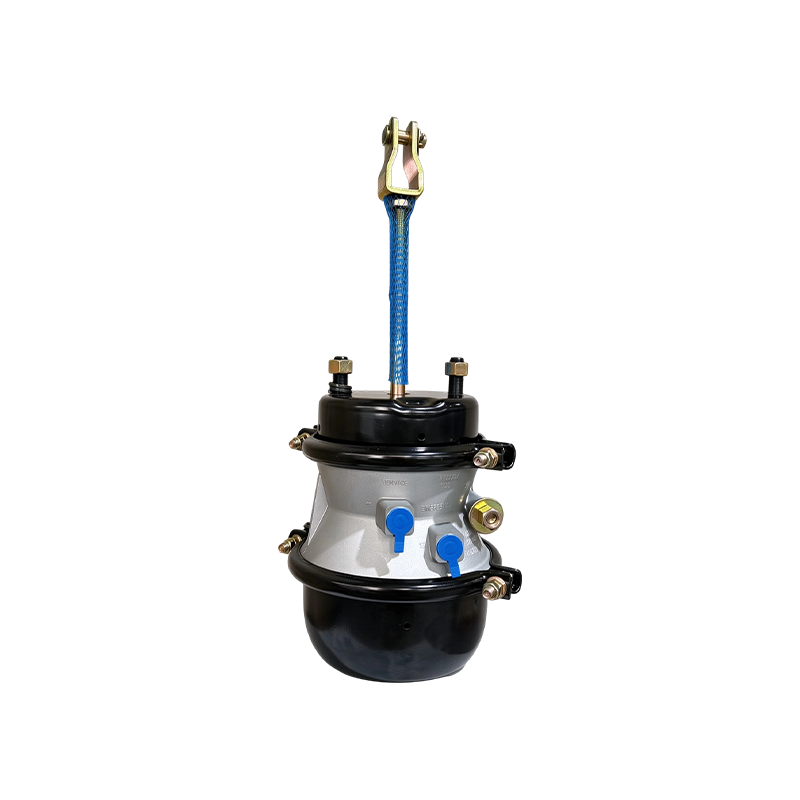
For a sealed build with a compact envelope and metric fittings, the T2424DP sealed chamber with M22 port is a typical starting point. On the Voss side, the T2424DP short version with Voss connection shows how the body can be shortened while keeping the same effective stroke, which is useful when the chamber sits close to the axle or frame rail.
 T2424DP Short-Stroke Brake Chamber with Voss ConnectionThis compact chamber suits tight axle or frame rail spaces while retaining effective stroke. Its short design and Voss interface help maintain seal integrity and easy installation in small vehicle chassis.View Product →
| Connection | Typical application | Custom order notes |
|---|---|---|
| M22 x 1.5 female | Standard metric air fittings | Confirm thread depth and specify thread sealant or O-ring |
| Voss plug-in connection | European OEM air systems | Confirm plug orientation relative to chamber body |
| M18 mounting hole | Certain single-chamber brackets | Only relevant when the bracket uses an M18 pilot |
2. Stroke Length
Stroke is the distance the push rod travels from the fully released position to the fully applied position. Standard DP chambers often provide around 2.5 inches of travel; long-stroke and 3-stroke versions extend that to roughly 3 inches. The extra travel becomes valuable when brake linings are worn and the slack adjuster is near the end of its range, because the push rod stays inside the chamber's efficient force band instead of bottoming out. The trade-off is physical: a longer stroke changes the overall body length and the clearance required for installation. Measure the available space on the axle before choosing a 3-stroke version.
3. Push Rod and Mounting Geometry
The push rod is not a generic rod. A custom DP chamber can be delivered with a long rod for standard connection, a welded clevis when a fork is pressed or welded onto the end, a shortened rod for tight installations, or a special fork angle for a specific vehicle model. Mounting geometry also includes the position of the clamp bolts and the rotation angle of the service port. OEM buyers send CAD models; aftermarket buyers measure the old chamber. A responsible supplier will archive the order drawings so every repeat order matches exactly.
4. Housing Material and Surface Protection
Most DP chambers use an aluminum die-cast housing because it is light and resists corrosion far better than a painted steel housing. Surface finish is the detail that gets underestimated: a chamber that works in a region with winter road salt needs a coating that survives stone impact and chemicals. Specify the surface treatment at the quotation stage and ask for corrosion test data. This is also the stage for private labeling, with your part number, logo, or barcode cast into the cover or printed on the label.
5. Testing and Documentation
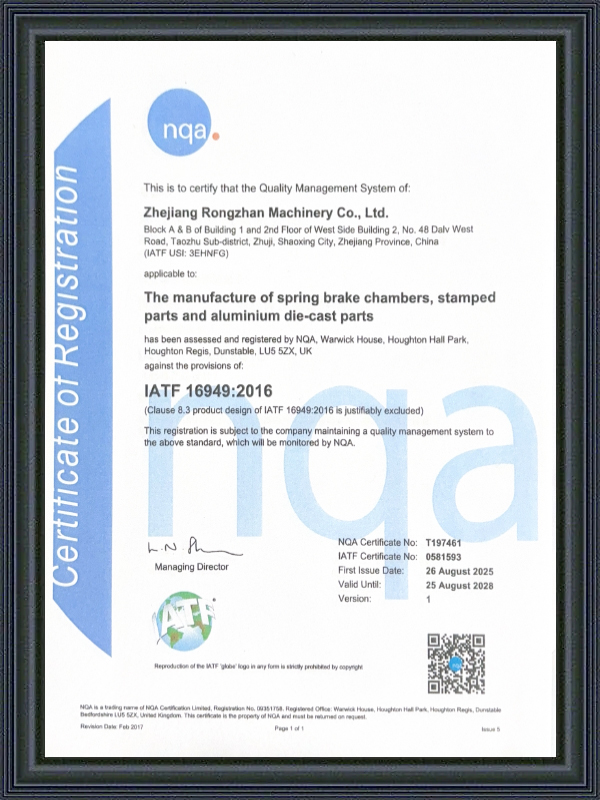
A truly custom DP chamber arrives with evidence. Because the diaphragm, spring, and die-cast housing interact, changing one element changes the performance curve. A factory with its own laboratory can provide high-temperature and low-temperature reports, service-life test results, and a performance curve for your specific configuration. When the supplier holds IATF 16949 certification, that documentation is part of the production process, not a paid extra.
A Practical Specification Checklist Before You Send the Inquiry
These six parameters cover 90 percent of quoting errors. Write them down before contacting a supplier.
| Parameter | What to confirm | Why it matters |
|---|---|---|
| Port type | M22, Voss, or other; thread depth | Avoids adapter leaks and extra fittings |
| Stroke | Standard, long stroke, or 3-stroke | Prevents push rod bottoming and brake fade |
| Push rod | Length, rod end, clevis width | Keeps slack adjuster alignment correct |
| Housing finish | Coating type, color, private label | Corrosion life and brand consistency |
| Test reports | High/low temperature, service life, leak test | Verifies the custom build meets safety requirements |
| Packaging | Individual box, label language, bar code | Clean installation and aftermarket traceability |
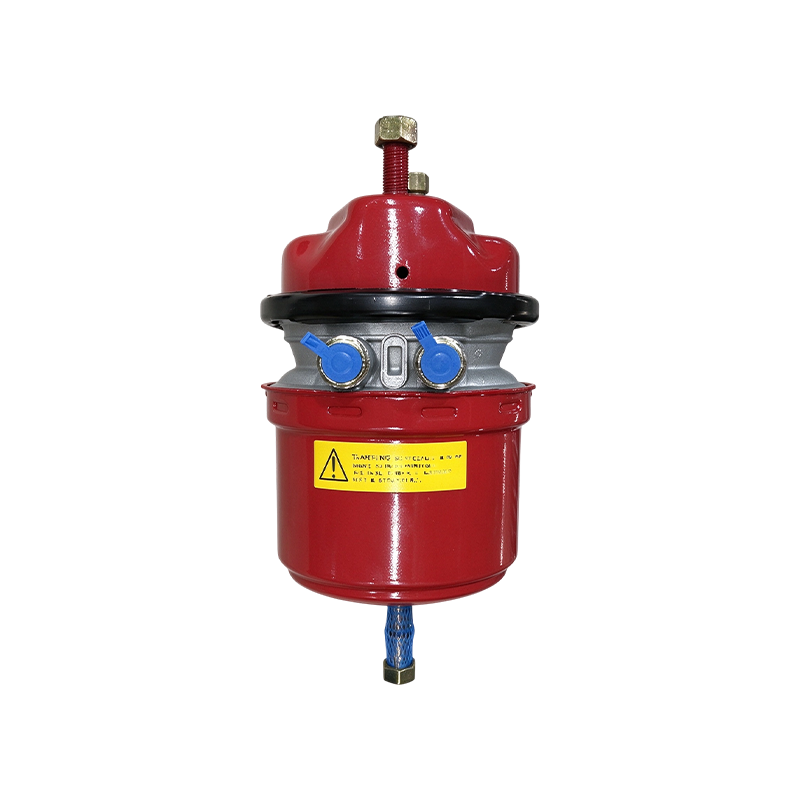
Keep one more item on the list. A custom chamber will eventually need service parts. If the factory also offers a DP brake chamber repair kit with the right diaphragm, springs, and seals, a future rebuild stays as close to the original performance as possible. Confirm that the repair kit exists for your exact custom part number before the first production batch runs.
 DP Brake Chamber Repair Kit Suppliers OverviewA rebuild kit for piston-type brake chambers, including top cover, shell, center body, and springs. It allows replacing worn parts without full chamber replacement, reducing cost and downtime while preserving braking performance.View Product →
Why In-House Die Casting and Stamping Change the Custom Game
There is a practical difference between a supplier that owns its die-casting and stamping workshops and one that only assembles purchased parts. The die-cast housing is where port threads, diaphragm seats, and mounting surfaces are created. If the supplier controls the casting, it can adjust wall thickness, move a locating boss, or rotate the port orientation without waiting on an outside foundry. In-house stamping does the same for the spring housing and mounting plates: lead times shrink, tolerances stay tight, and no trading margin is added in the middle.
That is the approach behind Zhejiang Rongzhan Machinery's production line. The company operates its own aluminum die-casting and stamping workshops, maintains an in-house laboratory for temperature and service-life testing, and reports a capacity of more than three million sets per year. Every chamber is checked before delivery, and the company's IATF 16949 certification covers the full manufacturing process. This is the practical answer to the question "how is a custom chamber verified?" The answer: it is verified by the same factory that built it, with the same test equipment used for a one-piece sample and a 10,000-piece batch. More details on the company's manufacturing setup are available on the about page.
For a closer look at why chamber sealing and stroke directly affect commercial vehicle safety, the industry note on how a brake chamber ensures commercial safety explains the mechanism in plain terms.
The bottom line is simple. When you order a custom DP brake chamber, you are betting on the factory's control over its own processes. Port type, stroke, push-rod geometry, surface finish, and test documentation are the five decisions that define the part. A manufacturer with in-house casting, stamping, and laboratory testing can turn those decisions into a chamber that fits, seals, and lasts. Ask for the test report, ask to see the casting workshop, and put the port and stroke specifications in writing. That is the difference between a modified stock part and a genuinely custom DP brake chamber.



-
When a driver presses the brake pedal on a commercial truck or trailer, a sequence of events begins ...
-
If you are qualifying a wedge brake chamber factory, settle five things before you talk about price...
-
Piggyback Brake Chamber: What It Does and Why Specs Matter When a trailer sits overnight and you he...
-
QUICK ANSWER A disc brake chamber converts compressed air pressure into the mechanical force that ...
-
A truck pulls into the shop with the low-air warning light flickering at the end of a delivery rout...
-
A purchasing manager once dismissed a low-priced ADB brake chamber factory because its sample faile...

- WHY US
- Company Profile
- Certifications
- News
- PRODUCTS
- S-Cam Type Brake Chamber
- DISC Brake Chamber
- Wedge Brake Chamber
- Piggyback Brake Chamber
- Brake Chamber Repair Kits
- MANUFACTURING
- Customer Service
- Factory Tour
-
-
No.90 Zhancheng Avenue, Zhuji City, Zhejiang Province, China

-
rongzhan@zjrongzhan.com / judith@zjrongzhan.com

-
+86-15258814607

-
- CONTACT


