

 русский
  Español
  عربى
عربى 


Brake Chamber & Air Brake Booster Explained | Rongzhan Machinery
Content
When a driver presses the brake pedal on a commercial truck or trailer, a sequence of events begins in the pneumatic system. Two components with different jobs do most of the work: the air brake booster, which amplifies the driver's braking command, and the brake chamber, which converts compressed air into mechanical stopping force at the wheel end. Understanding the difference between these parts, and how they cooperate in one braking cycle, is the fastest way to diagnose weak brakes, avoid dangerous failures, and choose replacement parts that match the vehicle's air system.
What Is a Brake Chamber?
A brake chamber is the pneumatic actuator mounted near each wheel end of a commercial vehicle. It converts compressed air pressure into linear mechanical force. Inside the housing, air pressure pushes against a rubber diaphragm, which moves a pushrod toward the slack adjuster, and the slack adjuster applies the foundation brake. In one sentence: the brake chamber is the final pneumatic-to-mechanical converter in the brake chain.
A typical service chamber consists of a steel or aluminum housing, a rubber diaphragm that separates the pressurized cavity from the atmosphere, a pushrod that transmits the force, and a return spring that retracts the pushrod when the driver releases the pedal. The pushrod stroke is the visible sign of a healthy chamber: it must stay within the range defined by the vehicle's friction material and slack adjuster settings.
The most common family split is service brake chambers and spring brake chambers. A service chamber handles normal driving and stopping. A spring brake chamber adds a powerful coil spring that mechanically applies the parking and emergency brake whenever air pressure in the spring cavity is exhausted. Many heavy-duty configurations mount both functions in a single combined housing.
What Is an Air Brake Booster?
The air brake booster sits upstream of the brake chambers, between the foot valve and the wheel-end actuators. Its job is to amplify the driver's braking request. When the driver presses the pedal, the foot valve sends a relatively small pilot signal to the booster. The booster then opens its supply valve, and reservoir pressure, typically 100 to 150 PSI on commercial vehicles as a general reference, rushes downstream toward the brake chambers.
The key difference between the two parts is their position in the energy chain. The booster is a signal and power amplifier. It does not push the foundation brake directly. The brake chamber is the final actuator. It takes the amplified air pressure and converts it into a mechanical push on the slack adjuster, camshaft, or caliper.
A useful analogy is a sound system. The booster is the amplifier, raising a weak signal to a level that can drive the output. The brake chamber is the speaker, converting that amplified energy into physical motion. If either element is undersized or worn, the whole system loses performance.
One point worth emphasizing: commercial air brake systems amplify force with compressed air. Hardware that relies on engine vacuum belongs to gasoline light vehicles, not to the pressure-based air systems used on heavy trucks and trailers.
How They Work Together in One Braking Cycle
The clearest way to see the relationship is to follow one braking cycle from the pedal to the wheel end.
- The driver presses the brake pedal, opening the foot valve. A pilot pressure travels from the foot valve to the air brake booster.
- The booster responds to the pilot signal by opening its supply port, allowing high-pressure reservoir air to flow downstream toward the brake chambers. Commercial systems usually operate in the 100 to 150 PSI range.
- The service air line carries the amplified pressure to the brake chamber at each wheel end of that axle.
- Inside the brake chamber, the pressure pushes the diaphragm outward and forces the pushrod forward, rotating the slack adjuster.
- The rotating slack adjuster turns the S-Cam shaft, spreading the brake shoes against the drum. In a disc brake system, the same pushrod motion applies the caliper.
- When the driver releases the pedal, the foot valve exhausts the air. Return springs inside the brake chamber retract the pushrod, the cam returns to its released position, and the brakes disengage.
This full-chain view matters for maintenance. A leak, a worn diaphragm, or a stuck valve anywhere between the booster and the wheel end degrades the entire brake response. Checking only one component can send a technician to the wrong part of the truck.
Main Types of Brake Chambers and How to Choose
Brake chambers are classified by internal structure, braking function, and mounting details. The industry naming convention appears directly in product catalogs: DD, DP, and Single.
DD stands for double diaphragm. This construction combines a service cavity and a spring cavity in one housing, with two diaphragms between them, which makes it the standard for spring brake applications on heavy trucks. DP is a double-piston variant, and Single is a single-diaphragm chamber with one pressure cavity, designed for service braking only.
For S-Cam brake systems, which are the dominant wheel-end layout on heavy trucks and trailers in North America, the chamber pushrod rotates the slack adjuster, which turns the camshaft and spreads the brake shoes. If you are comparing configurations, the S-Cam brake chamber product line provides a direct overview of DD, DP, and single variants in one catalog.
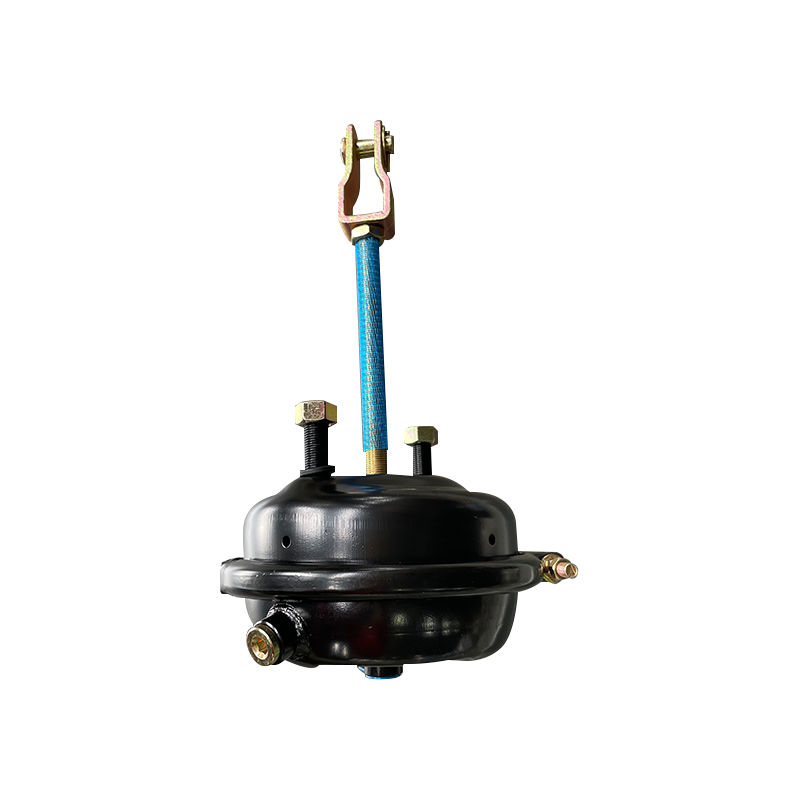 Heavy Duty Truck S-Cam Type Brake Chamber Factory, ManufacturersAs China heavy duty truck S-cam type brake chamber factory and service brake chambers manufacturers, Zhejiang Rongzhan Machinery Co., Ltd...View Product →
On trailers where the tractor handles the parking brake function, a single service chamber is usually sufficient. If your axle design matches that layout, reviewing single brake chamber options side by side simplifies the sizing decision.
Single Brake Chamber Manufacturers, Single Brake Chamber SuppliersAs China single brake chamber manufacturers and suppliers, Zhejiang Rongzhan Machinery Co., Ltd. offers custom single brake chamber, wide...View Product →
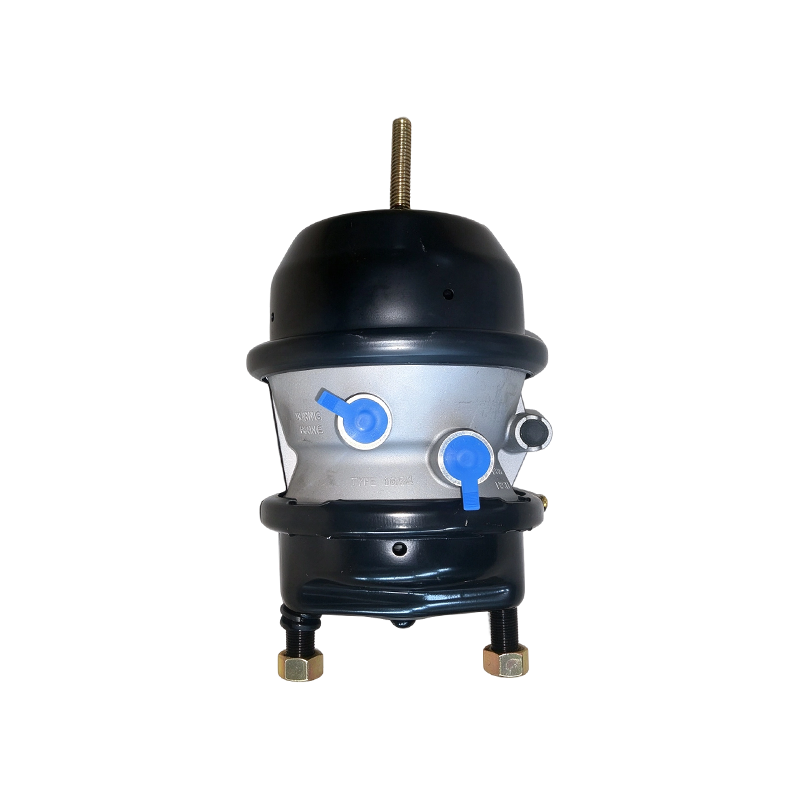
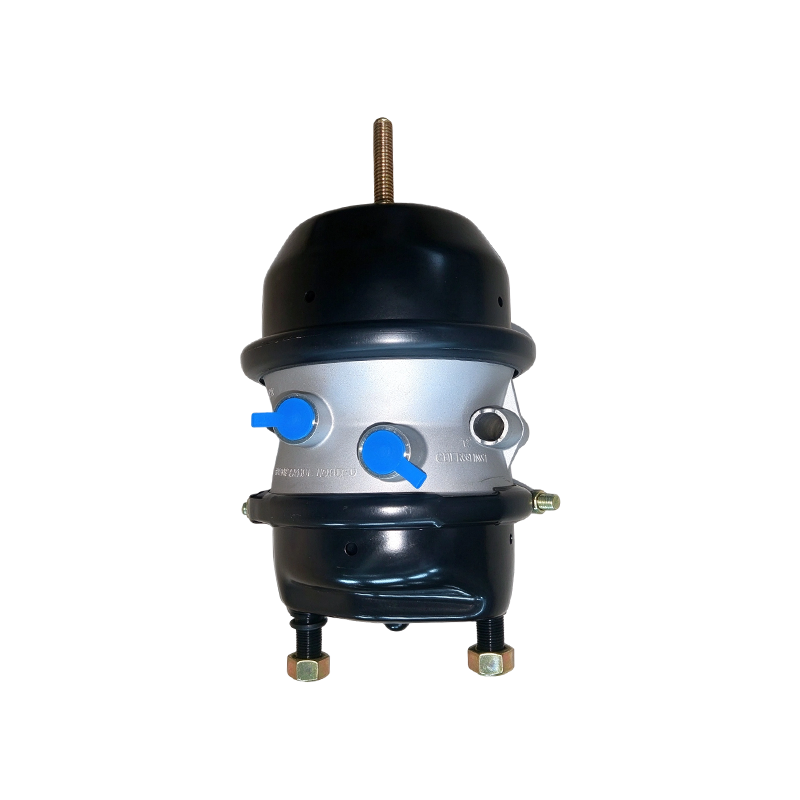
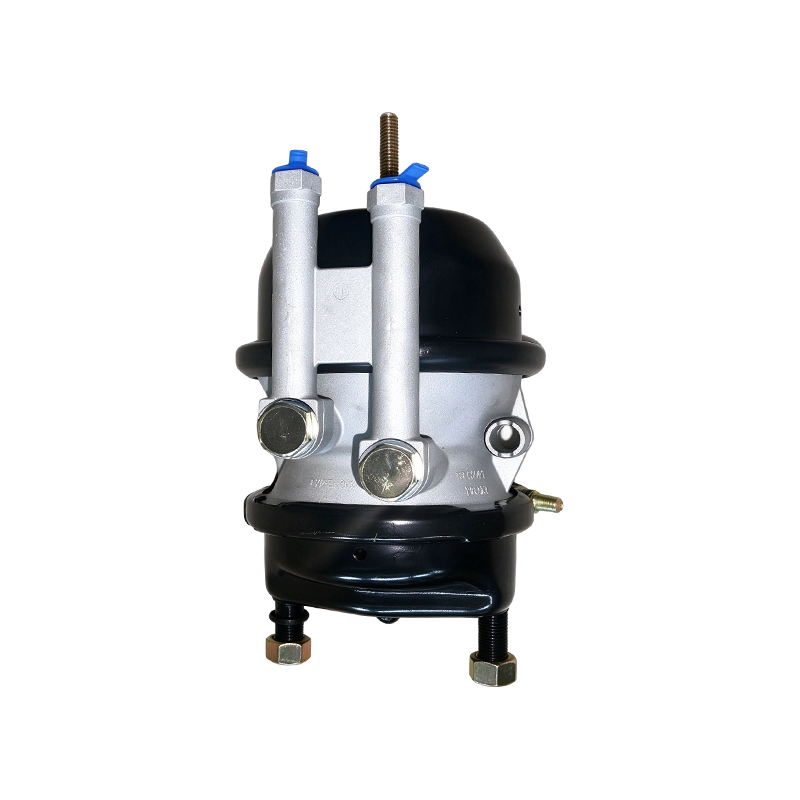
When a vehicle needs an integrated parking and emergency brake at the wheel end, a spring brake chamber is the correct choice. In applications with tight space around the axle, the spring chamber is sometimes mounted piggyback style directly above the service chamber. If the wheel-end geometry demands extra travel for thick linings or long adjuster strokes, a long-stroke piggyback safety chamber gives the additional stroke without changing the mounting footprint.
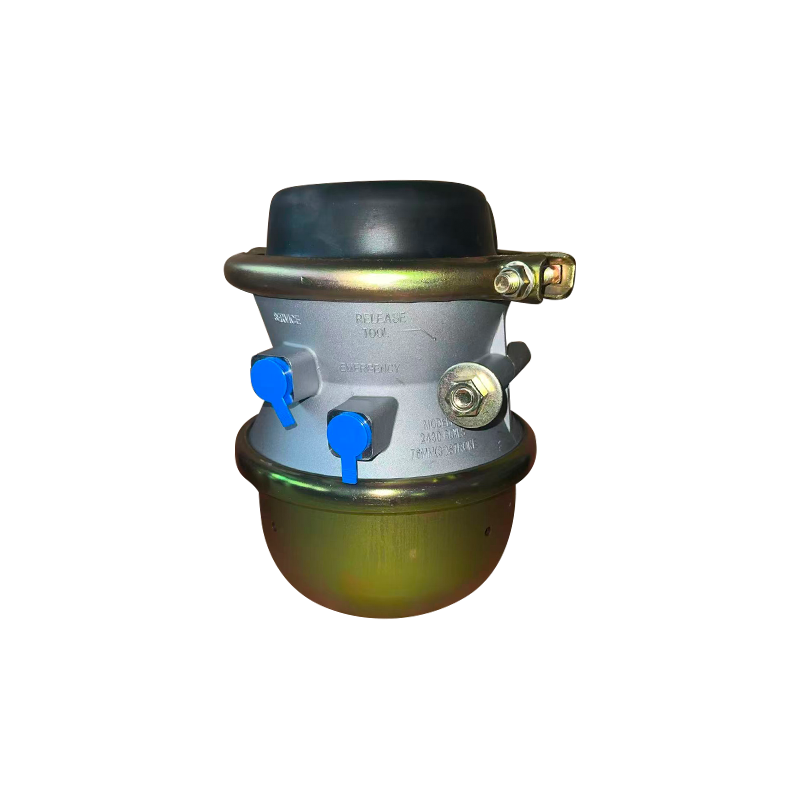 Wholesale 2430DD Piggyback Long Stroke Safety Chamber Suppliers, Factory - ZhejiZhejiang Rongzhan Machinery Co., Ltd is China wholesale 2430DD Piggyback Long Stroke Safety Chamber suppliers and factory,The 2430DD Pigg...View Product →
Selection checklist at a glance
When you evaluate a chamber, walk through five points:
- Braking function: service only, or service plus spring parking brake.
- Structure: DD, DP, or Single, matching the original part's configuration.
- Stroke length: standard, long stroke, or 3-stroke, chosen for the slack adjuster and lining wear range.
- Air port and fitting: M22 port, Voss interface, or M18 hole.
- Mounting style: long rod or welded clevis.
Beyond the S-Cam family, the same selection logic applies to disc, wedge, and piggyback configurations. Disc brake chambers often use the same stroke and port options; wedge chambers change the internal actuation mechanism; piggyback chambers integrate the spring function where axle space is limited.
Common Failure Signs You Should Not Ignore
Brake chamber and booster failures announce themselves with symptoms that a driver or technician can recognize before the vehicle becomes unsafe.
| Symptom | Likely cause | First check |
|---|---|---|
| Hissing air leak when the brakes are applied | Damaged diaphragm or leak in the service air line | Inspect the chamber housing and air line connections for leaks |
| Slow braking response or weak stopping power | Low system pressure or excessive pushrod stroke | Confirm reservoir pressure and measure pushrod travel with brakes applied |
| Spring brake will not release | Seized spring mechanism or failed seal in the spring cavity | Cage the spring and service the chamber before further diagnosis |
| Visible pushrod misalignment or deformed housing | Impact damage or worn internal components | Replace the chamber before returning the vehicle to service |
Two patterns help with diagnosis. If the whole vehicle feels under-braked, inspect the booster, air supply, and valves first. If only one wheel behaves differently, focus on that wheel's brake chamber, slack adjuster, and air line.
Replacement and Maintenance Essentials
Replacing a brake chamber is a standard job for a qualified technician, but it must be done in the right order.
Before touching a spring brake chamber, cage the spring with the factory-style caging bolt. This compresses the powerful spring inside the housing so it cannot expand suddenly during disassembly. Skipping this step can turn the housing into a projectile.
- Cage the spring on spring brake chambers and follow the vehicle manufacturer's published procedure.
- Disconnect the service and emergency air lines and mark them for correct reconnection.
- Remove the old chamber from the mounting bracket and inspect the slack adjuster, camshaft splines, and mounting bolts for wear.
- Install the new chamber with the correct fasteners. Torque values in service manuals are general references; confirm the exact specification for your vehicle model.
- Reconnect the air lines and pressurize the system. Check every connection for leaks before testing the brake response.
- Apply the brakes and measure the pushrod stroke. If the stroke exceeds the recommended range, adjust the slack adjuster or recheck the chamber selection.
If the housing and pushrod are still sound, a chamber can often be restored with a new diaphragm and seals instead of a complete replacement. In that case, using brake chamber repair kits that match the chamber's internal geometry is more reliable than mixing components from different sources. For twin-diaphragm designs, a DD brake chamber repair kit contains the exact diaphragm and sealing elements for that two-cavity construction.
Why Quality and Certification Matter in Brake Chambers
Brake chambers are safety-critical parts, and quality differences between manufacturers are real. A chamber built with thin housings or low-grade rubber can develop leaks and stroke inconsistencies months before a properly built unit would need attention. For fleet managers and OEM buyers, those differences appear as unscheduled downtime and shortened maintenance intervals.
When you evaluate a brake chamber supplier, check for these concrete capabilities:
- Quality system certification such as IATF 16949, which requires structured process control and defect prevention across production.
- In-house laboratory testing, including high-temperature, low-temperature, performance, and lifecycle tests.
- 100 percent final inspection before shipment, so leak and stroke defects are caught at the factory, not on the truck.
- Vertical integration, such as in-house aluminum die-casting and stamping, which gives the manufacturer direct control over housing quality and dimensional consistency.
These are not marketing phrases; they are the verification points a buyer should discuss during supplier qualification. If you want to see how one manufacturer documents these commitments, our manufacturing and quality standards page outlines the certification and inspection process used at our facility.
Whether you are a technician tracing a brake fault or a procurement engineer shortlisting suppliers, the same discipline applies: understand the full system, verify the part, and never compromise on the components that control stopping distance. If you are evaluating brake chambers for a fleet or an OEM program, send us your application details, and we will help match the structure, stroke, port, and mounting type to your axle design.




-
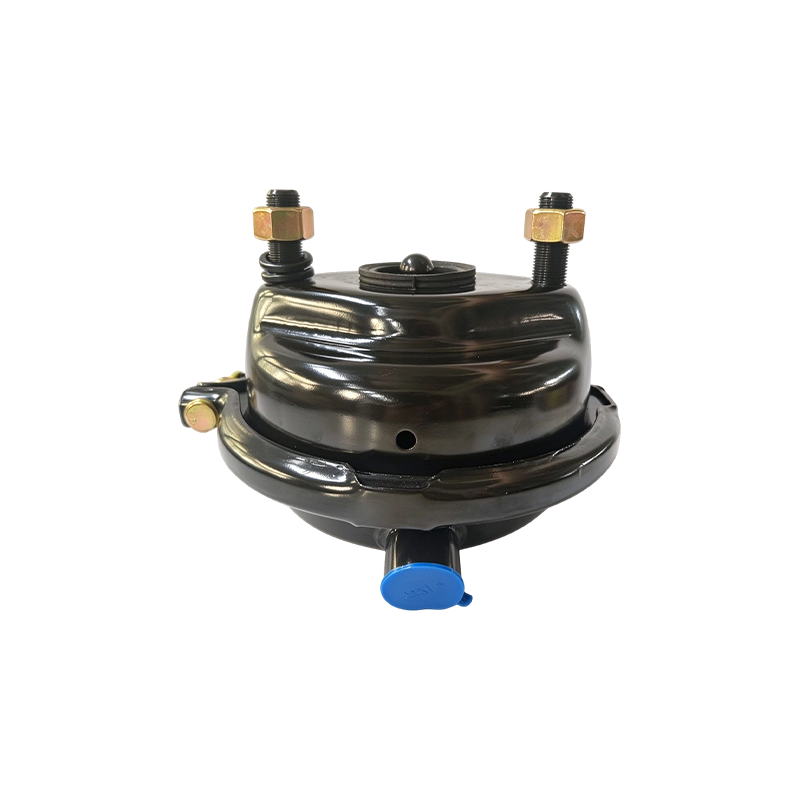
What Does a Brake Chamber Do? A brake chamber converts compressed air pressure into mechanical push...
-
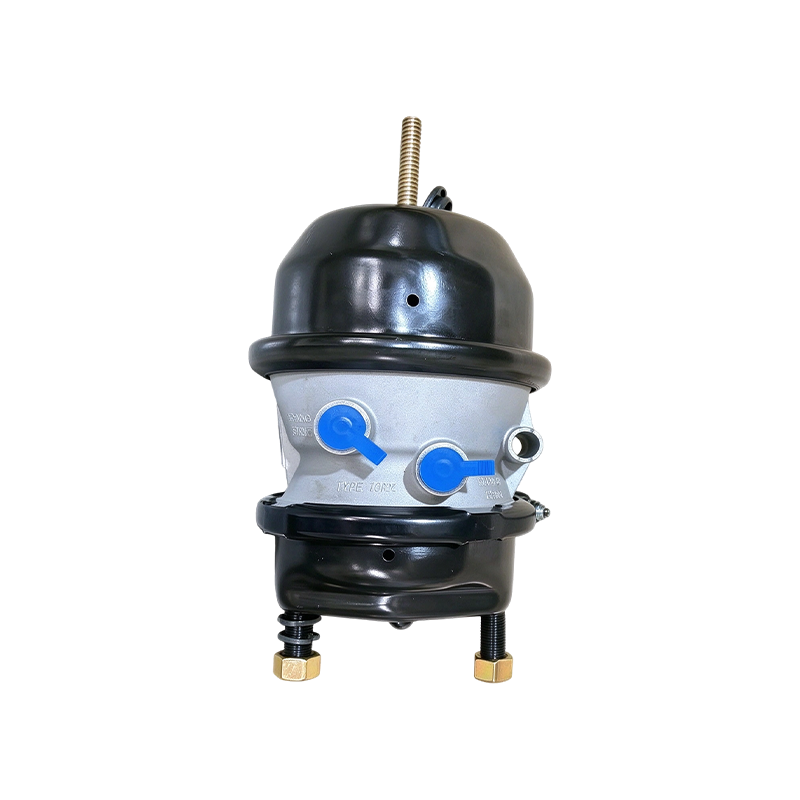
QUICK ANSWER A disc brake chamber converts compressed air pressure into the mechanical force that ...
-
An OEM purchasing manager once sent us a DP brake chamber that had been pulled off a prototype vehi...
-
If you are qualifying a wedge brake chamber factory, settle five things before you talk about price...
-
A purchasing manager once dismissed a low-priced ADB brake chamber factory because its sample faile...
-
Two suppliers quote the same Type 20 service wedge brake chamber, and one is 20 percent cheaper. Si...

- WHY US
- Company Profile
- Certifications
- News
- PRODUCTS
- S-Cam Type Brake Chamber
- DISC Brake Chamber
- Wedge Brake Chamber
- Piggyback Brake Chamber
- Brake Chamber Repair Kits
- MANUFACTURING
- Customer Service
- Factory Tour
-
-
No.90 Zhancheng Avenue, Zhuji City, Zhejiang Province, China

-
rongzhan@zjrongzhan.com / judith@zjrongzhan.com

-
+86-15258814607

-
- CONTACT


