

 русский
 Español
 عربى



Heavy Duty Truck S-Cam Brake Chamber Factory: Sourcing Guide for Buyers
Content
A fleet running 40-ton tractors can feel the difference between two nominally identical S-cam brake chambers long before the odometer moves far. One holds stroke in freezing weather, seals at the diaphragm seat, and returns predictably. The other fades, leaks air, or arrives with a welded clevis that does not match the slack adjuster. The gap is rarely in the part number — it is in the factory that makes it. That is why a serious evaluation of a heavy duty truck S-cam brake chamber factory starts with process control, test data, and fit details before anyone compares unit prices.
Why the S-cam brake chamber stays the workhorse of heavy trucks
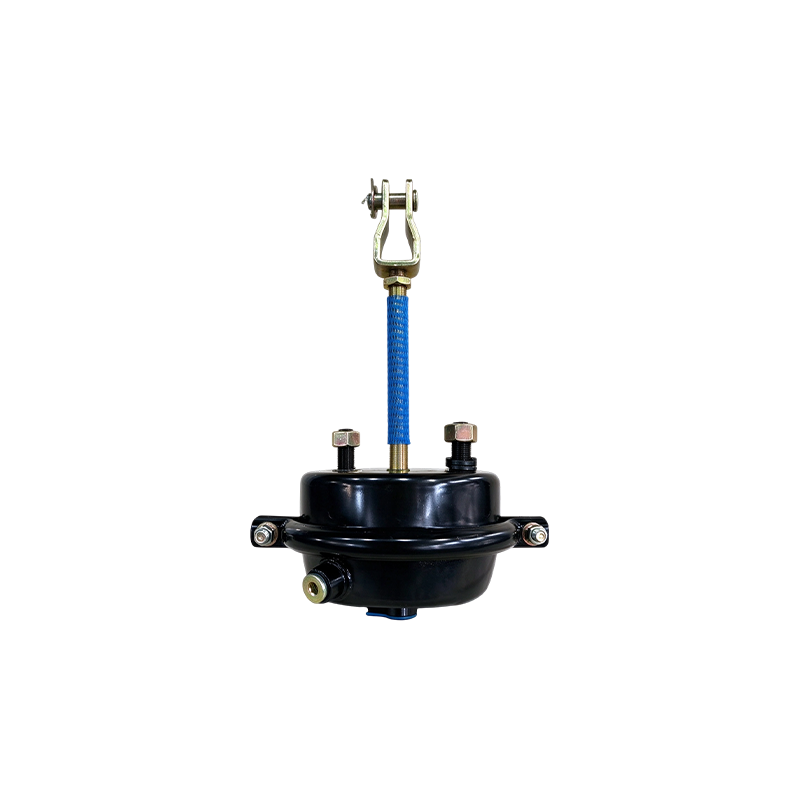
An S-cam brake chamber is a pneumatic actuator. Compressed air pushes a rubber diaphragm, the diaphragm moves a push rod, and the push rod rotates a slack adjuster connected to an S-shaped cam. As the cam turns, it forces the two brake shoes outward against the drum. Everything after the diaphragm is mechanical, which is exactly why the design keeps its position in heavy trucks: it tolerates heat, vibration, water, and road dirt, and repair crews understand it without special training.
Compared with wedge actuators and heavy-duty air disc brakes, S-cam chambers offer simpler troubleshooting and a lower replacement cost. Air disc brakes are gaining ground on new European trucks, but S-cam drums still dominate large parts of the global fleet — especially tractors, trailers, and vocational vehicles — because the installed base is enormous and the service skills are universal.
| Comparison point | S-cam chamber | Wedge actuator | Heavy-duty air disc |
|---|---|---|---|
| Actuation path | Push rod to slack adjuster to S-cam | Internal wedge spreads the shoes | Caliper with air chamber and disc rotor |
| Service familiarity | Very high in most markets | Moderate | Growing but specialist |
| Typical maintenance cost | Low | Medium | Higher |
From a factory's point of view, this popularity creates a serious responsibility. A brake chamber is a safety part; its failure is not an inconvenience but a stopped vehicle, possibly on a mountain grade. The production tolerances, material choices, and test procedures of a heavy duty truck S-cam brake chamber factory therefore deserve as much attention as the number on the quotation.
What a heavy duty truck S-cam brake chamber factory actually controls
Three properties define a good chamber: airtight sealing, stable stroke, and exact interfaces. Each one is decided on the factory floor, often by choices that are invisible on the outside of the housing.
Diaphragm and sealing
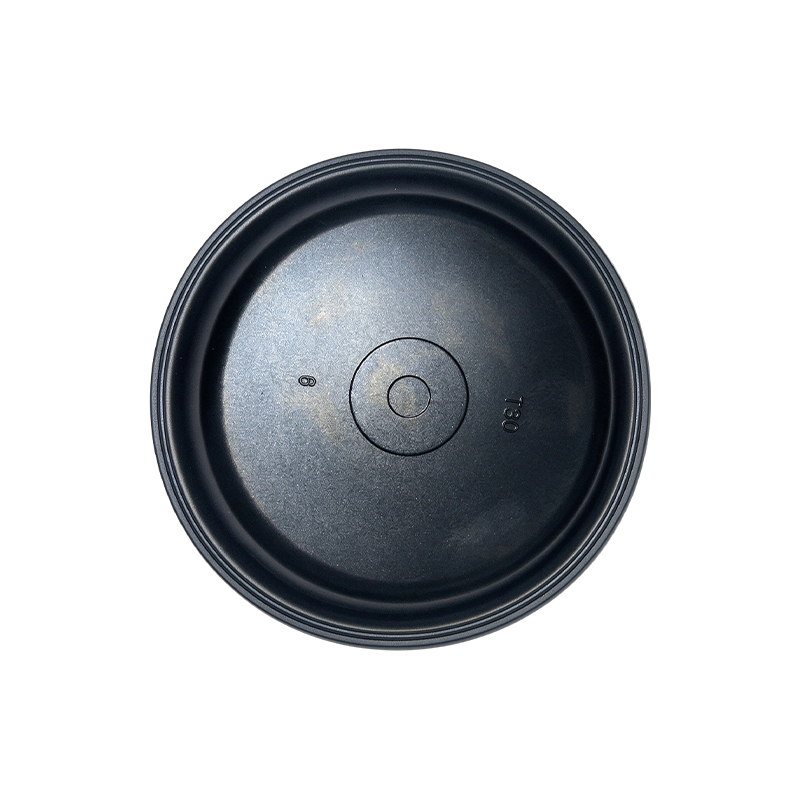
The diaphragm is the most stressed component in the chamber. It flexes millions of cycles across temperature extremes, and its edge must stay airtight against the housing for years. A competent factory tests sealing at low and high temperatures and records leakage data instead of offering verbal guarantees. If the seal fails, the vehicle loses service braking force, or the spring brake releases at the wrong moment. Sealing is also the first place where cost-cutters save money — thinner diaphragm stock, softer compounds, and rougher mating surfaces. You can see why the diaphragm seat must stay leak-free in this look at how sealing performance is tested on heavy duty chambers.
Stroke and return spring
Stroke length defines how far the push rod can travel as the brake linings wear. A long-stroke chamber — the 3-inch type — leaves more reserve travel before the rod bottoms out, which extends the interval between slack adjuster resets. The return spring is just as important. If it weakens, the push rod drags, the brakes overheat, and lining wear becomes uneven. A factory that checks stroke and return force at the end of the production line catches these faults before shipment.
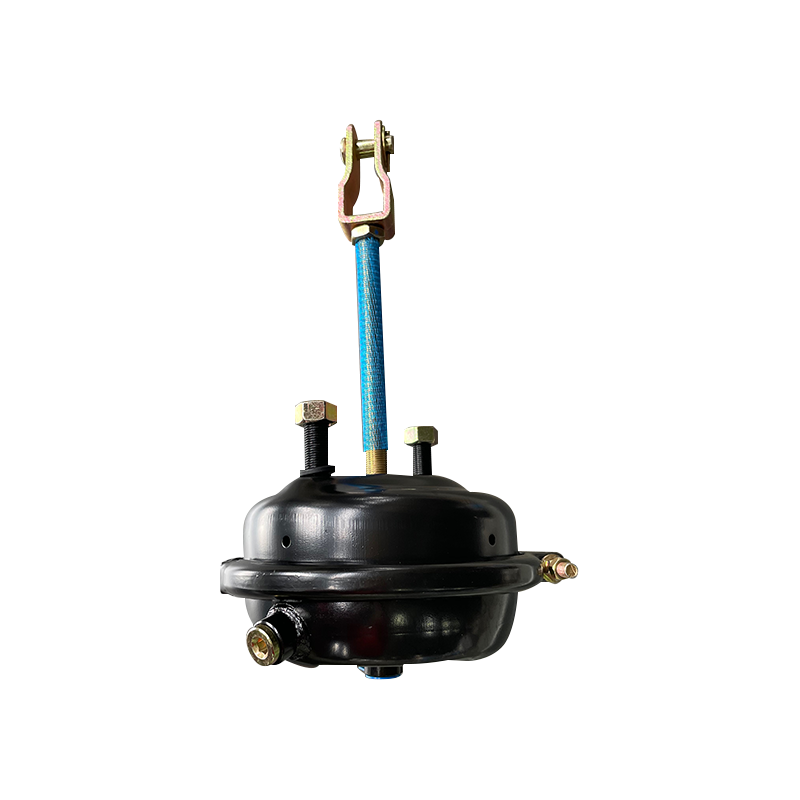
 T3030 Long-Stroke Brake Chamber with Welded ClevisThis 3-inch long-stroke chamber is ideal for heavy-duty vehicles requiring extended reserve travel. Its welded clevis enables direct slack adjuster mounting, while the sealed housing and corrosion-resistant finish suit demanding environments, making it a practical choice for fleets focused on durability.View Product →
Ports, clevis, and mounting interfaces
The same chamber family can use different ports for different air systems. An M22 threaded port, a Voss connector, or an M18 hole changes how the chamber connects to the vehicle's air plumbing. The push rod end matters too: a welded clevis suits direct slack adjuster mounting, while a long rod fits certain trailer geometries. When a factory stocks these variants and keeps the drawings accurate, buyers avoid the classic "right part, wrong port" problem.
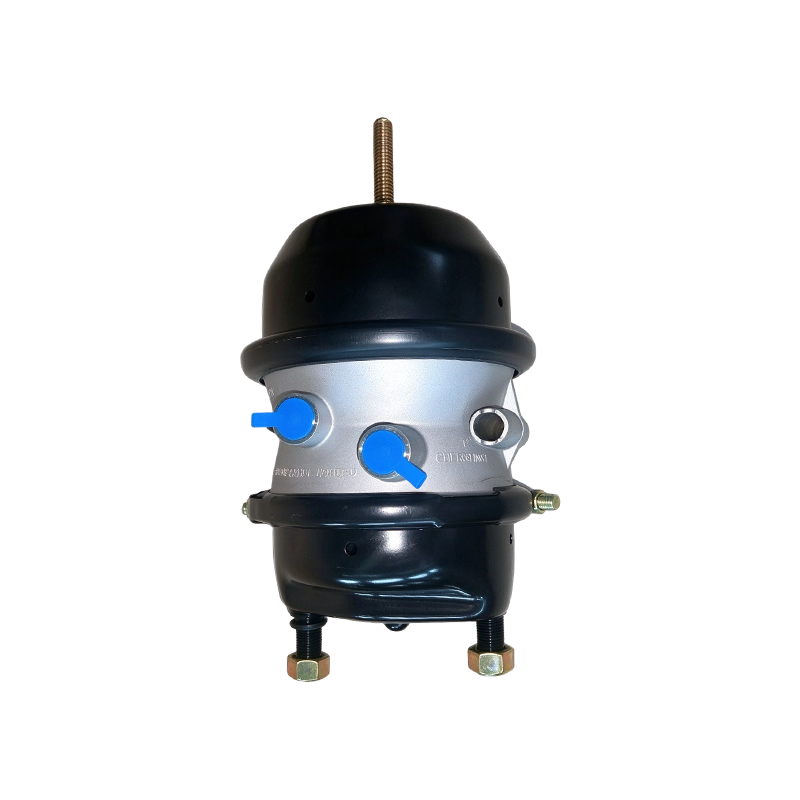
 T2424DP Sealed Brake Chamber with M22 PortFeaturing a fully sealed design and compact structure, this chamber suits small vehicles with limited chassis space. The M22 port simplifies air-line connections with leak-proof sealing, while the thick housing and durable diaphragm support reliable, long-term braking performance in continuous operation.View Product →
This is where vertical integration becomes visible. A factory with in-house aluminum die casting and stamping controls the housing quality, thread accuracy, and surface finish that determine whether leaks appear at year one or year five.
Choosing the right configuration: DD, DP, or single
Brake chambers are not interchangeable within a size class. The application decides the configuration. DD chambers combine a service brake function with a spring-applied parking and emergency brake. They are the standard choice for tractors and trailers that need a positive parking brake. DP chambers add a sealed port configuration for dual-circuit air systems, which is common in European and North American plumbing layouts. Single chambers handle service braking only; they are lighter, simpler, and often fitted on trailer axles where parking is managed by a separate spring chamber.
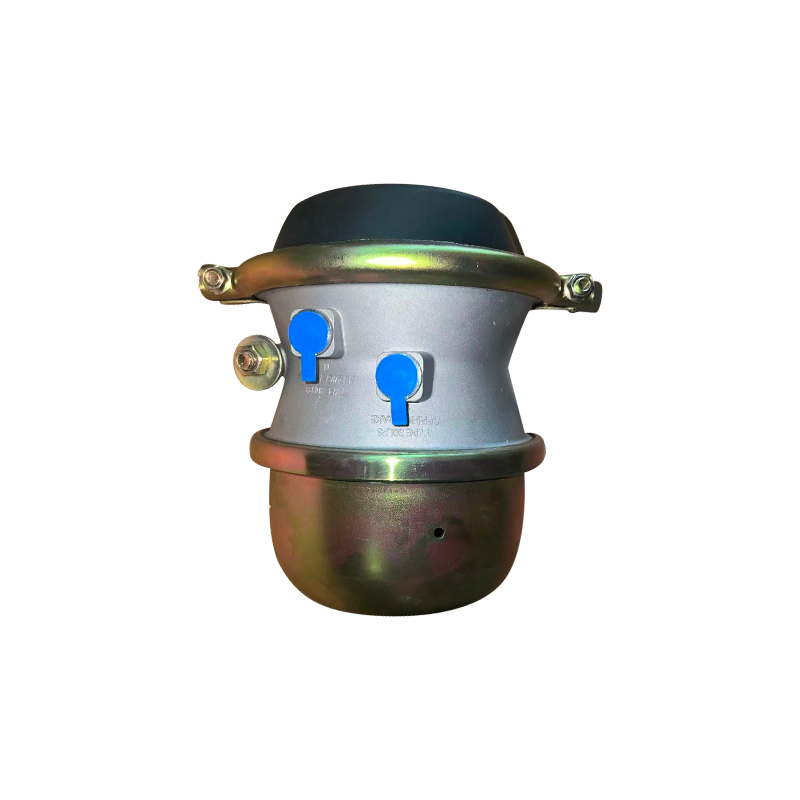
Within these families, the model numbering tells a story. T2430 and T3030 denote DD chambers with different rod and clevis arrangements; T2424DP denotes a sealed DP unit with an M22 port; and the T16, T20, T24, and T30 singles cover compact, standard, and long-stroke service brake applications.
| Model | Type | Key features |
|---|---|---|
| T2430 long rod | DD | Long rod, black finish, spring-brake configuration |
| T3030 long stroke | DD | Welded clevis, extended stroke |
| T2424DP | DP | Sealed M22 port; short version with Voss port |
| T16 / T20 / T24 | Single | Service chambers with 2.25-inch and 2.5-inch stroke variants |
| T30 | Single | 3-inch stroke, black finish |
Long-stroke singles deserve a second look. On trailers with high-mileage brake linings, the extra travel of a 3-inch chamber reduces the frequency of manual adjustments and keeps braking consistent between inspections. On the factory side, offering all of these variants from one catalog makes it easier to consolidate suppliers and simplify part qualification.
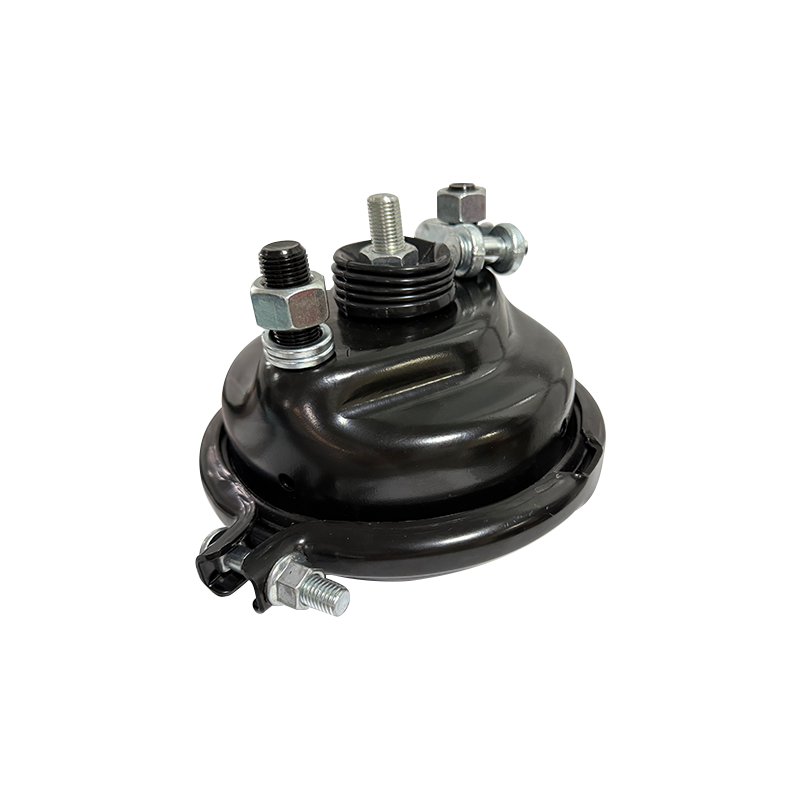
 T30 3-Inch Stroke Black Front-Axle Brake ChamberDesigned for front-axle applications, this 3-inch stroke chamber offers extended travel to reduce manual adjustment frequency. With a 150 PSI rating, optional 3/8" or M16 ports, and proven corrosion resistance, it provides dependable braking and customization options for various vehicle setups.View Product →
How to qualify a heavy duty truck S-cam brake chamber factory
Certifications such as IATF16949 confirm that a management system exists. Test reports confirm that the product behaves. When you evaluate a factory, ask for these five items:
- Low-temperature and high-temperature performance test reports for the chamber models you plan to buy.
- Service-life or cycle-test data that show how the diaphragm and return spring behave after heavy use.
- Dimensional reports for stroke, clevis bore, and port threads, with the tolerances the factory guarantees.
- Batch traceability records that link raw material lots to finished chamber serial numbers.
- A written description of the 100% pre-delivery inspection procedure.
Zhejiang Rongzhan Machinery, for example, sets out the full picture in its company profile: an in-house laboratory that can deliver test reports quickly, in-house die casting and stamping workshops, and an annual capacity above three million sets. That combination matters in practice. When a factory controls the chain from aluminum melting to final assembly, the price it quotes reflects real process costs rather than the cost of re-sold components.
Capacity also protects the buyer. A heavy duty truck S-cam brake chamber factory producing more than three million sets per year can hold large OEM orders and still react to medium and small batches. For a purchasing team, that flexibility shortens lead times and reduces the temptation to over-order.
Sourcing mistakes that shorten chamber life
Even experienced buyers trip on the same details. The most common sourcing mistakes are:
- Choosing by price sheet alone. The cheapest quote often pairs a thinner diaphragm or a softer return spring with a well-finished housing.
- Ignoring the port type until installation. An M22 chamber will not plug into a Voss system without adapters that add cost and leak points.
- Assuming long stroke is always better. A longer stroke changes the leverage relationship with the slack adjuster; it suits some axles and hurts others.
- Skipping clevis alignment checks. A welded clevis with poor angular alignment accelerates pin and bushing wear.
- Accepting "meets the standard" without test data. Standards define minimums; a good factory documents performance above those minimums.
Ask a prospective heavy duty truck S-cam brake chamber factory for its acceptance limits — for example, the allowed leakage rate at rated pressure and the stroke tolerance at which a unit is rejected. A real manufacturer publishes or shares these numbers. A trader can only promise them.
The S-cam brake chamber looks simple, but its reliability is decided by choices made on the factory floor: diaphragm compound, sealing verification, stroke control, and traceable final inspection. Buyers who evaluate those points before comparing price usually find that a quality-driven factory is cheaper over the life of the vehicle — fewer unplanned stops, fewer warranty claims, and fewer urgent air-freight orders.



-
A Sourcing Scenario Every Fleet and OEM Buyer Should Recognize A fleet maintenance supervisor appro...
-
A truck pulls into the shop with the low-air warning light flickering at the end of a delivery rout...
-
A heavy duty brake chamber that fails at 200,000 miles instead of 600,000 miles is rarely a design ...
-
The modern commercial transport industry relies heavily on air brake systems to ensure fleet safety...
-
Direct Conclusion: Selecting the correct heavy duty brake chamber requires evaluating your commer...
-
Piggyback Brake Chamber: What It Does and Why Specs Matter When a trailer sits overnight and you he...

- WHY US
- Company Profile
- Certifications
- News
- PRODUCTS
- S-Cam Type Brake Chamber
- DISC Brake Chamber
- Wedge Brake Chamber
- Piggyback Brake Chamber
- Brake Chamber Repair Kits
- MANUFACTURING
- Customer Service
- Factory Tour
-
-
No.90 Zhancheng Avenue, Zhuji City, Zhejiang Province, China

-
rongzhan@zjrongzhan.com / judith@zjrongzhan.com

-
+86-15258814607

-
- CONTACT


